Difference Between a Hot Spark Plug and a Cold Spark Plug
Explore the difference between hot spark plugs and a cold spark plug, when to use each, and how heat range affects deposits, misfires, and engine longevity. Practical guidance for choosing the right heat range and optimizing performance.


Understanding the difference between a hot spark plug and a cold spark plug starts with heat range. The difference lies in tip temperature and how the plug manages deposits, heat, and detonation risk. In practice, hot plugs suit light-duty, short-trip driving, while cold plugs excel under high-load or high-RPM conditions. Always align heat range with OEM specs for reliability.
Core concept: heat range and the difference between hot and cold spark plugs
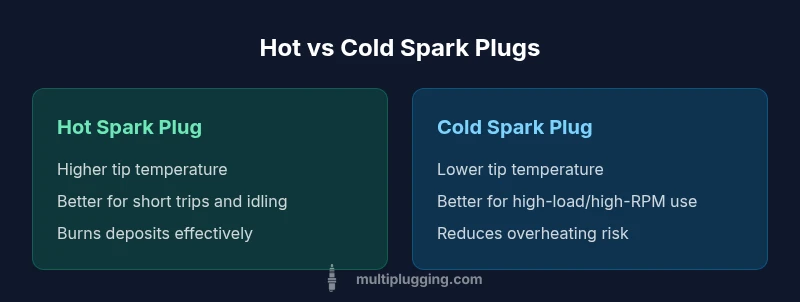
The term hot vs cold in spark plugs refers to how quickly the plug dissipates heat from the tip. A hot spark plug maintains a higher tip temperature, helping to burn off carbon deposits during routine driving. A cold spark plug dissipates heat faster, keeping the tip cooler to resist overheating under sustained high-load conditions. The choice is not about one being universally better; it is about matching the engine’s design and the owner’s typical driving pattern. According to MultiPlugging, heat range is a design compromise that affects combustion stability, deposit control, and ignition timing sensitivity. When choosing between a hot spark plug and a cold spark plug, you’re selecting how aggressively the tip temperature is managed across operating conditions. The keyword here, difference between hot spark plug and a cold spark plug, captures the core distinction: heat management.
Heat range mechanics: why tip temperature matters
Tip temperature is the primary lever controlling deposit burn-off and pre-ignition risk. Hot plugs are less likely to accumulate carbon in short trips or infrequent drives because their hotter tips reach temperatures that burn deposits. Cold plugs, by contrast, shed heat quickly, which helps prevent overheating under high-load operation but can allow deposits to form if the engine rarely reaches operating temperature. The balance you seek rests on engine design, fuel quality, and the drivetrain’s typical load profile. Engines with turbochargers or high compression generally benefit from colder plugs to guard against detonation; naturally aspirated engines with frequent short trips often perform well with hotter heat ranges to keep deposits in check.
Deposits, fouling, and combustion: how heat range changes outcomes
Deposits form when combustion byproducts aren’t burned away adequately. Hot plugs facilitate more complete burning of light carbon deposits during normal driving, reducing fouling risk in typical usage. Cold plugs help prevent overheating but can be prone to carbon buildup if the engine never reaches its ideal operating temperature. Misfires are less likely when the plug’s heat range aligns with engine operation, but using a heat range that is too far from OEM specifications can introduce misfires, rough idle, or reduced fuel efficiency. In practical terms, the difference between hot spark plug and a cold spark plug often comes down to whether your driving habits favor shorter trips or sustained higher loads.
When to use hot plugs: driving patterns and engine design
Hot spark plugs are commonly recommended for engines that spend a lot of time idling, short trips, or older designs with lower operating temperatures. In these scenarios, keeping the tip hotter helps prevent fouling and maintains stable ignition under light loads. If your vehicle experiences frequent stop-and-go commuting or sits in traffic, a hotter heat range can support reliable combustion by burning off deposits more effectively. OEM guidance should take precedence, but context matters: if your engine has a long history of injector or fuel-system issues causing inconsistent fueling, a hotter range can help, provided it remains within manufacturer tolerances.
When to use cold plugs: high-load scenarios and performance engines
Cold plugs are typically favored for engines that regularly operate under high load, high RPM, or forced induction (turbocharged or supercharged) conditions. These environments generate more heat, so a cooler tip helps prevent overheating, pre-ignition, and detonation risks. Cold plugs also suit engines designed for sustained power output and continuous driving, such as highway performance runs or towing. The goal is to keep combustion stable without the tip lingering at temperatures that promote overheating. Always corroborate with OEM heat-range specifications before selecting a colder option.
How to select the correct heat range: a step-by-step method
Start with the OEM specification from your owner’s manual or vehicle manufacturer. If you are experiencing misfires, rough idling, or frequent fouling under your normal driving conditions, evaluate whether your usage pattern aligns with the heat range recommendation. Consider your climate and fuel quality as well: very cold climates or long trips may justify a different heat range than hot climates with frequent high-load driving. If you are upgrading for performance, consult tuning resources and manufacturer guidance for whether a colder heat range is appropriate and safe for your engine’s compression and timing.
Common myths and misconceptions about hot vs cold plugs
A common myth is that hotter plugs always improve fuel economy. In reality, fuel economy is more strongly influenced by combustion efficiency, ignition timing, and fuel delivery. Another misconception is that a plug’s color alone determines heat range suitability; color can indicate combustion quality but not heat range in isolation. The heat range must match engine specifications and driving profile. Finally, the idea that cold plugs eliminate all fouling is incorrect; poor fueling and improper heat range can still cause deposits. Rely on OEM guidance and empirical observations rather than myths when deciding between hot and cold plugs.
Real-world scenarios: OEM specs, aftermarket replacements, and troubleshooting
In OEM replacement scenarios, the recommended heat range aligns with your engine’s design. Aftermarket substitutes can be acceptable if they maintain the same heat range and reach the manufacturer’s tolerances. When troubleshooting misfires or rough running, recheck the heat range first before adjusting other fuel or ignition components. If your vehicle has undergone engine modifications or receives frequent high-load operation, a cold heat range may be more robust, whereas a vehicle with low-mileage city driving may benefit from a hotter heat range that helps prevent deposit buildup. Always diagnose holistically, not in isolation, to prevent misinterpretation of symptoms.
Maintenance tips and practical guidelines to avoid misfires
Regularly inspect plug electrodes for wear, deposits, and gaps. Use OEM-recommended heat range as the baseline, and only experiment when you understand the risks and potential warranty implications. For mixed driving, consider a staged approach: start with OEM, monitor for deposits or misfires, then adjust with careful testing. If replacing plugs in a turbocharged or high-performance engine, ensure the selected heat range supports sustained boosts and heat production. Document any changes you make and track their impact on ignition performance and fuel economy.
Practical decision guide: quick-start checklist
- Check OEM heat-range recommendation in the manual.
- Assess driving pattern: short trips vs high-load usage.
- Consider climate and fuel quality.
- If in doubt, start with OEM and observe performance over a few weeks.
- Avoid mixing heat ranges without professional guidance, as misfires or detonation risk can occur.
Comparison
| Feature | Hot spark plug | Cold spark plug |
|---|---|---|
| Tip temperature | Maintains higher tip temperature to burn deposits | Dissipates heat quickly to lower tip temperature |
| Best operating condition | Idle/short trips; older or low-heat engines | High-load/high-RPM; turbocharged or performance engines |
| Deposits/fouling tendency | Burns off light deposits; reduces fouling in routine driving | Prone to carbon buildup if engine rarely reaches operating temp |
| Pre-ignition risk | Higher risk under heavy load or advanced timing | Lower risk, but not eliminated under high boost |
| Performance under load | Can struggle under sustained high load; risk of overheating if misapplied | Supports sustained performance with better heat management |
| Fuel economy impact | Indirect effects via combustion stability; depends on usage | Indirect effects via misfire risk and detonation control |
| Maintenance considerations | May require closer monitoring for overheating in certain apps | Requires attention to ensure engine reaches operating temp |
Strengths
- Allows heat management aligned with driving patterns
- Hot plugs aid deposit control for frequent short trips
- Cold plugs reduce overheating risk in high-load scenarios
- OEM-aligned heat range supports engine longevity
Negatives
- Using the wrong heat range can cause misfires or overheating
- Switching heat ranges requires careful assessment and testing
- Aftermarket choices may affect warranty if not OEM compliant
Match heat range to driving pattern and OEM specs; neither option is universally better.
For routine city driving with shorter trips, a hotter heat range helps prevent fouling. For sustained high-load or turbocharged engines, a colder heat range reduces the risk of overheating and detonation. Always start with the OEM recommendation and adjust only after careful testing.
FAQ
What is the main difference between hot and cold spark plugs?
The main difference is how much heat the plug tip retains. Hot plugs stay hotter to burn deposits; cold plugs dissipate heat quickly to prevent overheating in high-load conditions.
Hot plugs stay hotter to burn off deposits, while cold plugs cool the tip to prevent overheating during heavy use.
When should I use a hot spark plug?
Use hot plugs for engines that idle or operate mostly at low loads, or for vehicles that make frequent short trips where deposits might accumulate. Always verify with the OEM heat-range specification.
Use hot plugs for light-duty, accidental short trips, but follow OEM specs.
When should I use a cold spark plug?
Use cold plugs for engines that see high-load or high-RPM operation, turbocharged or performance engines, or when detonation risk is a concern. Ensure compatibility with manufacturer recommendations.
Cold plugs are for high-load or performance use; check OEM specs.
Can switching heat ranges improve fuel economy?
Heat range changes can influence combustion stability and misfire risk, which in turn affects efficiency. Improvements depend on correct matching to engine design and usage patterns.
Yes, but only if the heat range is properly matched to the engine and driving style.
Do modern engines use a fixed heat range?
Most modern engines specify a heat range in the OEM manual and require a specific plug. Aftermarket substitutions can work if they preserve the same heat characteristics and tolerances.
OEM specs usually lock the heat range; aftermarket choices must mimic those specs.
How do I determine the right heat range for my car?
Start with the manufacturer’s recommendation, assess your typical driving conditions, fuel quality, and climate, then monitor performance. If symptoms persist after replacement, consult a trusted technician.
Begin with OEM guidance and adjust only after careful testing.
Main Points
- Align heat range with engine design and driving style
- Hot plugs benefit short trips; cold plugs suit high-load scenarios
- OEM specifications are the best starting point
- Avoid mixing heat ranges without professional guidance