How Hot Do Spark Plugs Get? A Practical Temperature Guide
Understand spark plug temperatures, what influences heat, and how to choose the right heat range to optimize performance, prevent fouling, and avoid pre-ignition.


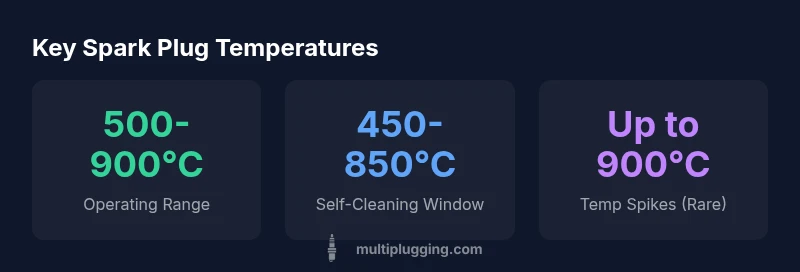
The typical spark plug tip temperature during normal operation falls within a broad range, commonly cited as roughly 500°C to 900°C (930°F to 1650°F) depending on engine design, heat range, and driving conditions. In practice, the goal is to stay hot enough to burn off deposits without reaching damaging pre-ignition. Temperature spikes occur under heavy load or misfiring conditions, which can affect longevity and performance.
How hot does spark plug get: The big picture
Spark plug temperature is a balance between heat being transferred from the tip to the cylinder head and the heat generated by combustion inside the chamber. The engine’s heat range determines how quickly a plug can shed that heat. Different engines and climates push the plug hotter or cooler, so the question “how hot does a spark plug get” has no single answer. According to MultiPlugging, the temperature is governed by a network of factors including heat range, engine design, driving style, and fuel quality. Understanding this helps you diagnose misfires, foul deposits, and abnormal wear before they become costly problems.
- Heat transfer controls peak temperatures
- Deposits and fuel affect near-tip temperature
- Correct heat range helps keep temps in the self-cleaning window
What is the normal temperature range for spark plug tips?
In everyday driving, plug tips typically sit in a self-cleaning window that several manufacturers describe as roughly 500°C to 900°C. This range corresponds to about 930°F to 1650°F and varies with engine speed, load, and fuel quality. Persistent operation outside this band increases the risk of fouling (too cool) or pre-ignition and detonation (too hot). It’s important to interpret temperature in the context of your specific engine and its heat range.
- Normal range is wide and engine-dependent
- The self-cleaning window is not a fixed number for every engine
- Quick checks rely on plug color and performance rather than a single thermometer
Key factors that influence spark plug temperature
Temperature is not fixed; it shifts with several interacting factors. Key influences include the heat range selected by the plug’s design, the engine’s compression and combustion efficiency, ignition timing, air-fuel ratio, throttle position, climate, and fuel quality. Driving at sustained high loads will push temperatures higher, while frequent idling or short trips tend to keep plugs cooler. Recognizing these factors helps you pick the right plug and avoid thermal-related issues.
- Heat range and design set core tolerance
- Load, RPM, and fuel quality alter temps
- Climate and driving habits modulate operating temperatures
Heat range basics: hot vs cold plugs
Heat range is a measure of how fast the plug transfers heat away from the tip. A hotter plug retains heat longer, remaining above the self-cleaning temperature and better at burning deposits under mild use. A colder plug sheds heat faster and is designed for high-output or turbocharged engines where rapid heat removal prevents pre-ignition. Selecting the wrong range can lead to fouling or overheating; always align with OEM specifications and your typical driving conditions.
- Hot plugs for mild use, cold plugs for high-load use
- Heat range should balance deposits and pre-ignition risk
- OEM recommendations provide the safest baseline
Temperature spikes: causes and consequences
Spikes occur with heavy acceleration, high RPMs, forced induction, or a rich fuel mixture. Repeated spikes can harm the insulator or electrode, degrade heat transfer, and shorten plug life. Excessive heat increases the risk of pre-ignition and detonation, especially in engines with advanced timing or boosted pressure. Conversely, chronic cooling can lead to lead deposition and fouling. The goal is stable operation within the manufacturer’s specified range.
- High-load driving can spike temps
- Overly rich mixtures and timing errors raise risk
- Prolonged abnormal temps impair longevity
Diagnosing spark plug temperature problems with measurements
Direct temperature measurement in everyday maintenance isn’t practical without specialized tools. Instead, technicians rely on plug condition, color, and operation indicators. A healthy plug tip often shows light tan to gray color with clean electrodes. Very white or cratered insulators suggest overheating; black sooty deposits indicate a rich mixture or poor combustion. Always cross-check with engine diagnostics and service history to confirm temperature-related issues.
- Plug color is a rough proxy for temperature
- Deposits reveal mixture and combustion problems
- Use diagnostic codes alongside plug inspection
Practical guidelines for maintaining optimal plug temperature
Follow these practical steps to keep spark plug temperature within the ideal window:
- Use OEM-recommended heat range and gaps; avoid 'one-size-fits-all' plugs
- Ensure correct torque to improve heat transfer and seal
- Use high-quality fuel and maintain proper air-fuel ratio
- Regularly inspect plugs for signs of fouling or overheating and replace as needed
- Consider engine load and climate when evaluating heat range selection
Implementing these practices reduces the likelihood of temperature-related failures and helps sustain engine performance.
How to select the right spark plug for your engine
Start with the OEM specification in your owner’s manual or service guide. Consider your typical driving conditions: city commuting with a lot of idle time may benefit from a hotter plug, while frequent towing, towing, or performance driving requires a colder plug to prevent overheating. Climate matters as well: hotter climates demand more aggressive heat management. If in doubt, consult a trusted technician or use the M- plug database from MultiPlugging as a reference.
- Match heat range to operating conditions
- Consider load, climate, and driving style
- Verify compatibility with your engine model and ignition system
Common myths about spark plug temperature
Myth: A hotter plug always improves performance. Reality: Too hot can cause pre-ignition; efficiency drops when the plug operates outside its intended range. Myth: Whiter insulators mean better efficiency. Reality: Insulator color reflects temperature history, not instant performance. Myth: Any clean plug is good for any engine. Reality: The wrong heat range can cause fouling or overheating. Truth lies in following OEM guidelines and monitoring engine behavior.
Selected data on spark plug temperatures and influencing factors
| Aspect | Typical temperature range | Notes |
|---|---|---|
| Tip operating temperature | 500-900°C | Engine design and heat range matter |
| Self-cleaning threshold | 450-850°C | Depends on deposits and fuel quality |
| Influence factors | Load, timing, fuel quality | Engine design dictates limits |
FAQ
What happens if a spark plug gets too hot?
Overheating can cause pre-ignition, detonation, and electrode damage. Symptoms include knocking, loss of power, and occasional misfires. Addressing heat-range issues and fuel mixture can prevent these problems.
Overheating can lead to pre-ignition and damage. If you notice knocking or power loss, check the heat range and fuel mix.
How can I tell if my spark plug temperature is correct?
There isn’t a single thermometer; you assess by plug color, performance, and emissions codes. A healthy plug typically shows a light tan to gray color and smooth operation, while overheating or fouling shows as color anomalies and performance changes.
Look for a light tan to gray plug and steady performance; unusual colors suggest temperature or combustion issues.
Do cold plugs cool the engine better?
Colder plugs shed heat faster and are used for high-load or forced-induction engines. They reduce the risk of overheating but can foul in mild or lean conditions if the engine isn’t designed for them.
Cold plugs remove heat quickly, which helps high-load engines but can foul in lighter use.
Can spark plug temperature affect fuel economy?
Yes. If the plug operates outside its intended range, combustion may become less efficient, increasing fouling or causing misfires that reduce economy.
Yes—wrong temperatures can worsen combustion efficiency and hurt fuel economy.
How do I choose the right heat range?
Start with the OEM specification, then adjust for climate and driving style. For engines with high-load or turbocharging, a colder plug may be appropriate; for regular commuting, a hotter plug can help prevent fouling.
Check the manual and consider your climate and driving style; pick the recommended heat range.
Is it safe to run a hotter heat range in winter?
Not typically. A hotter plug can stay hot longer and foul in cold starts; winter operation often benefits from the OEM heat range or closer to cold-range plugs to handle cold-starting conditions.
Usually not—stick to the recommended range, especially in cold starts.
“Temperature management in spark plugs is a balancing act between heat transfer and combustion efficiency. Staying within the manufacturer’s specified range reduces fouling and the risk of pre-ignition.”
Main Points
- Understand heat range basics to match your engine
- Maintain temperatures within a safe operating window
- Monitor plug color and performance as temperature indicators
- Avoid extreme heat or cool extremes by correct maintenance
- Always follow OEM specifications for heat range and gaps