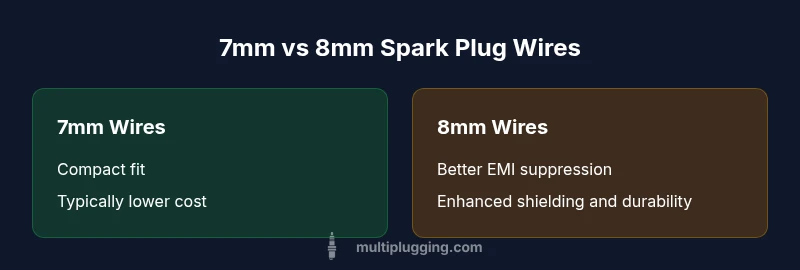
7mm vs 8mm Spark Plug Wires: A Practical Comparison
A detailed comparison of 7mm vs 8mm spark plug wires, focusing on diameter, shielding, compatibility, and installation tips for DIY engine care. Learn which size fits your engine and driving style.


7mm vs 8mm spark plug wires offer a trade-off between diameter, shielding, and routing practicality. In most DIY scenarios, 8mm wires provide better EMI suppression and shielding without sacrificing ease of installation, while 7mm wires stay a solid, budget-friendly option for older engines. The best choice depends on engine design, wire run length, and your performance goals.
Understanding wire diameter and conductor geometry
In spark plug wires, diameter matters for how current is carried, how voltage is distributed along the conductor, and how effectively noise is suppressed. The topic of 7mm vs 8mm spark plug wires centers on how a modest increase in diameter can influence impedance, boot fit, and durability. According to MultiPlugging, the primary concern for most DIYers is whether the extra diameter translates to meaningful gains given their engine design. For many engines, the difference between 7mm and 8mm wires is a balancing act between performance gains and routing constraints. As you read, keep in mind that 7mm vs 8mm spark plug wires should be evaluated against the engine's ignition system architecture and the length of the wire runs. The decision may hinge on whether you’re chasing cleaner ignition, reduced misfires, or easier installation, rather than chasing speculative performance claims.
7mm vs 8mm: Core differences that matter to you
The diameter of a spark plug wire affects several interrelated factors: how easily the wire can be routed through the engine bay, how much physical stress the insulation can tolerate, and how much electrical capacity remains for delivering a consistent spark. In the 7mm vs 8mm spark plug wires debate, the 8mm option generally offers a more robust shield against cross-talk and EMI, which can matter in engines with sensitive ignition electronics. The 7mm option tends to be more flexible and easier to feed through tight spaces. The practical takeaway is: pick the size that fits your engine bay geometry and your willingness to trade space for potential electrical stability.
How wire diameter affects ignition timing and energy transfer
Ignition energy must travel from the coil to the spark plug reliably. The conductor size affects impedance, which can influence how much energy is delivered at the spark plug under heavy load or high rpm. With 8mm spark plug wires, the extra diameter can help maintain a steadier energy flow across longer runs, potentially reducing misfires in some setups. However, many older engines with short, direct runs do not experience a noticeable difference between 7mm and 8mm. The key point: the effect of diameter on ignition timing and energy transfer is highly engine-specific and depends on run length, coil type, and spark plug design.
EMI and resistance myths vs reality for 7mm and 8mm wires
A common belief is that bigger is always better for EMI suppression. In reality, the best EMI performance depends on shielding quality, conductor material, and the overall ignition system. The 8mm spark plug wires often feature thicker or additional shielding layers, which can reduce radio frequency interference in modern coil-on-plug setups. That said, if your vehicle uses an older distributor-based system or short wire runs, the difference between 7mm and 8mm may be minor. Don’t assume diameter alone guarantees cleaner signals—inspect the entire wire design and the routing path.
Practical installation considerations: fitment, boots, and routing
Fitting 8mm spark plug wires in a tight engine bay can be more challenging than installing 7mm wires due to the increased diameter and boot geometry. Check boot diameter, curvature, and connector clearance before purchase. If routing requires sharp bends, the stiffer 8mm wire may kink or rub against moving parts, accelerating wear. In contrast, 7mm wires are more forgiving in cramped spaces, but may require careful routing to avoid heat sources and contact with exhaust components. The best practice is to test-fit or measure wire path before committing to a size change.
Heat, aging, and environmental durability
Engine bays are hot, oily, and subjected to temperature swings. Over time, spark plug wires must resist heat, oil exposure, and physical abrasion. The 8mm wires often use thicker insulation and higher-grade jackets, which can improve long-term durability in hotter engines or longer wire runs. However, aggressive route layouts and constant vibration can wear any wire, so inspection for cracks, boot integrity, and moisture intrusion remains essential. If you drive in extreme conditions, the durability edge may favor thicker-walled designs, i.e., 8mm, but only when the design quality is high.
Engine type, usage, and choosing the right wire size
There is no one-size-fits-all answer to the 7mm vs 8mm spark plug wires question. For compact engines with short spark plug lead lengths, 7mm wires can deliver adequate performance with minimal installation hassle. For modern engines with longer wire runs, sensitive ignition electronics, or high-load driving, 8mm wires often provide a tangible improvement in stability and noise suppression. Consider your vehicle’s ignition system type (coil-on-plug vs distributor), typical driving conditions, and service budget when deciding between 7mm and 8mm spark plug wires.
Maintenance tips and when to replace wires
Proactive maintenance saves more trouble than frequent wire replacements. Regularly inspect the boots for cracks, check for visible wear on the insulation, and look for softened sections near heat sources. If you notice misfires, rough idle, or a drop in performance, testing with a spark tester can help determine if the wires are contributing. In general, replacement is recommended on a schedule that aligns with your vehicle manufacturer’s guidance, but the specific diameter choice (7mm vs 8mm) is less important than ensuring good contact, solid boot seals, and proper routing to avoid abrasion.
Common reliability concerns and troubleshooting with 7mm vs 8mm
A frequent concern is whether switching from 7mm to 8mm will address all ignition reliability issues. The truth is that many problems stem from worn distributors, faulty coils, or poor grounding rather than wire diameter alone. Use diagnostic checks to identify misfire sources, and consider the wire diameter as part of an overall strategy to improve spark reliability. If misfires persist after replacement, re-evaluate boot seating, boot tips, and connection to the spark plug as well as the coil pack.
Comparison
| Feature | 7mm wires | 8mm wires |
|---|---|---|
| Diameter | 7mm | 8mm |
| EMI shielding | Standard | Enhanced |
| Cost tendency | Lower | Higher |
| Install routing | Easier in tight spaces | Potentially stiffer routing |
| Suitability for engine type | Older engines with short runs | Modern engines and longer runs |
| Durability in heat | Comparable | Slightly higher for 8mm designs |
Strengths
- 8mm wires often offer better EMI suppression for modern ignition systems
- Enhanced shielding can reduce electrical noise under load
- Thicker insulation may improve durability in hot engine bays
- 7mm wires are typically more affordable and easier to route in cramped spaces
Negatives
- 8mm wires can be stiffer and harder to fit in crowded engine bays
- The performance gains of 8mm over 7mm depend on engine design and runs
- Higher replacement cost for 8mm wires in some cases
8mm wires are the generally preferred default for modern engines; 7mm remains a valid budget alternative for older setups or tight spaces.
For most drivers with contemporary ignition systems, 8mm wires offer better EMI suppression and durability. If space, cost, or an older engine with short wire runs limits you, 7mm wires can still deliver reliable performance.
FAQ
What is the main difference between 7mm and 8mm spark plug wires?
The main difference is diameter and shielding. An 8mm wire typically offers better EMI suppression and more stable energy transmission in modern ignition systems, while a 7mm wire is usually cheaper and easier to route in tight spaces. Whether you notice a performance gain depends on your engine design and wire length.
The main difference is wire size and shielding. An 8mm wire often improves noise suppression, but the benefit depends on your engine.
Will upgrading from 7mm to 8mm wires improve fuel economy?
Upgrading may marginally affect efficiency in some scenarios by stabilizing ignition, but the impact is not guaranteed. Most gains come from overall ignition reliability and drivability rather than a strict diameter change.
Upgrading might help a bit with reliability, but it rarely creates a big fuel economy boost.
Are 8mm wires compatible with all engines?
Compatibility depends on boot width and connector spacing. Some engines or aftermarket setups may not physically accommodate the thicker 8mm wires. Always check boot clearance and fit before buying.
Compatibility varies by engine; always check boot clearance before choosing.
Do 7mm wires fit in tight engine bays?
Yes, 7mm wires generally fit better in cramped engine bays due to their smaller diameter. However, ensure the wires still meet length and shielding needs for your ignition system.
Yes, they’re easier to fit in tight spaces, but check shielding and length too.
How often should spark plug wires be replaced?
Replacement should follow the vehicle manufacturer’s guidance, typically based on mileage or inspection results. If you notice cracking, hardening insulation, or persistent misfires, replacement is advised regardless of diameter.
Follow the manual, but replace if you see cracks or misfires.
Do 8mm wires require special tools to install?
Installing either size mostly needs basic hand tools and care with boot seating. No special tools are required beyond common spark plug tools, but double-check boot seating and torque guidance for the ignition connectors.
No special tools are required beyond standard spark plug tools.
Main Points
- Assess engine layout before selecting wire diameter
- 8mm wires typically improve EMI suppression in modern engines
- 7mm wires can save money and fit cramped spaces
- Verify boot compatibility and routing before buying
- Regular inspection is key to long-term reliability