Why Would a Spark Plug Overheat? Troubleshooting Guide
Urgent guide to diagnose spark plug overheating, with practical checks, fixes, and prevention tips. Learn how heat range, cooling, timing, and fuel mix affect plug temps and how to fix them fast.


The most likely reason a spark plug overheats is a heat-range mismatch or cooling problem that causes the plug to run hotter than intended. Start by verifying you installed the correct heat range plug and check the cooling system for blockages or leaks. If the engine is running hot or timing is advanced, address those issues before replacing the plug. In many cases, replacing with the proper plug resolves overheating quickly.
Understanding why spark plug overheats
According to MultiPlugging, a spark plug overheating is usually a symptom of a heat-range mismatch or cooling system problem that makes the plug run hotter than intended. When a plug operates outside its designed temperature window, the insulator can crack, deposits can form, and pre-ignition can occur. If you ask, "why would a spark plug overheat?", the answer often begins with the heat range being too aggressive for the engine's operating conditions or the engine running hotter than normal due to a cooling fault. This block lays out the core physics: plugs are designed to transfer heat from the combustion chamber to the cooling system; when heat transfer is impaired or when the combustion chamber operates at abnormally high temperatures, the plug overheats. Understanding this helps you prioritize checks and avoid unnecessary plug replacements.
Key factors: heat range, timing, and combustion temperature
The temperature management of a spark plug hinges on three intertwined factors: heat range, ignition timing, and combustion temperature. A plug with a heat range that’s too hot for your engine will retain more heat in the tip, increasing the risk of pre-ignition and damage over time. In contrast, a plug with too cold a range can foul due to wet deposits and will not reach self-cleaning temperatures, also leading to poor performance. Timing matters because overly advanced timing raises peak cylinder temperature, while retarded timing can raise cylinder pressures and heat, stressing the plug. Finally, combustion temperature is affected by fuel quality, air-fuel mixture, and engine load. If any of these are out of spec, the plug will run hotter than intended and may overheat.
Cooling system and spark plug temperature
An efficient cooling system is critical to maintain safe spark plug temperatures. If the radiator is restricted, the thermostat is stuck closed, or water pump flow is reduced, heat isn’t removed effectively. This forces the cylinder charge to stay hotter, which pushes the plug toward overheating. Other cooling faults—like clogged passages or poor coolant quality—also raise plug temperatures. Regular coolant changes and a visual check of hoses, radiators, and fans can catch these issues early, preventing ongoing plug overheating.
Fuel, air, and sensor-related causes
Fuel quality and air-fuel calibration directly influence combustion temperature. A lean condition (too much air relative to fuel) raises peak combustion temperatures, stressing the plug and raising its tip temperature. Conversely, a rich mixture can foul the plug and create heat indirectly through misfire and unburnt fuel burning inside the exhaust. Sensor faults—such as a failing O2 sensor or mass airflow sensor—can send incorrect data to the engine control unit (ECU), skewing fuel delivery and causing hotter-than-expected combustion. Regularly scanning for trouble codes and checking sensors helps identify these upstream causes before they harm the plug.
Visual signs and quick checks you can perform
Inspect your plug for telltale signs of overheating: a melted or glazed insulator tip, white or light-colored deposits, and a scorched ceramic appearance. These signs suggest excessive temperature at the tip. Perform quick checks by pulling the spark plug wire, inspecting the boot for cracks, and checking the plug’s color after a short drive. Compare the plug’s color to a reference chart for your engine; a properly burnt plug should show a light tan to gray color. If you notice shiny or blistered metal, serious overheating is likely, and further investigation is warranted.
Diagnostic workflow you can follow (quick start)
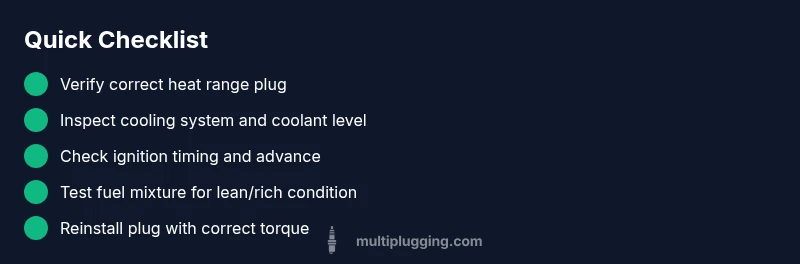
Start with the simplest checks: confirm you are using the correct heat range plug for your engine, inspect the cooling system, and verify ignition timing. If those pass, test fuel quality and air-fuel mixture. If misfires or lean conditions are suspected, use a fuel pressure gauge and a simple air leak test to confirm. After each fix, recheck the plug condition and engine performance to determine if overheating persists. If the problem remains unresolved, escalate to more advanced diagnostics or a professional service.
Fixes you can try now: step-by-step actions
The most common fix for spark plug overheating is to install the correct heat range plug and ensure the cooling system is functioning properly. Replace the plug with the properly rated number and heat range, ensuring proper torque and sealing. If cooling is suspect, service the radiator, thermostat, and water pump, and ensure coolant levels are correct. If ignition timing is misadjusted, adjust according to the manufacturer’s specification. Finally, address lean or rich conditions by inspecting sensors, fuel pressure, and intake leaks. After making any change, perform a controlled test drive and inspect the plug again.
Prevention and maintenance to avoid overheating
Preventative maintenance is the best defense. Use the correct heat range plugs for your engine and climate, and replace them at intervals recommended by the manufacturer. Keep the cooling system in top shape—check coolant level, inspect hoses, test the thermostat, and clean or replace the radiator as needed. Regular oil changes help maintain cooling efficiency by reducing engine heat. Finally, keep ignition timing and sensors calibrated, and use high-quality fuel to prevent abnormal combustion temperatures.
Steps
Estimated time: 60-90 minutes
- 1
Inspect the plug and engine signs
Turn off the engine and remove the spark plug to inspect its insulator and electrode. Look for color changes, glaze, or melting. Note any signs of overheating and document what you see before continuing.
Tip: Take a clear photo of the plug for reference when comparing heat-range charts. - 2
Verify heat range and replace if needed
Check the vehicle’s service manual or OEM specification for the correct heat range. If the installed plug is hotter than recommended for your operating conditions, replace it with the correct one and torque to spec.
Tip: Always use anti-seize or anti-oxidant on new threads if recommended by the manufacturer. - 3
Assess the cooling system
Check coolant level, inspect hoses for leaks, test the thermostat, and confirm water pump operation. Address any blockage or flow restriction that could prevent heat removal from the engine.
Tip: Do not open hot cooling system components; wait for the engine to cool to avoid burns. - 4
Check ignition timing
Using the service manual, verify the timing marks align correctly and that the advance curve is within spec. If timing is too far advanced, adjust per manufacturer guidelines.
Tip: If you don’t have the timing light, consult a professional rather than forcing adjustments. - 5
Test the fuel system and sensors
Scan for codes; test sensor inputs (O2, MAF) and fuel pressure. Correct any lean or rich conditions that could raise combustion temperatures.
Tip: A lean condition is often the culprit; fix leaks and recalibrate sensors if needed. - 6
Reinstall, test drive, and recheck
Reassemble, reconnect components, and perform a controlled test drive. After the run, inspect the plug again to confirm overheating has ceased.
Tip: Document the outcome and plan follow-up checks if conditions recur.
Diagnosis: Spark plug overheats (insulator glaze, white deposits, or melted tip observed after a drive)
Possible Causes
- highWrong heat range plug installed
- highCooling system malfunction (blocked radiator, low coolant, faulty thermostat)
- mediumAdvanced ignition timing or high compression causing higher cylinder temperatures
- lowLean fuel condition due to vacuum leak or sensor issue
Fixes
- easyReplace with correctly rated heat-range plug for the engine
- mediumInspect and repair cooling system components (coolant level, thermostat, radiator, water pump)
- mediumVerify and adjust ignition timing; check mechanical timing and spark advance
- mediumInspect for vacuum leaks and sensor faults; correct air/fuel trim and fuel pressure as needed
FAQ
What are the most common causes of spark plug overheating?
Overheating is typically due to a too-hot heat range plug, cooling system faults, or overly advanced timing. Lean combustion and faulty sensors can also push temps up. Start with heat range and cooling checks, then verify timing and fuel trim.
Common causes are heat range mismatch, cooling problems, and timing issues. Start with those checks to diagnose overheating.
Can using a hotter spark plug cause overheating?
Yes. A plug rated for hotter operation can trap more heat in the tip, raising temperatures and risking pre-ignition. Use the correct heat range for your engine.
Yes. Using a hotter plug can cause overheating; ensure you have the correct heat range.
How can I tell if my spark plug is too hot for my engine?
Look for signs like a glazed or melted insulator and light-colored deposits. Compare the plug color to a recommended reference. If in doubt, consult the manual or a pro.
Signs include melted insulator and light deposits. Compare with manufacturer references or consult a pro.
Should I always replace all spark plugs if one overheats?
Not always. If overheating is caused by heat range or cooling issues, replacing the single overheated plug with the correct one often suffices. However, inspect all plugs for signs of heat damage and replace as needed.
Sometimes one overheated plug is enough, but inspect all plugs and replace any damaged ones.
What role does the cooling system play in plug temperature?
The cooling system carries away heat from the engine and the plug. Problems here raise thermal stress on the plug, increasing overheating risk. Regular cooling system checks help prevent this.
Cooling system removes heat; problems here raise plug temperature and overheating risk.
Is it safe to drive with an overheating spark plug?
Driving with an overheating plug can cause engine damage, misfires, and detonation. Seek a fix promptly and avoid highway trips until the issue is resolved.
No — overheating can damage the engine; fix it before extended driving.
Watch Video
Main Points
- Verify heat range before replacement
- Check cooling system for heat transfer issues
- Inspect ignition timing and sensors
- Address lean/rich conditions affecting combustion temperature
- Test and monitor to prevent recurrence