Why Is My Spark Plug Not Screwing In? A Practical Troubleshooting Guide
Learn how to diagnose and fix a spark plug that won't screw in, including thread checks, anti-seize cautions, proper torque ranges, and safe steps for DIYers.


According to MultiPlugging, a spark plug that won’t screw in is usually caused by dirty or damaged threads, a cross-threaded plug, or debris in the well. Start by cleaning the threads, inspecting for damage, and confirming the correct plug size and torque. If you see stripped threads or a stubborn binding, stop and seek professional head service.
Why a Spark Plug Won't Screw In Happens
When you encounter a spark plug that refuses to thread in, the issue is almost never a mystery for long. Most cases trace back to three culprits: dirty or damaged threads, cross-threading from misalignment, or debris in the plug well. Oil, coolant, or carbon buildup can corrode threads, making bite difficult. The plug itself may be the wrong size or type for your engine, or the cylinder head threads may be worn. In all cases, the goal is to restore clean, true threads and proper alignment before applying torque. According to MultiPlugging, addressing the root cause quickly saves time and prevents costly head repairs. Keep in mind: never force a plug into damaged threads, as that can worsen the damage and create a bigger problem down the line.
What to Check First
Before you touch the spark plug, gather your tools: a torque wrench or spark plug socket with a no-slip handle, a clean brush or thread chaser, automotive solvent, and a clean rag. Begin by inspecting the plug’s threads: are they clean, straight, and free of nicks? Check the cylinder head threads for wear or cross-threading. If you detect oil on the plug or in the well, that’s a sign of valve cover or piston seal issues that should be addressed separately. Finally, confirm you’re using the correct plug type for your engine model and the correct heat range. Starting with the right plug minimizes resistance and the chance of cross-threading.
Cleanliness and Thread Care
Thread cleanliness is the foundation of a successful installation. Use a soft brass brush or a dedicated thread cleaner to remove residue from both the plug threads and the cylinder head threads. Lightly lubricate the new plug threads with a small amount of anti-seize compound only if the manufacturer allows it; some modern plugs are pre-lubed, and applying anti-seize to certain metals can affect torque readings. After cleaning, dry the threads completely to avoid moisture that could cause corrosion. If you notice damaged or rounded threads, don’t force the plug—this is a sign you may need thread repair work.
Torque and Proper Installation Technique
Torque is the key to a secure seal without over-tightening. Hand-thread the plug to ensure it’s aligned with the threads, then finish with a torque wrench to the manufacturer’s specification. If you don’t have the exact spec, consult the vehicle’s service manual or a trusted guide for your engine. Avoid using power tools that can over-torque or slip; a slow, controlled turn is safer for delicate threads. Remember: overtightening can strip threads, while under-tightening can cause gas leaks and poor sealing.
When to Stop and Call a Pro
If the plug binds severely, won’t start by hand, or you feel cross-thread resistance, stop immediately. Forcing the plug risks thread damage or head threads that require helicoil or more extensive repair. In cases of suspected head-thread damage or if you see stripped metal, professional service is the safest route. The cost of a quick professional repair is often lower than the potential head repair from continued DIY attempts. The MultiPlugging team emphasizes knowing when a task is beyond a DIY fix and seeking expert help early.
Prevention and Maintenance Tips
Regular maintenance helps ensure spark plugs thread smoothly in future. Use the correct plug type and gap, keep the well clean during replacement, and inspect threads for wear at each change. When replacing plugs, always follow the service interval and torque spec, and avoid reusing damaged plugs. Drip-free, tidy installations reduce the risk of seizing and cross-threading, saving you time and money in the long run. MultiPlugging’s practical guidance highlights that proactive checks are easier than reacting to a seized plug.
Steps
Estimated time: 45-60 minutes
- 1
Collect tools and safe workspace
Power down the engine, remove the ignition coil pack if needed, and lay out a torque wrench, spark plug socket, thread cleaner, and a clean rag. A stable workspace reduces slips that could damage threads.
Tip: Double-check that the engine is cool before touching wiring. - 2
Inspect the old plug and well
Look for oil, carbon buildup, or corrosion on the threads. Check the cylinder head threads for nicks or wear. If damage is visible, prepare for possible repair rather than forcing installation.
Tip: Use good lighting and a magnifier if you suspect fine thread damage. - 3
Clean and dry the threads
Clean both plug and head threads with a solvent and a brass brush or thread chaser. Ensure the threads are dry and free of debris before attempting to rethread.
Tip: Never apply solvent near hot components; let everything dry completely. - 4
Start by hand, then torque
Gently start threading by hand to ensure alignment. Once it’s seated with minimal resistance, finish with a torque wrench to the recommended spec.
Tip: If you feel binding, back off and realign; forcing can strip threads. - 5
Recheck and test
Reinstall any removed parts, reconnect wiring, and perform a cautious test run. Check for leaks and listen for abnormal sounds that indicate improper seating.
Tip: Turn off the engine before checking torque values visually. - 6
Know when to quit
If the plug still won’t thread, or you notice cross-thread damage, stop and consult a pro. Continued DIY attempts risk expensive repairs.
Tip: Document the issue and seek guidance from a qualified technician.
Diagnosis: Spark plug threads bind or won’t engage, and the plug cannot be threaded by hand.
Possible Causes
- highCross-threading from improper initial turn
- highDirty or damaged threads in plug or head
- mediumDamaged cylinder head threads or worn seating surface
Fixes
- easyClean threads and well, inspect for burrs, and attempt hand-threading with care
- easyRealign and rethread by hand to confirm straight path, then torque to spec
- hardIf threads are damaged, perform professional repair or head/thread helicoil replacement
FAQ
Why won't my spark plug screw in straight?
Straight threading is essential. Misalignment or debris can cause cross-threading, making the plug bind. Clean the threads, inspect for damage, and start threading by hand before torquing to spec.
Straight threading matters. Clean and align, then hand-thread before torquing to ensure proper seating.
Can anti-seize cause over-tightening?
Anti-seize can lower friction, which helps with installation, but over-application or incorrect material can affect torque readings. Follow manufacturer recommendations and use only where approved.
Be careful with anti-seize—use only where recommended and follow torque specs.
What if the head threads are damaged?
Damaged head threads often require professional repair. If a helicoil or insert is needed, a pro should perform it to restore sealing and strength.
Damaged head threads usually need a professional repair or insert.
Should I replace gaskets or O-rings when replacing a plug?
Generally not required for a standard plug change, but inspect surrounding seals for wear. If you see oil leaks or gasket damage, replace as needed.
Usually not, but check seals for wear and replace if necessary.
Is it safe to drive if the plug won’t thread?
No. Forcing a plug can cause further damage; a mis-seated plug can lead to misfire, gas leaks, and head damage. Seek professional diagnosis.
No—do not drive it; get it checked by a pro.
Watch Video
Main Points
- Check threads before forcing the plug in
- Start by hand to avoid cross-threading
- Torque to spec; don’t rely on feel alone
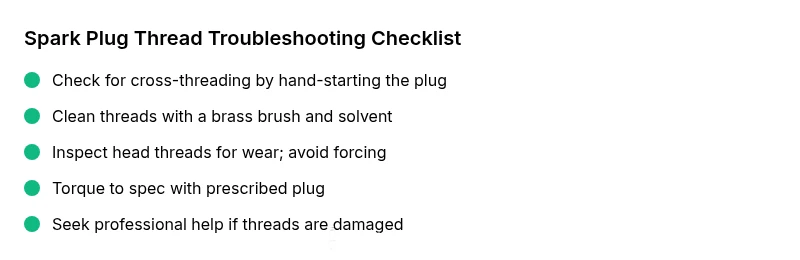
- Stop and seek professional help for damaged threads