What Causes a Spark Plug Not to Spark: Troubleshooting
Discover what causes a spark plug not to spark and how to troubleshoot quickly with clear steps, safety tips, and a diagnostic path to restore ignition.


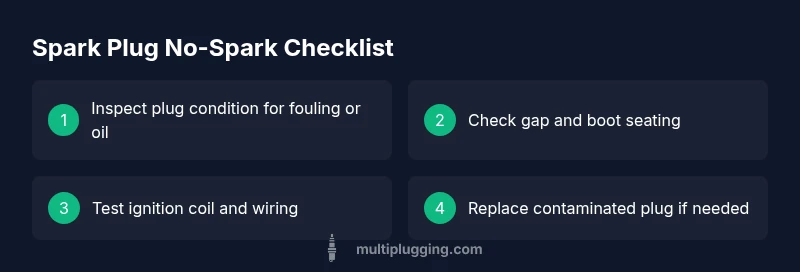
According to MultiPlugging, the most common reason a spark plug won't spark is fouling or contamination, oil intrusion, or a worn electrode. For a quick fix: inspect the plug and boot, clean or replace as needed, verify the gap is within spec, and test for a spark by grounding the plug while cranking. Also check the ignition coil and wiring connections for damage or looseness.
Common causes of a spark plug not sparking
When a spark plug fails to spark, it’s usually due to conditions around the plug itself or the surrounding ignition system. The phrase "what causes a spark plug not to spark" often points to fouling from carbon, oil, or fuel, which creates a conductive film that prevents a strong spark. Worn electrodes, especially on older plugs, reduce gap integrity and spark energy. Incorrect or inconsistent spark plug gap, a damaged plug boot, or a cracked ignition coil wire can also stop the spark. In many DIY scenarios, you’ll find carbon fouling, oil fouling from oil leaks or PCV issues, or fuel washing the electrode are common culprits. By understanding these primary failure modes, you can quickly triage and restore ignition. MultiPlugging’s guidance emphasizes a systematic check to avoid chasing phantom faults.
Common symptoms alongside no spark include a misfire during cold starts, rough idle when the engine should be smooth, or a check engine light appearing in modern vehicles. Early detection helps prevent catalytic converter damage and wasted fuel.
How to inspect a spark plug safely
Inspecting a spark plug begins with safety and a calm, methodical approach. Disconnect the battery only if required by your model to avoid shock risk from high-voltage components. Remove the spark plug boot using an insulated socket, keeping the tool steady to avoid damaging the ceramic insulator. Look for signs of fouling (black crusty deposits), oil coating, or wet fuel residue that indicate contamination. Check the electrode for wear—rounded or eroded tips reduce spark energy. Measure the gap with a feeler gauge and compare to the engine’s recommended spec. If the gap is too wide or too narrow, the spark may fail to jump the gap. Re-gap or replace plugs as needed, ensuring you use the correct heat range and type for your engine. If contamination is suspected, a proper cleaning can help, but replacement is often the most reliable fix. Always reinstall with the boot fully seated and torque the spark plug to spec if your manual requires it.
Differentiating plug problems from ignition system issues
A stubborn no-spark symptom requires you to separate plug problems from ignition system issues. To test the plug vs. coil, perform a spark test using a dedicated spark tester or a high-impedance screwdriver held near a grounded metal surface. If you see a bright blue spark from the tester when cranking, the plug is likely fine and the issue lies in the ignition coil, coil boot, or wiring. If there’s no spark, inspect the ignition coil, primary/secondary windings, and the distributor or coil pack connections. Poor grounding, corroded connectors, and damaged wires can mimic a bad plug. Fuel delivery and compression problems can also mask symptoms; however, these don’t produce spark and should be considered only after ruling out ignition components. Document any patterns, such as intermittent failures at higher engine load, to guide further checks.
Step-by-step fix for the most common cause: fouling
The most frequent fix for a spark plug that won’t spark is cleaning or replacing a fouled plug and rechecking the live ignition path. Begin by removing the plug and inspecting the insulator and electrodes. If you see carbon or oil fouling, clean with a non-residue cleaner and a soft brush, or replace if the deposits are stubborn. If oil contamination is heavy, inspect PCV valves and oil seals for leaks. After cleaning or replacing, re-gap the plug to the manufacturer’s spec and re-install with proper torque. Re-test with a spark tester or by cranking the engine to confirm spark. If the ignition coil or boot shows wear or cracks, replace them to restore the complete circuit. Finally, ensure all wiring harness connections are tight and free of corrosion.
Steps
Estimated time: 40-60 minutes
- 1
Safety check and power disconnect
Turn off the engine and remove the negative battery cable to avoid shock from high-voltage components. Wear insulated gloves and eye protection. This prevents accidental arcing during inspection.
Tip: Always work in a well-ventilated area and keep tools dry. - 2
Remove and inspect spark plug
Use an insulated spark plug socket to remove the plug from the cylinder. Inspect the ceramic insulator for cracks, and note any oil or carbon fouling on the tip and ground electrode.
Tip: Take a photo of the plug for reference and pattern of wear. - 3
Check the plug gap and condition
Measure the electrode gap with a feeler gauge and compare against the manufacturer’s spec. If the gap is off, adjust carefully or replace with the correct heat range and type.
Tip: Don’t bend the electrodes; replace if there’s any deformation. - 4
Test ignition path
Ground the spark plug body on the engine or a metal surface and crank the engine to observe a spark. If no spark, inspect / test the ignition coil, coil boot, and wiring for damage or poor connections.
Tip: If the engine is hard to crank, test with a helper to ensure consistent cranking speed. - 5
Clean or replace
If fouling is light, clean the plug with a brush and solvent, dry completely, and re-gap. If heavy fouling or oil contamination is present, replace the plug with a new one.
Tip: Always use anti-seize sparingly if recommended by the manufacturer. - 6
Reassemble and test
Reinstall the plug to spec torque, reattach the boot, reconnect the battery, and start the engine. Confirm spark with a test or two and monitor for any misfire signs.
Tip: If misfire persists, proceed to test ignition components or seek professional help.
Diagnosis: No spark at the spark plug when cranking
Possible Causes
- highFouling or contamination on the plug (carbon/oil/fuel)
- highWorn or damaged electrode
- mediumIncorrect plug gap or improper torque
- mediumDamaged spark plug boot or wiring
- mediumIgnition coil failure or weak coil connection
- lowMoisture in ignition system
Fixes
- easyInspect and replace fouled or contaminated plug(s)
- easyClean or replace worn electrodes and adjust the gap
- mediumTest and repair ignition coil and wiring connections
- easyDry out moisture and reseat all electrical connections
- easyEnsure proper torque when installing plugs
- easyIf in doubt, consult a professional for ignition system testing
FAQ
What is the first step if my spark plug won't spark?
The first step is a visual inspection for fouling, oil, or oil contamination, followed by cleaning or replacement if needed. Then check the gap and seating of the boot.
Start with a visual check for fouling, then clean or replace the plug and verify the gap and boot seating.
Can a bad ignition coil cause no spark but a good plug?
Yes. A faulty ignition coil or damaged wiring can prevent sparking even if the plug is in good condition. Use a spark tester to isolate the issue.
A bad coil can stop spark even if the plug is fine. Use a tester to isolate the cause.
Is oil on the spark plug always a sign I must replace it?
Oil on a plug often indicates a seal or PCV issue and can foul the plug. Cleaning may not fix underlying leaks, so inspect related gaskets and seals.
Oil on a plug usually means a leak; fix the source and replace the plug if contaminated.
How do I know if the gap is correct?
Check the vehicle’s service manual for the recommended gap and measure with a feeler gauge. Adjust if within tolerance; if you’re unsure, replace with a plug that matches spec.
Compare the gap to the spec in your manual and adjust or replace as needed.
When should I seek professional help?
If you’ve tested spark and coil with no resolution, or if you notice persistent electrical corrosion, it’s wise to consult a mechanic to avoid further damage.
If simple checks don’t restore spark, get a professional to prevent further damage.
What maintenance prevents no-spark problems?
Regularly replace spark plugs at manufacturer intervals, keep ignition components dry and clean, and address oil leaks and PCV issues early to reduce fouling.
Regular maintenance prevents most no-spark issues.
Watch Video
Main Points
- Start with visual inspection of the plug and boot.
- Fouling and wear are the leading no-spark causes.
- Verify gap and torque to spec; replace if contaminated.
- Test the ignition path before replacing components.