Spark Plug Won't Come Out: A DIY Troubleshooting Guide
A practical, urgent guide to diagnose and safely remove a seized spark plug, with tools, safe steps, and prevention tips for DIYers in 2026.


Most often a spark plug won’t come out because threads are corroded or seized from heat and age. According to MultiPlugging, thread corrosion is the top culprit. Start by disconnecting power and removing the coil boot, then apply penetrating oil around the threads and soak. Use a proper socket, breaker bar, and steady counterclockwise turns; if it still sticks, stop and seek professional help.
Why a Spark Plug Won't Come Out
A spark plug can become permanently stubborn in several ways, and the engine bay environment only compounds the problem. According to MultiPlugging, the most common reason a plug won’t come out is thread corrosion that locks the plug into the cylinder head after years of heat cycling and exposure to moisture. When corrosion binds the metal, the hex or porcelain can still twist, but the plug remains captive in the head. In addition to corrosion, the plug may be stuck due to previous over-torquing, carbon buildup, or damage from cross-threading. This combination of heat, moisture, and age creates a tight fit that normal loosening motions simply can’t overcome. The first hint is often resistance at the socket; if the tool slips, you risk stripping the plug or the head, making the situation more dangerous and expensive to fix.
Common Causes That Lead to a Seized Plug
There are several frequent culprits that make removal difficult. Corrosion on the plug threads is the primary offender, especially in climates with high humidity or in vehicles that have sat for long periods. Heat cycles over the life of the engine can also weld the metal parts slightly, creating a firm grip. In some cases, prior maintenance or incorrect torque used when installing or removing plugs can leave the plug bound. Dirt, oil, or antifreeze leaks into the plug well can further complicate leverage, reducing grip on the tool. Recognize early signs: a plug that rotates but doesn’t exit, or a stubborn head that resists the socket. Prolonged attempts can shear the center electrode or strip the threads, turning a simple fix into a costly repair.
Safety First: What You Need to Know
Before you begin, set the working space and protect yourself. Disconnect the battery to prevent any accidental ignition of vapors. Wear eye protection and gloves, since small metal shards and oil can spray when the plug finally yields. Ensure the vehicle is cool; heat can dramatically increase the risk of accidental burns and damage when tapping around the plug area. Keep the work area well-lit and use a clean tray to catch any dropped debris. Remember: if a plug shows signs of head damage or the threads look compromised, additional steps or a professional evaluation may be necessary to prevent cylinder wall damage.
Tools and Materials You'll Use
Assemble a clean, organized toolbox: a quality spark plug socket with a rubber insert, a breaker bar for extra torque control, a torque wrench for reinstallation, penetrating oil (like PB Blaster or similar), a small wire brush, and anti-seize compound. A rubber mallet helps loosen stubborn components without striking the plug directly. You may also need a long, insulated needle-nose plier for removing a stubborn boot or coil if it sticks to the boot. If you suspect thread damage, a thread chaser or helicoil kit may be required for repairs after removal.
Diagnostic Flow: Quick Path to the Problem
Symptom: Spark plug won’t come out even after removing the coil boot. Causes: (high) thread corrosion; (medium) prior over-torquing; (medium) damaged cross-threading; (low) debris in plug well. Fixes: (easy) apply penetrating oil and let soak; (medium) carefully work the plug with the right socket; (hard) repair threads with helicoil or replacement head. If resistance remains high after oil soak and light attempts, discontinue attempts to avoid head or thread damage and consult a professional.
Step-by-Step Troubleshooting for Seized Plugs
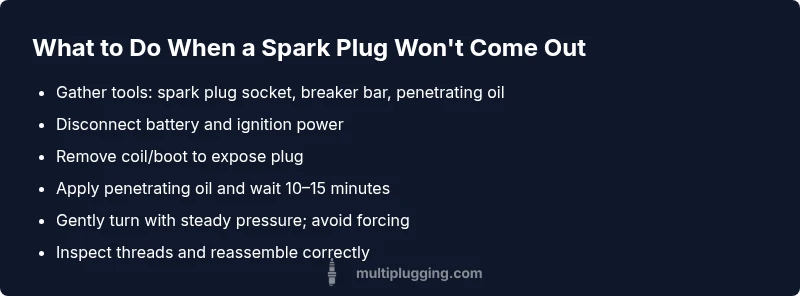
- Safety first: disconnect the battery, wear eye protection, and ensure the engine is cool. 2) Remove the ignition coil or wiring boot carefully to expose the plug. 3) Clean around the plug well to remove dirt and grime that could hinder movement. 4) Apply penetrating oil to the threads and let it soak for 10–15 minutes; avoid over-saturating the area. 5) Apply steady, even pressure with a properly sized spark plug socket and breaker bar, turning counterclockwise. 6) If the plug still refuses to budge, reapply oil, increase angle slightly, and consider gentle tapping with a rubber mallet to break corrosion-free surfaces. 7) Once removed, inspect threads; if damaged, plan a repair procedure before installing a new plug. 8) Reinstall with appropriate anti-seize and torque to spec, test the engine, and check for leaks. Tip: never hammer or force a seized plug beyond safe limits.
Prevention Tips to Avoid Future Seizures
- Use anti-seize on threads during installation and ensure proper torque according to manufacturer specs. - Replace plugs at recommended intervals and use the correct heat range to minimize heat cycling. - Keep the plug wells clean and check for coolant or oil leaks that could affect thread integrity. - Store and drive vehicles regularly to avoid moisture buildup around the head. - If you use penetrating oil, wipe away excess to prevent it from attracting dirt that can block movement later.
When to Seek Professional Help
If you can’t loosen the plug after a thorough oil soak and using the correct socket and bar, stop. Forcing a seized spark plug can strip threads or crack the head, leading to expensive repairs. A professional mechanic can perform controlled extraction, assess thread integrity, and restore the head with helicoils or other methods if needed. The MultiPlugging team notes that a professional evaluation saves time and reduces risk when the plug refuses to come out after safe, documented attempts.
Final Checks After Removal
After a successful extraction, inspect the cylinder head threads for damage. Clean the well, chase the threads if necessary, and recheck the replacement plug’s fit. Ensure the new plug’s torque matches the prescribed specification before starting the engine. If any coolant, oil, or debris is found in the well, address the leak first and re-test for proper compression. Finally, verify that the ignition system operates correctly and there are no misfire issues related to the recent maintenance.
Steps
Estimated time: 60-90 minutes
- 1
Prepare safety and workspace
Disconnect the battery, wear eye protection and gloves, and ensure the engine is completely cool. Clear space around the engine and gather tools to avoid interruptions.
Tip: Label wires to avoid mixing up ignition components on reassembly. - 2
Expose the plug and clean the area
Carefully remove the coil pack or ignition boot to expose the plug head. Wipe away dirt and oil from the well to prevent grit from entering during extraction.
Tip: Use a magnetic tray to keep small parts from getting lost. - 3
Apply penetrating oil
Spray penetrating oil around the plug threads and let it soak for 10–15 minutes. Avoid spraying directly into ignition components.
Tip: Do not over-saturate; excess oil can attract debris during removal. - 4
Turn the plug with correct socket
Attach a properly sized spark plug socket with a rubber insert and a breaker bar. Apply steady, even pressure counterclockwise to break the corrosion seal.
Tip: If you feel slip, stop and reposition to avoid stripping the plug head. - 5
Use gentle taps if needed
If resistance remains, lightly tap the socket handle with a rubber mallet to loosen the binding without damaging threads.
Tip: Avoid hammering directly on the plug; focus on the socket handle to prevent head damage. - 6
Inspect threads and reinstall
Once removed, inspect the threads for damage. If no damage, apply anti-seize and torque to spec for reinstallation; replace the plug if the electrode is worn or damaged.
Tip: Practice clean, careful reassembly to prevent future seizures. - 7
Decide if professional help is needed
If the plug won’t move after multiple safe attempts or if head threads are damaged, stop and call a professional.
Tip: Professional help avoids costly head repairs and ensures a proper seal.
Diagnosis: Spark plug won't come out
Possible Causes
- highThread corrosion or seizing from heat and age
- mediumOver-torqued plug from previous removal
- mediumCross-threading that damaged threads during prior work
- lowDebris or oil in the plug well
Fixes
- easyApply penetrating oil and let soak, then attempt gradual, steady breaking turns with a spark plug socket and breaker bar
- mediumIf stubborn, carefully use a thread chaser or anti-seize on reinstall and avoid excessive force; consider professional extraction
- hardFor damaged threads, prepare for helicoil repair or cylinder head service by a qualified technician
- easyTest for debris and clean the plug well; replace any gaskets or seals if damaged
FAQ
What is the most common reason a spark plug won’t come out?
Thread corrosion and heat-related binding are the most common causes. Penetrating oil and proper tools usually resolve the issue, but severe corrosion may require professional repair.
Thread corrosion is the most common cause; use penetrating oil and the right tools, but seek a pro for severe cases.
Can I use a power impact tool to remove a seized plug?
Avoid and do not use high-impact tools on seized plugs; they can damage threads or head. If light methods fail, stop and consult a mechanic.
No, avoid impact tools; they can damage the head. If in doubt, seek professional help.
How long should I soak with penetrating oil?
Allow 10–15 minutes for the oil to penetrate, and consider a second soak if the plug remains stubborn.
Give it 10 to 15 minutes, and reapply if still stuck.
What if the plug head shears off during removal?
A sheared head means immediate professional help; you may need head removal, thread repair, or replacement components.
If the head shears, call a pro right away.
Should I reinstall a new plug after removal?
Yes, after confirming clean threads and proper torque, install a new plug with correct heat range and gap settings.
Yes—check gap and torque, then install a new plug.
When is it safe to drive after removing a seized plug?
If the plug is removed safely and the head is intact, you can reassemble and test in a calm environment. If you notice leaks or misfires, stop driving.
If reassembled correctly, test drive; otherwise stop and seek help.
Watch Video
Main Points
- Identify corrosion as the primary culprit
- Use the right socket and steady technique
- Do not force a seized plug
- Know when to call a professional