What to Do When Spark Plug Won’t Come Out
Learn safe, practical steps to free a seized spark plug that won’t come out, plus prevention tips to protect threads and engine health. A practical MultiPlugging troubleshooting guide for DIY enthusiasts.


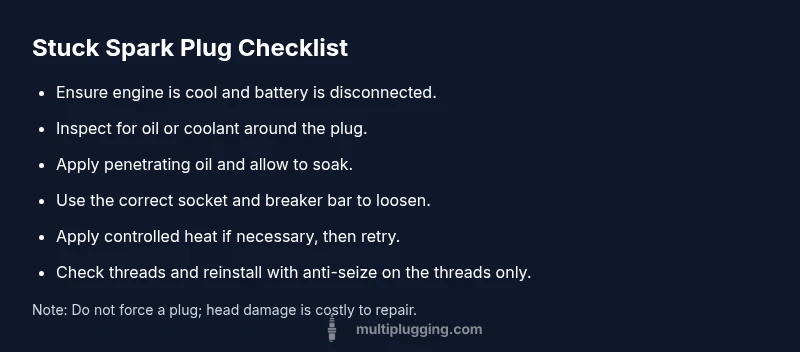
Most likely a seized plug won’t come out due to corrosion or thread galling. Apply penetrating oil, let it soak, then use a proper socket with a breaker bar to loosen. If it still sticks, stop to avoid head damage and seek professional help.
Understanding the Problem: Why Spark Plugs Seize
If you’re faced with a spark plug that won’t come out, you’re not alone. According to MultiPlugging, seized plugs are a common DIY headache. The underlying issue is usually a combination of heat, moisture, and corrosion that locks the threads in place over time. The three most frequent culprits are corrosion-induced seizure, thread galling from improper torque, and contamination on the threads from oil, fuel, or coolant leaks.
- Corrosion and heat: Repeated heating and cooling cycles drive metals apart and invite rust, which welds the plug to the head.
- Thread galling or cross-threading: When the plug is installed or removed at an angle or with improper tools, the threads can seize and binding occurs.
- Contamination: Oil, fuel, or coolant on the threads acts like a glue, increasing friction and making extraction difficult.
Safety note: Never yank or twist with brute force. A forced movement can strip the threads, crack the head, or push the plug deeper, potentially dropping debris into the combustion chamber.
Tools and Safety Essentials
Before you touch the plug, assemble a small toolkit and review safety basics. Wear eye protection and gloves, and ensure the engine is cool and the battery disconnected. You’ll want: penetrating oil (PB Blaster, Liquid Wrench), a quality spark plug socket with a rubber insert, a torque wrench (optional for reinstallation), a breaker bar for extra leverage, and anti-seize compound for future installs. Also keep clean rags handy and a flashlight to inspect the plug area. Always operate in a well-ventilated space and avoid ignition sources near the engine.
Diagnostic Flow: From Quick Checks to Dirty Details
Start with the simplest checks and move to deeper fixes.
- Confirm engine is completely cool and the ignition system is de-energized.
- Visually inspect the plug area for grease, oil, coolant leaks, or obvious damage to the plug or head.
- Clean around the base with compressed air to prevent debris from falling into the cylinder.
- Apply penetrating oil at the base and threads; allow 10–15 minutes for penetration.
- Fit a spark plug socket and breaker bar; apply steady, even pressure to loosen. If resistance remains, stop and reassess.
- If feasible, apply controlled heat to the surrounding head (not directly on the plug) to expand the metal slightly, then try again. If the plug still won’t budge, don’t force it—seek professional help to avoid thread damage.
Most Common Causes and Immediate Fixes
The top reasons a spark plug won’t come out are corrosion/seizure and thread galling. Corrosion forms during heat cycles and moisture exposure; galling occurs when torque is applied improperly, causing the threads to bind. Immediate fixes include applying penetrating oil, letting it soak, and using a breaker bar with a proper spark plug socket. If the plug remains stuck, consider heating the surrounding head carefully and checking for cross-threading, which may require thread cleaning or professional extraction.
Deep Dive: When Quick Fixes Fail
If penetrating oil and gentle leverage fail, the plug head may be truly seized. In this case, you must avoid aggressive twisting that can strip threads or snap the plug. A cautious approach is to apply heat around the plug hole to lengthen and loosen the surrounding metal, then reapply oil and attempt again with a longer breaker bar. If you see chrome flaking, exposed threads, or the plug still won’t move after repeated attempts, stop and arrange professional assistance to prevent cylinder damage.
Step-by-Step Actions You Can Try Now
- Verify safety: engine cool, battery disconnected, gloves and eye protection on.
- Clean the area: remove obvious soot and debris around the plug with a brush; blow out with compressed air.
- Apply penetrating oil: spray around the base and threads; let sit 10–15 minutes.
- Loosen with the right tool: attach a spark plug socket, extension, and breaker bar; apply steady torque, not a sharp twist.
- If it binds, apply controlled heat to the surrounding head using a propane torch for a short, controlled burst while monitoring for discoloration.
- Reassess and attempt again: if the plug starts to loosen, continue gradually; if not, stop and seek professional help.
- Inspect the threads after removal: clean them and decide if replacement is needed; rethread or replace the head if damage is detected.
- Replace with anti-seize on the new plug’s threads and torque to spec to prevent future sticking.
tip1":"Always use a torque wrench when reinstalling plugs to avoid over-tightening.",
tip2":"Keep a log of oil or coolant leaks around the plug area—these can foreshadow future sticking.
tip3":"If you hear grinding or see metal shaving, stop immediately to avoid head damage and seek pro help.",
tip4":"Never hammer, pry, or twist wildly on a stubborn plug; it risks breaking the plug or damaging threads."],
Steps
Estimated time: 60-120 minutes
- 1
Prepare and safety
Ensure the engine is cool, disconnect the negative battery, and don eye protection. Gather your tools and double-check room to work.
Tip: Wear safety gear and verify no risk of electric shock. - 2
Inspect the area
Look for oil or coolant around the plug, check for cracks in the head, and clean the area to prevent debris from entering the cylinder.
Tip: A clear work area reduces the chance of accidental damage. - 3
Apply penetrating oil
Spray around the base and threads thoroughly. Allow 10–15 minutes for it to penetrate rust and corrosion.
Tip: Use a penetrating oil with a long soak time for better results. - 4
Loosen with proper tool
Attach a quality spark plug socket with rubber insert, plus extension and breaker bar. Apply steady torque—no twisting bursts.
Tip: Keep the tool straight to avoid bending the plug. - 5
Apply heat if needed
If resistance remains, apply controlled heat to the surrounding head area (not the plug tip) in short bursts to expand metal.
Tip: Avoid overheating the head; monitor color changes and stop if you see discoloration. - 6
Reattempt and assess
Attempt another gentle twist with the breaker bar. If the plug begins to loosen, continue slowly until fully free.
Tip: If it still won’t budge, stop and seek professional help. - 7
Inspect threads and reinstall
Examine the threads for damage; clean and re-torque a new plug with anti-seize on the threads. Reinstall carefully.
Tip: Use the correct torque specification for your engine. - 8
Test the engine
Reconnect the battery, start the engine, and check for normal operation and any leaks around the plug area.
Tip: Listen for misfires or unusual noises after replacement.
Diagnosis: Spark plug won’t come out
Possible Causes
- highCorrosion and heat-induced seizure
- mediumThread galling or cross-threading
- lowContamination on threads (oil, fuel, coolant)
Fixes
- easyApply penetrating oil around base and threads; allow 10–15 minutes to soak.
- easyLoosen with a proper spark plug socket and breaker bar; use steady, even force.
- mediumIf still stuck, apply controlled heat to the surrounding head and reattempt.
- hardIf the plug remains immovable, avoid forcing it; seek professional extraction to prevent head damage.
FAQ
Why does a spark plug seize and how can I prevent it?
Seizure happens from corrosion, heat cycles, and improper torque. Prevent by using anti-seize on reinstall, using proper torque, and keeping threads clean and dry.
Seizure happens from heat and corrosion. Prevent it by proper torque and clean threads.
Can I remove a seized spark plug without removing the cylinder head?
In some engines you can access the plug from the top without removing the head, but many require head access or service. If you’re unsure, consult a repair guide for your engine.
Sometimes you can access it from above, but many engines need head work.
What should I do if the plug tip breaks off in the cylinder?
Do not push or pry the broken piece into the cylinder. Stop and have a pro retrieve the fragment with appropriate tools, as it can cause piston damage.
Avoid pushing the piece deeper; a professional may recover it without engine damage.
Is applying heat around the head safe for stuck plugs?
Controlled heat can help, but you must avoid overheating the aluminum head and plug tip. Use short bursts and monitor color changes.
Heat can help, but don’t overdo it or you risk head damage.
What socket size do I need for most spark plugs?
Most common spark plugs use a 5/8 inch or 13/16 inch socket with a rubber insert. Check your plug type to confirm.
Commonly 5/8 or 13/16 inch sockets, but verify your plug size.
Watch Video
Main Points
- Start with penetrating oil and light leverage.
- Avoid forcing a seized plug to protect threads.
- Use the right tools for safe loosening and reinstall.
- If in doubt, seek professional help to prevent engine damage.