Why Is My Spark Plug Not Coming Out? Troubleshooting Guide
Urgent, practical troubleshooting guide to diagnose and safely remove a stubborn spark plug, with a clear diagnostic flow, step-by-step removal process, safety tips, and prevention strategies for DIY enthusiasts.


The seizure is most likely caused by corrosion or thread damage. Start with penetrating oil, then apply steady, controlled torque using a spark plug socket and breaker bar. If it still won’t budge, stop and seek professional help to avoid head damage.
Why Spark Plugs Get Stuck
When you wonder why is my spark plug not coming out, the answer usually involves corrosion and thread damage. Most stuck plugs result from years of heat cycling, moisture, and tiny deposits that weld the metal to the head. Even when the visible portion looks intact, the threads inside the hole can become galling or cross-threaded, especially if the plug was installed with excessive torque in the past. Oil leaks or carbon buildup can also act like glue, binding the plug to the seat. On some engines, the ceramic insulator can crack under stress, increasing friction as you twist the plug out. The combination of heat, friction, and misalignment is why a plug can feel frozen, even when it’s turning. Understanding these causes helps you choose the right next steps instead of forcing the plug and risking head damage.
What You Need Before You Start
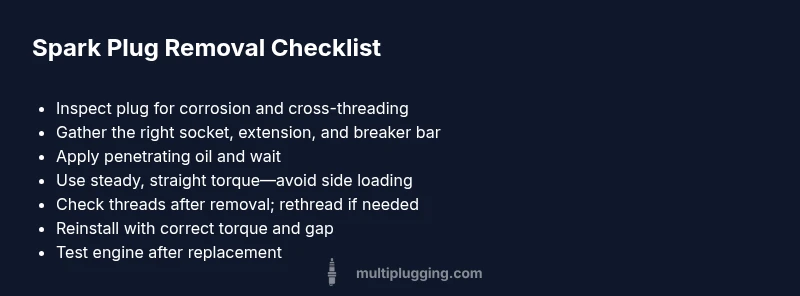
Before you attack a stubborn spark plug, gather the right tools and set safety expectations. You’ll want a quality spark plug socket with a rubber insert, a corresponding extension, and a breaker bar or torque wrench for controlled leverage. Have penetrating oil or rust penetrant on hand, plus heat-resistant gloves and eye protection. A soft mallet is sometimes helpful to gently seat the socket, but never strike the plug directly. Clean rags, degreaser, and a flashlight make inspection easier. If the plug is in a very tight or awkward spot, you may also need a wobble or universal joint to reach at the right angle. Finally, verify you have the replacement plug ready and note the manufacturer’s torque specification to avoid future seizing.
Quick Diagnostic Flow (Symptom to Diagnosis)
Note: This block outlines a logical approach but the dedicated diagnostic flow block below formalizes the steps. Start with the simplest explanations and progress to more involved checks.
- Symptom: The plug feels stubborn or won’t turn, or it starts to turn but then binds.
- Likely causes: corrosion/galling, cross-threading, or oil/carbon binding.
- Early checks: ensure battery is disconnected, engine cool, and you have the correct socket; inspect the plug from the top for visible damage.
- Early fixes: apply penetrating oil, allow time to soak, and reattempt with steady torque using a proper socket.
- When to stop: if you hear cracking or see chrome plating flake, stop to avoid head damage.
- Next steps: determine if threads are damaged; if so, professional extraction or head service may be required.
Step-by-Step: Safe Removal Process
This section provides a practical, safety-first approach to remove a stuck spark plug without harming the head or threads. Follow in order and pause if anything feels unsafe. If the plug remains firmly seized after thorough attempts, do not force it.
What If It Still Won’t Budge? Advanced Options
If standard lubrication and gentle torque fail, you’re approaching limits of DIY removal. Consider these non-destructive options first: reapply lubricant and let it soak longer; try a longer breaker bar with very slow, steady turns; use a heat source around the head carefully to expand metal slightly and reduce binding—but never heat the plug directly. If there is any sign of head damage or the plug begins to shear, stop immediately and consult a professional. In many cases, seized plugs require specialized extraction tools or head removal.
Prevention: How to Avoid Seizing Spark Plugs
Prevention saves time and money. Always use the correct torque specification for your engine, apply anti-seize on new plugs where appropriate, and avoid reusing old plugs in engines that are subject to high heat. Use the proper heat range and avoid overtightening during installation. Regular maintenance and timely replacement with the correct gap will reduce future seizing events. Keeping the threads clean and dry during installation also helps.
Safety Tips and Common Mistakes to Avoid
Safety comes first. Wear eye protection and gloves; disconnect the battery; work in a well-ventilated, cool environment. Common mistakes include using the wrong socket size, striking the plug with metal tools, and applying force on an already damaged thread. Never use blunt force, chisels, or makeshift tools on the plug area. If you’re unsure, stepping back and seeking guidance from a professional is wiser than risking engine damage.
Final Checklist Before Replacing
Before you reinstall or replace the plug, verify the head surface is clean and dry, the threads are intact, and the new plug is the correct type and gap. Confirm the ignition coil or boot is seated properly to avoid misfire after installation. Re-torque the plug to spec, install the boot securely, reconnect the battery, and perform a cautious start to observe for abnormal sounds or leaks. A quick test drive can reveal any lingering issues, ensuring the engine runs smoothly after the fix.
Steps
Estimated time: 60-90 minutes
- 1
Power down and prep
Turn off the engine, remove the key, and disconnect the negative battery cable. Put on eye protection and gloves before touching any engine components.
Tip: Double-check you’re working on the correct cylinder and have the right plug type. - 2
Expose the plug area
Disconnect the ignition coil/plug wire and clear debris around the plug. Wipe away oil or grime to prevent slipping when you place the socket.
Tip: Take a photo of the plug routing before removing to reassemble correctly. - 3
Apply penetrating oil
Spray around the base of the plug and let it soak. Avoid oversaturation; a light, even coat works best.
Tip: Wait 5–15 minutes or longer if buildup is heavy. - 4
Attach the right tool
Fit a high-quality spark plug socket with a rubber insert, attach a short extension if needed, and prepare a breaker bar for controlled torque.
Tip: Ensure the socket is fully seated and straight to prevent thread damage. - 5
Apply steady torque
Turn slowly with a smooth, continuous motion. If the plug begins to move, stop intermittently to monitor progress and prevent twisting off the head.
Tip: Use a torque wrench to avoid over- or under-tightening on reinstallation. - 6
Reassess and avoid force
If you hear binding, stop and reassess. For stubborn plugs, additional soaking or alternative extraction methods should be considered by a pro.
Tip: Never torque beyond the plug’s resistance; the risk of head damage is high. - 7
Inspect and replace
After removal, inspect threads for damage. If needed, repair threads or replace the head assembly before installing a new plug.
Tip: Keep new plugs clean and gap them to spec before installation.
Diagnosis: Spark plug won't come out or binds after initial turning attempts
Possible Causes
- highThread corrosion or galling from heat cycling
- mediumCross-threading or damaged plug threads in the cylinder head
- lowOil or carbon fouling binding the plug
Fixes
- easyApply penetrating oil around the base and allow it to soak 5–15 minutes, then reattempt with steady torque
- easyUse the proper spark plug socket with a breaker bar to apply controlled torque; avoid twisting at odd angles
- mediumIf movement remains minimal or resistance increases, stop to avoid head damage and seek professional extraction
- hardIf threads appear damaged, you may require thread repair or cylinder-head service by a professional
FAQ
Why won’t penetrating oil free a seized spark plug?
Penetrating oil helps when corrosion or galling binds the threads. If it doesn’t free within reasonable soaking time, forcing the plug can cause head damage. In stubborn cases, a professional extraction may be required.
Penetrating oil helps, but if it doesn’t free after soaking, don’t force it—professional extraction may be needed.
Can I remove a spark plug while the engine is hot?
No. Heat loosens metal unpredictably and can cause burns or sudden failure. Wait until the engine is cool before attempting removal.
Wait until the engine is cool before trying to remove the plug.
What tools do I absolutely need to remove a stuck plug?
A spark plug socket with a rubber insert, a suitable extension, and a breaker bar or torque wrench. Penetrating oil and safety gear are also essential.
You’ll need a spark plug socket, extension, breaker bar, and oil for lubrication.
What if the plug head is damaged after attempts?
If the head or threads show damage, do not force further. A professional may need to extract or repair the head and rethread the hole.
If you damage the head, stop and get a pro to fix the threads.
Is using an impact wrench ever safe on stuck plugs?
Impact tools can damage threads and gaskets. Avoid them for sticking spark plugs; rely on controlled torque and proper lubrication instead.
No—avoid impact wrenches on stuck plugs; use controlled torque.
Watch Video
Main Points
- Identify corrosion and thread issues before forcing removal
- Use penetrating oil and the correct tools for safe removal
- Avoid forcing the plug; preserve head integrity and threads
- Prevent future seizing with proper torque and maintenance