What to Do When the Glow Plug Light Comes On
Urgent, practical guide for diesel owners: interpret the glow plug light, perform safe quick checks, understand common causes, and know when to seek professional help.


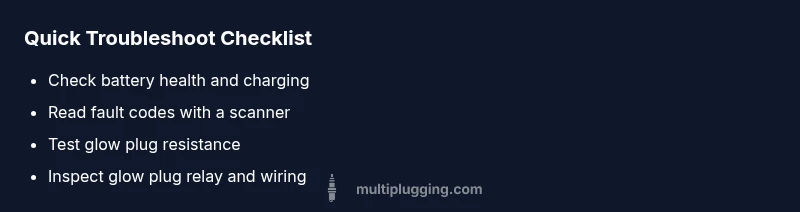
Most often, the glow plug light signals a glow plug circuit fault or sensor issue in a diesel engine. Start with safety, then check the battery and charging system, followed by the glow plug relay. If the light persists, use a diagnostic scanner to read fault codes and guide the next steps.
What the glow plug light means for diesel engines
Diesel engines rely on glow plugs to heat the combustion chamber for reliable cold starts. When the glow plug light on the dash illuminates, it usually signals an electrical fault in the glow plug circuit, a sensor reading, or a relay/control module issue. According to MultiPlugging, the root cause is most often an electrical fault rather than a single glow plug element failing completely, though both can occur. Diagnosing the issue requires a systematic approach rather than guessing. In all cases, safety first: park on a flat surface, turn off the engine, and let components cool before touching anything. Use a diagnostic tool to pull fault codes and start with the simplest checks before moving to component tests. Understanding the system helps you decide whether you can DIY safely or if you should seek a diesel technician.
Immediate safety steps if the light comes on
Don’t panic, but don’t ignore it either. If you’re driving, ease off the accelerator and avoid long cranks or heavy acceleration while the light is on. Pull over in a safe location if you notice rough starting, misfiring, increased exhaust smoke, or a battery warning alongside the glow plug light. Turn off accessories, engage hazard lights, and perform a quick safety check: ensure the engine is cool, the parking brake is set, and you have a way to contact assistance if needed. If you’re in cold weather, be mindful that starting may be harder and repeated cranking can drain the battery. Never disconnect electrical connectors while the system is powered.
Common causes behind glow plug light illumination
- Faulty glow plug(s) or degraded heating element: Over time, the plugs can wear out and fail to heat effectively, triggering the light.
- Faulty relay or control module: The relay or engine management module may fail to energize the plugs at the right time.
- Low battery voltage or failing alternator: A weak electrical supply can prevent proper glow plug operation, even if individual plugs are fine.
- Wiring issues or loose connections: Corrosion or damaged insulation in the glow plug harness can create intermittent faults that light the warning.
- Faulty sensor input or PCM fault: A faulty sensor can report a false fault condition, lighting the glow plug warning even when plugs are healthy.
DIY checks you can perform before calling a mechanic
- Check battery voltage and the charging system with a multimeter. A healthy battery should show about 12.6 volts with the engine off and 13.7-14.7 volts while the engine is running.
- Inspect obvious wiring and connectors around the glow plug harness for corrosion, looseness, or damaged insulation. Look for frayed wires or burnt smells.
- Look for blown fuses related to the glow plug circuit and the engine management system.
- If you have a diagnostic scanner, pull fault codes and note any PLOG or related codes; these codes guide which circuit is at fault.
- Keep the glow plug harness dry and clean; moisture can cause intermittent faults. If you find a damaged connector, consider resealing and protecting it.
Diagnostic flow: symptom → diagnosis → solutions workflow
Symptom: Glow plug light appears during or after a cold start or intermittently at idle Possible causes:
- Glow plug circuit problem (high likelihood)
- Relay/control module issue (high)
- Battery/charging issue (medium)
- Wiring/connector fault (medium)
If the light is steady, start with battery and relay checks; if it’s intermittent, pay close attention to wiring harness connections. For each cause, apply fixes in order of likelihood, starting with the simplest checks. If a fix doesn’t resolve the warning, proceed to the next probable cause and retest. Always clear codes after repair and re-test to confirm the system is healthy.
How testing guides the fix (most common scenario)
When the glow plug light persists after basic checks, technicians typically verify battery health and perform an electrical system scan. They test glow plug resistance on a cylinder-by-cylinder basis, inspect the relay coil and the control module, and evaluate the wiring harness for damage or corrosion. Replacing the failed glow plug(s) or the relay usually resolves the fault. After any repair, the codes should be cleared and the system retested with a normal cold-start cycle to confirm the fix. If the problem recurs, further diagnostics, including a possible harness replacement, may be required.
Safety, maintenance, and prevention tips
- Regularly test the battery and ensure the charging system is healthy; a strong electrical supply improves glow plug performance.
- Inspect the glow plug harness for wear and corrosion at least once a year, and repair any damaged wiring promptly.
- Use high-quality fuel and treat water separators if your diesel has them; fuel quality can influence starting reliability.
- Store the vehicle in a dry, sheltered area to minimize moisture intrusion into connectors.
- When replacing glow plugs, use manufacturer-recommended parts and proper torque specifications; mis-torqued plugs can crack the cylinder head or cause poor heating.
- Keep a dedicated diagnostic scanner in the toolbox; this helps you verify fixes and avoid guesswork.
When to seek professional help and expected costs
If the light remains on after you have completed the basic checks, or if you notice hard starts, rough running, or excessive exhaust after starting, schedule a professional diagnostic with a diesel technician. A shop will typically test glow plugs, relay, wiring, and the control module, and may replace the faulty unit or the entire harness. Prices vary widely by vehicle and region, and the final bill includes parts and labor; plan for a range rather than a fixed amount. A thorough test drive after repair confirms the fix and helps prevent recurrence.
Steps
Estimated time: 60-120 minutes
- 1
Prepare safety and tools
Park on a flat surface, switch off the engine, and wait for components to cool. Gather a multimeter, diagnostic scanner, basic hand tools, gloves, and eye protection. Safety first ensures you can work confidently without accidental burns or electrical shocks.
Tip: If the engine is hot, wait until it’s cool to avoid burns. - 2
Check battery and charging system
Measure battery voltage with the engine off (about 12.6V is healthy). Start the engine and check charging voltage (13.7-14.7V is typical). A weak battery or bad alternator can trigger glow plug warnings even when plugs are fine.
Tip: A failing alternator will often show a rising or fluctuating voltage. - 3
Read fault codes with a scanner
Connect a diesel-compatible scanner and pull fault codes related to glow plug circuits (PLOG codes). Record codes and cross-check which component is implicated. Codes guide the next exact test steps.
Tip: Note whether codes are persistent or intermittent. - 4
Inspect glow plug harness and connectors
Visually inspect the wiring harness for corrosion, loose pins, or damaged insulation. Wiggle test connectors gently to check for intermittent faults. Moisture or oil contamination should be cleaned and resealed.
Tip: Protect exposed wiring with dielectric grease after cleaning. - 5
Test glow plug resistance
Use an ohmmeter to test each glow plug’s resistance. A plug with abnormally high resistance or open circuit indicates failure and replacement is needed. Do not rely on visual inspection alone.
Tip: Test one at a time to avoid mismatched readings. - 6
Evaluate the relay and control module
Relay contacts should energize when commanded; a weak coil or failing control module can fail to energize plugs. Replace the faulty relay/module if resistance tests on plugs are good.
Tip: Keep a spare relay of the correct amperage rating on hand for emergencies. - 7
Replace faulty components
Install new glow plugs or the relay as indicated by tests. Follow manufacturer torque specs and use anti-seize as recommended. Reconnect all wiring and perform a post-repair safety check.
Tip: Torque to spec to avoid cracked heads or burned threads. - 8
Clear codes and verify with a cold start
Clear all fault codes with the scanner. Start the engine from a cold state and observe whether the glow plug light behaves normally. If it reappears, re-run targeted tests to locate remaining faults.
Tip: Document results for future reference. - 9
Road test and final verification
Take a short drive and then re-check for any warning lights. Confirm starting performance in typical operating temperatures. If issues persist, escalate to a diesel specialist.
Tip: A test drive helps confirm the fix beyond the bench tests.
Diagnosis: Dashboard glow plug light comes on during cold start or intermittently while driving
Possible Causes
- highFaulty glow plug(s) or degraded heating element
- highFaulty glow plug relay or control module
- mediumLow battery voltage or failing alternator
- mediumDamaged wiring or loose connections in the glow plug circuit
Fixes
- hardTest glow plugs with proper equipment and replace failed units
- mediumReplace glow plug relay or control module
- easyCharge or replace the battery and verify charging system
- easyInspect and repair wiring/connectors for corrosion or damage
- easyClear fault codes after repair and re-test
FAQ
What does the glow plug light indicate on a diesel engine?
The glow plug light signals issues in the glow plug circuit, relay, or control module rather than the plug elements themselves. It often points to an electrical fault that can affect cold starts. A proper diagnosis requires checking power, connections, and fault codes.
The glow plug light means there’s an electrical fault in the glow plug system; get the codes and start testing.
Can I drive with the glow plug light on?
If the light comes on, avoid long drives and hard starts. You can drive cautiously to a safe location, but persistent warning indicates an underlying problem that should be diagnosed soon.
Drive safely to a place you can inspect or get help soon.
Do glow plugs wear out often?
Glow plugs wear with time and use; in cold climates, failures are more common. Regular testing and replacement when symptoms arise help prevent starting issues.
Yes, they wear with use, especially in cold weather.
How much does glow plug replacement cost?
Costs vary by vehicle and region; replacement often involves parts and labor. Expect a price range rather than a fixed figure, and consider whether multiple plugs or the relay needs replacement.
Prices vary; get a ballpark range from a shop.
Will resetting the light fix the problem?
Resetting the light without repairing the root cause provides only a temporary fix; codes will typically return if the fault remains. Always address the underlying circuit issue.
No, resetting won’t fix the underlying issue.
When should I replace glow plugs vs. the relay?
Replace glow plugs when resistance tests exceed spec or when at least one plug fails. Replace the relay if tests show the coil or contacts are weak or there’s a faulty control signal.
Replace the faulty component per the test results.
Watch Video
Main Points
- Prioritize safety and code-reading first
- Check battery and relay before replacing plugs
- Address the root cause, not just the warning light
- Keep electrical connections clean and dry
- Verify fix with cold-start test and road test