Glow Plug Diagnosis, Replacement & Care
A practical, step-by-step guide to diagnosing glow plug issues, selecting replacements, and performing a safe glow plug replacement for diesel engines. Learn testing, torque references, and maintenance tips from MultiPlugging.


By the end of this guide, you will diagnose glow plug issues, safely remove faulty units, and install correct replacements. Gather essential tools, a torque wrench, and the right glow plugs for your engine. According to MultiPlugging, proper glow plug care improves cold starts and overall diesel performance. This quick snapshot helps you decide whether to DIY or seek professional help.
What a glow plug does and why it matters
According to MultiPlugging, a glow plug is a heating element used in diesel engines to warm the combustion chamber, enabling reliable starting in cold conditions. Understanding glow plug function helps you diagnose starting problems and reduce wear. A healthy glow plug ensures rapid preheating, reduces white smoke, and improves idle stability. Over time, glow plugs can wear, carbon buildup can form, and wiring connectors can age, leading to delayed preheating or failed starts. In practice, you should think of a glow plug as a small, robust heater placed in each cylinder head; when energized, it glows, raises the air temperature, and helps ignite the fuel-air mixture. When a glow plug fails, you may notice longer cranking times, rough idle, and increased exhaust odor. This section covers how glow plugs work, typical failure modes, and how diagnostics can point you toward the right replacement strategy. The health of glow plugs directly influences cold-start reliability, warm-up efficiency, and overall emissions, making regular inspection a smart habit for every diesel owner and DIYer.
Signs your glow plugs are failing
Glow plugs can degrade gradually, and symptoms often cluster as problems worsen. Common indicators include hard starting in cold weather, longer cranking before the engine catches, rough idle when the vehicle is warming up, white or blue exhaust smoke on startup, and an illuminated check engine light in modern diesels. If several glow plugs are weak, you may see intermittent misfires or uneven combustion across cylinders. Diagnostic tests—such as resistance measurements with an ohmmeter, scan-tool fault codes, or a deterministic glow-plug test—will point to which plug(s) need replacement. Inconsistent heat delivery also correlates with worn wiring harnesses or failing controller relays, not just the plug element itself. Regular checks help you plan a replacement before symptoms intensify and risk damage to fuel injectors or the cylinder head.
Choosing the right glow plug: heat range, length, and compatibility
Not all glow plugs are the same. The right glow plug matches your engine’s heat range, thread size, and overall length so it can sit correctly in the precombustion chamber. Always consult the vehicle’s service manual for the exact heat rating (often labeled as number or color code) and topology (post- or pre- chamber location). Consider environmental conditions: harsher climates and higher altitude may benefit a plug with higher preheating temperature or longer preheat duration. In addition, verify the connector type and wire harness compatibility to ensure a clean electrical connection that minimizes resistance and voltage drop. If you’re tackling a diesel heater or a modern turbo diesel, you may encounter glow plugs with integrated sensors or rapid preheat features; ensure you select plugs that support those features for reliable start-up.
Safety, preparation, and best-practice handling
Safety comes first when replacing glow plugs. Diesel engines can be hot, and working around fuel systems requires care to avoid spills. Disconnect the battery before starting to prevent accidental short circuits. Use a clean, well-lit workspace and lay out tools and replacement plugs in a logical order. Avoid forcing plugs into position; cross-threading can ruin cylinder heads and create expensive repairs. When removing old plugs, apply penetrating oil to any stubborn threads and allow time for it to work. Wear eye protection and gloves, and keep combustible materials away from the work area. Anti-seize compounds can help future removals, but follow your manufacturer’s guidance to avoid over-application near seals and sensor connectors.
Step-by-step replacement workflow: a practical overview
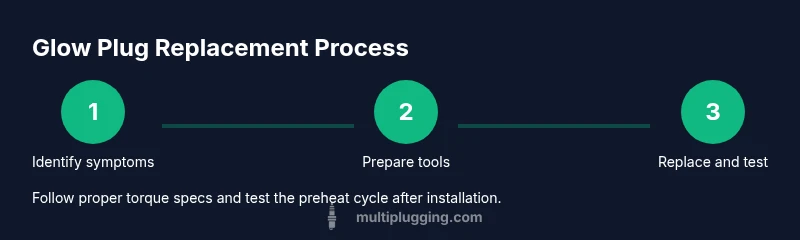
This section provides a high-level workflow for glow plug replacement that you can perform with basic automotive tools. You’ll remove protective covers, locate each glow plug, disconnect wiring harnesses, unscrew old plugs without twisting the threads, install new plugs with careful torque, and reassemble components. Ensure you torque to the manufacturer’s specification to prevent overtightening or under-tightening, which can lead to poor heat transfer or sealing issues. After installation, reconnect wiring, perform a post-install test, and verify proper preheating in a cold start scenario. The goal is a clean, reliable cold start with minimal post-replace faults. If you’re replacing a set, complete all plugs to maintain balanced heat delivery across cylinders.
Testing and post-install checks
Testing glow plugs after replacement confirms the success of your work. Start with a cold engine and observe the preheat cycle duration and glow intensity. If the engine starts quickly and smoothly without excessive cranking, you’ve likely installed the plugs correctly. Use an ohmmeter to measure resistance values across plugs and compare them to the vehicle’s service spec; large deviations indicate a faulty plug or connection. Inspect harness connectors for corrosion or looseness and verify that fuel system and glow control circuit codes are cleared, if applicable. Finally, run the engine up to operating temperature and check for abnormal noises or misfires, which could indicate an installation issue or a related sensor fault.
Maintenance and preventive care for glow plugs
Even after a successful replacement, proactive maintenance helps extend glow plug life. Schedule periodic inspections, especially before winter or in unusually cold climates. Replace damaged wiring connectors or cracked seals promptly, and use quality anti-seize on threads during future removals. Consider stocking a spare set of glow plugs that match your engine’s heat range for emergencies. Routine checks reduce the likelihood of roadside starts in extreme cold and improve long-term reliability. By adopting a proactive maintenance approach, you keep glow plugs effective, engine warm-up efficient, and emissions low.
Tools & Materials
- Diagnostic service manual for your engine(Always verify exact glow plug heat range and torque spec)
- Battery disconnect tool or wrench(Prevent electrical shorts during work)
- Glovebox or tray to organize plugs(Keep track of each plug's wire harness and boot)
- Deep socket with rubber insert or glow-plug socket(Avoid breaking the plug terminals)
- Torque wrench(Torque to manufacturer spec; do not guess)
- Penetrating oil (e.g., WD-40 Specialist or equivalent)(Helps loosen stubborn threads)
- Anti-seize compound(Light application on threads (follow manual))
- Replacement glow plugs (correct heat range and length)(Buy from reputable supplier and verify compatibility)
- Dielectric grease(Apply to connector terminals if recommended)
- Rags, gloves, eye protection(Maintain cleanliness and safety)
Steps
Estimated time: 90-120 minutes
- 1
Prepare and safety check
Park the vehicle on a flat surface, engage parking brake, and disconnect the negative battery cable to prevent shorts. Let the engine cool if recently run. Gather tools and replacement glow plugs in one place for easy access.
Tip: Label wiring connectors to avoid mispairing during reassembly. - 2
Disconnect electrical harnesses
Locate each glow plug harness and carefully disconnect the electrical connectors. Use a small pick or screwdriver if needed, but avoid prying on wires. Ensure you don’t damage the connector seals.
Tip: Take photos before removal to reference connector orientation. - 3
Remove old glow plugs
Using a glow-plug socket, thread counterclockwise to loosen. If a plug binds, apply penetrating oil and pause 5–10 minutes. Remove each plug straight out to avoid cross-threading.
Tip: Do not force a plug; excessive force can ruin the cylinder head threads. - 4
Prepare threads and install new plugs
Clean the threads in the bore and apply a light coat of anti-seize if the manual allows. Begin threading gently by hand to ensure alignment, then tighten with a torque wrench to the manufacturer spec.
Tip: Always start by hand to avoid cross-threading; misalignment is a common failure. - 5
Reconnect harnesses and double-check
Reconnect the electrical connectors, seating them fully. Re-check that no tools or debris remain in the engine bay and that all hoses and lines are properly reattached.
Tip: Confirm each plug seat is flush with the cylinder head surface. - 6
Test starting and inspection
Reconnect the battery, start the engine from cold, and observe the glow cycle. A smooth start and stable idle indicate success. If misfires occur, recheck connections and torque.
Tip: Allow a full preheat cycle before judging starting performance.
FAQ
What is a glow plug and how does it work?
A glow plug is a heating element used in diesel engines to preheat the combustion chamber for a easier cold start. When energized, it reaches a high temperature that helps ignite the fuel-air mixture. Faulty plugs can cause hard starting and rough idle.
A glow plug heats the combustion chamber to help starting in cold conditions. If a plug is bad, starts can be hard and the engine may idle roughly.
Can I drive with one or more bad glow plugs?
Driving with failed glow plugs can worsen engine wear and emissions, and may lead to hard starts. It’s best to replace faulty plugs before attempting extended driving.
It's not recommended to drive long with failed glow plugs; replace them to avoid further issues.
How long do glow plugs typically last?
Glow plug life varies by engine design and climate, but many plugs last tens of thousands of miles. Regular diagnostics help catch issues before failure.
They can last a long time, but cold climates and heavy use can shorten life. Check them if you notice starting issues.
Should I replace all glow plugs at once?
Replacing all glow plugs at once is common to maintain even heat delivery and avoid repeated service. If only one is faulty, replace the affected unit but consider timing the rest.
Usually replace them all for consistency, but if one is bad you can replace only that one with caution.
Are glow plugs the same as spark plugs?
Glow plugs are used in diesel engines for preheating; spark plugs ignite fuel-air in gasoline engines. They are not interchangeable and use different ignition principles.
Glow plugs heat the chamber in diesel engines; spark plugs ignite gasoline engines. They’re not interchangeable.
Can I perform glow plug work myself or should I hire a technician?
DIY replacement is possible with the right tools and caution, especially in engines with tight access or fragile threads. For complex engines or if torque specs are uncertain, consult a professional.
You can do it yourself if you’re comfortable with hand tools and torque specs; otherwise, a shop is safer.
Watch Video
Main Points
- Inspect glow plugs regularly and replace as needed.
- TORQUE to manufacturer specs; avoid over-tightening.
- Use the correct heat range for reliable cold starts.
- Test after installation to confirm proper preheating and start-up.
- Maintain clean workspace and organize plugs for quick future service.