Heater Plug in Diesel Engine: A Practical Replacement Guide
Learn how to diagnose, replace, and test the heater plug in a diesel engine. This educational guide covers safety, tools, torque-spec guidance, troubleshooting, and post-install checks for reliable cold starts.


This guide teaches you how to diagnose, replace, and test the glow plugs in a diesel engine (heater plugs), including safety checks, common failure signs, and post-install testing. You’ll need the correct glow plug type for your engine, basic hand tools, a torque wrench, and anti-seize compound. Follow the step-by-step process for reliable cold-starts.
Understanding the heater plug in diesel engine
The heater plug in diesel engine, commonly called a glow plug, is a compact heating element installed in each cylinder head. It preheats the combustion chamber to improve starting at cold temperatures and reduces exhaust smoke during warm-up. Over time, heat cycling, oil seepage, and carbon buildup can degrade performance. According to MultiPlugging, glow plug failures are a frequent cause of hard starts and extended cranking in many diesel applications. In this guide, we’ll unpack what the heater plug in diesel engine does, how to recognize when it’s failing, and how to replace it safely and effectively. We’ll also cover testing procedures and practical maintenance tips to keep starting reliability high across seasons.
How glow plugs work and why they fail
Glow plugs heat the intake of air in diesel engines before ignition to ensure stable combustion during cold starts. When the engine starts, the glow plugs provide a preheat that helps ignite thicker diesel fuel at lower temperatures. Each plug is an electrical resistor connected to a control circuit; when energized, it glows bright red hot for a few seconds before shutting off. Failures can stem from internal ceramic cracks, worn threads, degraded seals, or wiring harness damage. Prolonged high-mileage use also accelerates electrode wear. Because heat cycling is relentless in cold climates, even a single failed plug can stress the remaining ones, increasing cranking time and fuel consumption. For safety and accuracy, always test individual plugs with a multimeter and consult the engine’s service manual to line up the right heater plug in diesel engine part numbers.
Symptoms of failing glow plugs
Common symptoms include long cranking times on cold starts, “white smoke” as unburnt fuel heats up, rough idle, and hesitation during acceleration when the engine is cold. You may also see diagnostic trouble codes related to misfire or cylinder temperature if you have an onboard computer. In some cases, you’ll notice a stubborn lack of heat in the exhaust manifold, which is a telltale sign the heater plug in diesel engine is not warming the chamber. If you park in cold weather and routinely test start the vehicle, keep an eye on starting performance across cylinders; a failed plug or plugs can also manifest as uneven ignition and poor fuel economy. Remember, electrical faults can also trigger error lamps; a proper diagnosis will pinpoint the exact cylinder and plug being affected.
Safety considerations for DIY glow plug work
Working on glow plugs involves high temperatures and exposed electrical connections. Before you begin, ensure the engine is cool, the battery is disconnected, and the vehicle is on a level surface with the ebrake engaged. Use insulated tools and wear eye protection and gloves. Wear long sleeves to reduce skin contact with hot components, and perform work in a well-ventilated area to avoid fumes. If you encounter seized plugs or corroded harness connectors, stop and reassess; forcing a plug can break the ceramic element or strip threads. In all cases, follow manufacturer guidelines for your specific diesel engine and glow plug type to avoid damage and injury.
Choosing the right heater plug for your diesel engine
Compatibility is critical: you must match the heat range, thread size, and electrical rating to your engine. Check the vehicle’s service manual or OEM part catalog for the exact glow plug specification. Using an aftermarket or mismatched plug can lead to incomplete preheating, misfires, or uneven combustion. If you’re unsure, consult the parts counter with your VIN and engine code. In many cases, replacing all glow plugs in a worn set avoids a repeat failure and keeps starting performance uniform across cylinders.
Tools, workspace, and preparation
Gather the essential tools and safety gear before you start. A clean, stable workspace helps you locate small parts as you work. Keep a rag for spills, a container for used parts, and a flashlight for better visibility. Having a torque wrench ensures each plug is tightened to spec, which is critical for sealing, thread integrity, and heat transfer. Anti-seize compound on the threads can ease future removals, but apply it sparingly and only to the threads that enter the cylinder head. Finally, prepare a spare glow plug harness if signs of harness wear are present.
Pre-replacement checks and diagnosis
Begin with a diagnostic check to confirm which glow plugs are faulty. Use a multimeter to test resistance across each plug—open or wildly high readings indicate a bad plug. If you have a diagnostic scanner, check for glow-related codes and cylinder temperature data. Inspect the wiring harness for cracked insulation or corrosion. If you discover oil leaks around a plug well, address that issue first, as oil contamination can ruin new plugs and foul their operation.
Step-by-step replacement overview
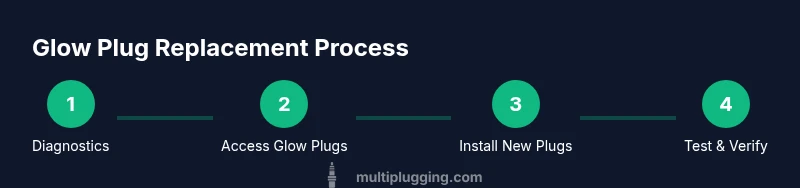
This section provides a practical overview of the replacement flow without duplicating the step-by-step instructions. You’ll remove old plugs, clean the seating area, apply a light film of anti-seize, install the new plugs, and reconnect the harness. Always torque to spec and verify that the electrical connections are secure. After installation, perform a start-test in a cool engine condition to observe the glow behavior and cranking speed. If any issue persists, re-check torque and seating depth.
Post-install testing and verification
After installing new heater plugs, reassemble any removed components and connect the battery. Start the engine in a cold condition and observe the preheat cycle. Listen for smooth cranking and confirm that the engine starts promptly without excessive cranking. Check for fault codes and clear them if the system shows no faults. A successful test usually shows improved cold-start performance and stable idle.
Maintenance and long-term care to prevent failures
Regularly inspect glow plug wiring and harness connectors for wear, corrosion, and heat damage. Schedule periodic checks during routine service, especially in extreme climates where preheating is most stressed. Keep the engine-cleaning schedule in mind; oil leaks and carbon buildup around plug wells can shorten plug life. Finally, replace plugs in sets when one fails to reduce mismatch in heating across cylinders and preserve smooth operation.
Troubleshooting common issues after replacement
If the engine still cranks long or starts hard after replacement, re-check the plug seating depth and connector polarity. Inspect for oil or coolant leaks in the plug wells, which can foul newly installed plugs. Verify that the alternator and battery are delivering sufficient current. If codes persist, repeat the diagnostic with an emphasis on cylinder-specific readings to ensure you did not miss a secondary fault.
Tools & Materials
- Glow plugs(Ensure OEM-equivalent or exact part number for your engine; replace all plugs if required by the service guide.)
- Torque wrench(Set to engine manufacturer specification; use the correct torque range for glow plugs.)
- Socket set with glow plug socket(6-point or 12-point socket as needed; ensure the socket fits the plug type.)
- Screwdrivers(Flat and Phillips as needed to remove covers and harness clips.)
- Multimeter(Test resistance of each glow plug to identify faults.)
- Anti-seize compound(Lightly coat plug threads to ease removal in the future.)
- Cleaning brush and towels(Clean plug wells and surrounding area; keep debris out of cylinder head.)
- Replacement glow plug harness (if needed)(Some engines require harness adapters or connectors.)
- Gloves and eye protection(Personal protection during heat and sharp components.)
- Shop towels(Contain spills and keep the work area clean.)
Steps
Estimated time: 60-120 minutes
- 1
Identify faulty glow plugs
Begin with a visual inspection and electrical test to determine which plugs are failing. Use a multimeter to check resistance across each glow plug; open circuits or abnormally high values indicate a faulty plug. Note that some engines require cylinder-by-cylinder testing with the engine off. This step ensures you target the correct heater plugs in a diesel engine.
Tip: Label or photograph each plug and its wiring connector before removing anything. - 2
Disconnect battery and prepare workspace
Disconnect the negative battery terminal to prevent accidental shorts. Move any tools out of the way and ensure the engine is cool. Set the vehicle on a flat surface and engage the parking brake for safety during the replacement.
Tip: Allow the engine to cool completely to avoid burns from hot components. - 3
Access glow plugs
Remove engine cover, air intake components, or accessories that block access to the cylinder head where glow plugs live. Depending on the engine, you may need to remove valve covers or intake manifolds. Access is the key to safe removal and proper seating of the new plugs.
Tip: Take care not to damage wiring harnesses when loosening clips. - 4
Disconnect glow plug harness
Carefully disconnect the plug harness from each glow plug. Be gentle to avoid tearing the connector or damaging the plug’s insulating seal. If any connector is hard to unplug, inspect for corrosion or dirt and clean with appropriate electrical contact cleaner.
Tip: Do not pull on the wires; pull on the connectors to avoid wire damage. - 5
Remove old glow plugs
Use a glow plug socket and a ratchet to carefully back out each old glow plug. If a plug is stubborn, apply a small amount of penetrating oil and wait a few minutes before retrying. Do not twist or wrench diagonally, as this can break the ceramic element.
Tip: Turn slowly to prevent thread damage and keep the plug intact. - 6
Inspect plug wells and threads
Check the cylinder head threads and the plug seating area for damage or oil leakage. Clean the seating surface and wipe away any debris. If threads are damaged, assess whether a heli-coil repair or professional service is needed.
Tip: Oil intrusion means you may have an imperfect seal that could ruin a new plug. - 7
Install new glow plugs
Thread the new glow plugs by hand to avoid cross-threading, then tighten with the torque wrench to the engine’s specification. Do not overtighten; ensure a snug seal without forcing the plug into place.
Tip: After threading by hand, use a torque wrench for precise tightening. - 8
Reconnect harness and test
Reconnect the glow plug harness to each new plug. Reinstall any components you removed to access the plugs and reconnect the battery. Start the engine in cold conditions to verify the glow cycle and smooth startup.
Tip: If the engine won’t start, recheck plug seating and electrical connections. - 9
Final verification and cleanup
Run the engine through a brief warm-up cycle and verify that all glow plugs are functioning uniformly. Check for leaks, clear any codes if the system reports none, and reassemble any remaining parts. Clean up tools and dispose of used plugs according to local regulations.
Tip: Keep a log of replacement parts and service dates for future maintenance.
FAQ
What is a heater plug in diesel engine and what does it do?
A heater plug, also called a glow plug, preheats the combustion chamber in a diesel engine to aid cold starts. It reduces rough running and smoke by ensuring reliable ignition during startup.
A glow plug preheats the combustion chamber to help your diesel start smoothly when it’s cold.
How do I know if my glow plugs need replacement?
Common indicators include extended cranking, rough idle when cold, white smoke on startup, and codes related to misfire. A resistance test can confirm faulty plugs.
If it takes longer to start and the engine runs rough when cold, your glow plugs may need replacement.
Should I replace all glow plugs at once?
If one plug fails, the others may be close to end of life. Replacing the entire set can prevent a loop of repeated failures and ensure uniform preheating across cylinders.
Often, replacing the whole set prevents future failures and keeps performance even.
Can I replace glow plugs myself or should I hire a mechanic?
DIY replacement is feasible for many DIYers with basic tools and a torque wrench, but complex engines or seized plugs may require professional service to avoid damage.
You can do it yourself if you’re comfortable with tool use and safety, otherwise a pro is a good option.
What are common mistakes when replacing glow plugs?
Overtightening, using the wrong torque, damaging wiring, or mixing plug types can cause immediate failure or future issues. Always verify part numbers and torque specs.
Common mistakes include over-tightening and using the wrong plug type, which can ruin the threads or heat seal.
How can I prevent glow plug failures in the future?
Regular maintenance, addressing oil leaks promptly, and using manufacturer-approved parts will extend glow plug life and ensure reliable cold starts.
Keep up with maintenance and replace parts per the manufacturer’s guidance to prevent failures.
Watch Video
Main Points
- Identify faulty plugs with proper testing
- Follow torque specs to prevent thread damage
- Replace all affected plugs for even heating across cylinders
- Verify electrical connections and start-up performance
- Dispose of old plugs safely and maintain a maintenance log