What to Do If a Spark Plug Breaks Inside: DIY Troubleshooting Guide
Urgent, step-by-step troubleshooting for when a spark plug breaks inside the engine. Safety, extraction, and prevention tips to minimize damage and costs.


Immediate fix: switch off the engine, disconnect the battery, and assess the broken plug in the well. Do not force tools into the bore. The safest path is to locate and remove the fragment with approved tools, then inspect the cylinder for damage. This guide outlines a careful, low-risk approach to minimize engine harm and future costs.
What to Do If a Spark Plug Breaks Inside: Quick Overview
If you're dealing with a spark plug that breaks inside the engine, you may notice misfires, rough idle, or a drop in compression. What you do first matters: safety comes before diagnosis, and a calm, methodical approach reduces the risk of dropping fragments or causing additional damage. According to MultiPlugging, understanding the layout of the spark plug well and the common failure modes helps you decide whether you can safely recover the fragments yourself or should call a professional. In this section we outline the high-level approach to the situation and set the stage for careful troubleshooting, focusing on safety, visibility, and first-pass checks. If you want to know what to do if a spark plug breaks inside, start with assessing accessibility, preparing tools, and protecting the area from debris.
Immediate Safety and Prep
Before touching anything, ensure the vehicle is off and the battery is disconnected if accessible. Wear eye protection and work gloves; spark plug fragments can be sharp, and small shards might drop into the cylinder. Move the vehicle to a well-ventilated area and use a clean workspace. Keep metal tools away from the battery and ignition coil to avoid short circuits. Gather the necessary tools: spark plug socket, flexible magnet pickup, a flashlight, a torque wrench, anti-seize compound, and replacement plugs if needed. If you smell fuel or see fuel leaks, stop and address the hazard first. Safety notes: never crank the engine with a broken plug still embedded, and avoid turning the engine over if you suspect fragments are in the cylinder. Quick, deliberate action reduces risk of further damage and salve potential costs. Remember, if you are unsure at any point, seek professional help early to prevent expensive engine damage.
Common Causes and What to Check First
A spark plug can break inside for several reasons: cross-threading during installation or removal can weaken the plug body; overtightening can stress the metal; corrosion from moisture or fuel contaminants can embrittle electrodes; a worn ignition coil or faulty plug wire can apply uneven forces that lead to breakage. Start by inspecting the spark plug well for visible fragments, check the connector boot and coil for damage, and verify the plug's thread condition. If the seat is damaged or fragments are deeply embedded, it’s often safer to stop and call a professional. As a rule, always handle a broken plug cautiously to avoid pushing shards deeper into the cylinder.
Diagnostic Flow: Symptom to Fix
Symptoms like misfire, rough idle, or a sudden drop in engine performance after a plug breaks inside point toward fragment interference, seat damage, or coil fault. A logical approach is to verify visual access first, then probe the bore with approved tools. If you can see and reach the fragment, you may attempt retrieval with a magnetic pickup and careful manipulation. If retrieval is not possible or the bore shows damage, stop and seek professional help to prevent piston or cylinder wall scoring. Always document what you inspected for future maintenance.
Step-By-Step: Extracting a Broken Spark Plug Inside
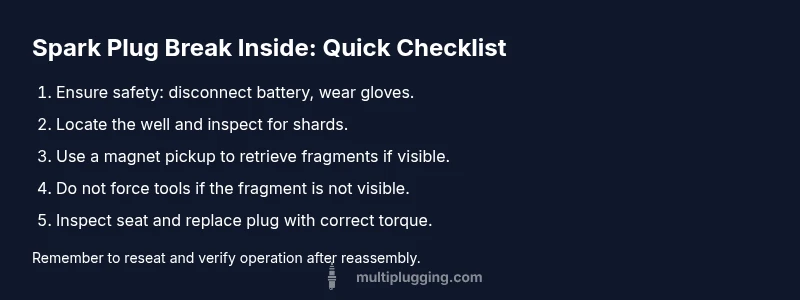
- Power down and prepare the workspace: disconnect the battery, remove any engine covers, and gather a spark plug socket, magnet tool, long-caliber pick, and a torque wrench. 2) Access the spark plug well: remove any obstruction, clear debris, and illuminate the well with a bright flashlight. 3) Attempt fragment retrieval: use a magnetic pickup to grab the visible piece; avoid poking with metal tools that could push debris further in. 4) Inspect the seat and bore: if you can see threads and the fragment, gently lift it out; if the fragment is lodged, do not force it. 5) Decide on replacement: if the seat is damaged, plan for a new plug with proper gap and anti-seize; if the fragment remains lodged, consider professional extraction. 6) Install the replacement plug: apply anti-seize, thread by hand, then torque to spec using a torque wrench. 7) Test and verify: reconnect the battery, start the engine, and listen for smooth operation; scan for codes if available. Tip: always hand-tighten first before final torque to avoid cross-threading.
Post-Repair Checks and Prevention
After removal and replacement, reseat the plug correctly, verify the seat area for any remnants, and re-torque to the manufacturer’s specification. Recheck ignition wires and boots for damage, replace as needed, and ensure the gap is correct for the new plug. Run the engine to operating temperature and listen for misfires; if codes appear, diagnose accordingly. To prevent future incidents, use anti-seize on plugs, torque correctly, and replace worn coils or wires in a timely fashion. Consider a light wipe-down after maintenance to prevent oil or fuel residues from affecting the plug seat.
When to Seek Professional Help
If the plug body is broken and fragments are difficult to locate, or if you observe bore damage, cylinder scoring, or difficulty in removing fragments without disassembly, stop and contact a qualified technician. Engine damage from a missed fragment can be costly, and complex bore work or head removal may be required. A professional can assess seat integrity, confirm proper torque, and ensure no codes remain that could affect run quality. Trust the experts when uncertainty or risk is high.
Note: In every scenario, safety comes first. Keep children and pets away from the work area, and never attempt this task on a hot engine. If you are unsure at any point, pause the work and seek professional assistance to avoid costly engine damage.
Steps
Estimated time: 45-60 minutes
- 1
Power down and prepare tools
Turn off the ignition, disconnect the battery, and lay out your tools in a clean workspace. This minimizes the risk of accidental starting or short circuits while you work on the spark plug well.
Tip: Place a magnetic tray under the area to catch small parts and prevent loss. - 2
Access the spark plug well
Remove any engine covers or panels that obstruct access to the spark plug well. Use a bright flashlight to illuminate the area and identify the exact location of the broken plug fragment.
Tip: Take photos before disassembly to reference torque specs and placement. - 3
Attempt fragment retrieval
Carefully insert a magnetic retrieval tool or a flexible-tipped tool to grab the visible fragment. Avoid leaning or prying with metal instruments that could push shards deeper into the bore.
Tip: Do not attempt to pry fragments out if you cannot see them clearly. - 4
Assess seat and bore condition
Look for any damage to the spark plug seat or threads. If fragments appear deeply lodged or you see scoring on the bore, stop and call a pro.
Tip: If the seat looks damaged, replacing the bore component may be required. - 5
Choose replacement strategy
If the bore is clear, prepare a new spark plug with the correct gap and threading. If the seat is damaged, you may need a helicoil or bore repair kit as directed by a professional.
Tip: Always use the correct plug type and heat range for your engine. - 6
Install the replacement plug
Lightly oil the threads, hand-tighten to seat, then torque to the manufacturer specification with a torque wrench. Reconnect the plug wire or coil boot securely.
Tip: Double-check the gap on the new plug before installation. - 7
Test run and verification
Reconnect the battery, start the engine, and listen for smooth operation. If there are codes, clear them and re-test. If misfire returns, re-check for fragments or seat damage.
Tip: Allow the engine to reach operating temperature to confirm stability.
Diagnosis: Engine misfiring after plug breakage, rough idle, or non-start
Possible Causes
- highFragment remains in the bore and blocks the seat
- mediumPlug electrode broke but sheath stayed in cylinder
- lowDamage to cylinder wall or piston from metal shard
Fixes
- easyDo not crank the engine; visually inspect the well and attempt retrieval with a magnetic tool if fragment is visible
- easyIf the fragment is accessible, carefully extract with a long magnet or approved pickup tool and re-check the seat area
- hardIf retrieval fails or bore shows damage, stop and consult a professional to prevent piston damage
FAQ
What are the first signs that a spark plug has broken inside the engine?
Common signs include misfires, rough idle, a drop in compression, and sometimes a drop in performance across one or more cylinders. If you suspect breakage, stop and inspect the spark plug well before attempting further diagnostics.
Common signs are misfires or rough idle; stop and inspect the plug well before continuing.
Can I safely remove a broken plug without professional tools?
In some cases you can retrieve a visible fragment with a magnetic pickup. If the fragment is not accessible or you feel resistance, avoid forcing tools and seek professional help to prevent piston damage.
You can sometimes retrieve it with a magnet, but if it's not accessible, get professional help.
Will a broken spark plug damage the engine?
Yes, fragments can scratch or score the cylinder walls if not removed properly. Damage risk increases if you attempt aggressive disassembly or force fragments out without proper access.
Fragments can damage the cylinder walls if not removed carefully.
What if the plug body is stuck in the cylinder?
If the body is stuck, do not hit it with force. This often requires specialized extraction tools or bore repair, and attempting it without experience can worsen damage.
A stuck plug usually needs a controlled extraction by a professional.
Should I replace all spark plugs after one breaks?
If the engine has high mileage or the plugs are all original, replacing the rest can prevent future issues. Consider checking the ignition system and service schedule before a full replacement.
Consider replacing others if they’re due for service to prevent future problems.
How long does this repair typically take?
Durations vary by engine layout and access. A straightforward removal and replacement can take under an hour, but more complex cases may require longer or professional help.
It can take under an hour for simple cases, longer for complex ones.
Watch Video
Main Points
- Safety first: disconnect battery and wear eye protection.
- Inspect bore and seat for damage before reassembly.
- Use proper torque to avoid over-tightening.
- Test engine and clear codes after replacement.