Spark Plug Coils Symptoms: Diagnose, Fix & Prevent Misfires
Learn to spot spark plug coils symptoms, diagnose coil faults, and safely fix them with a step-by-step guide. Improve engine reliability and reduce misfires.


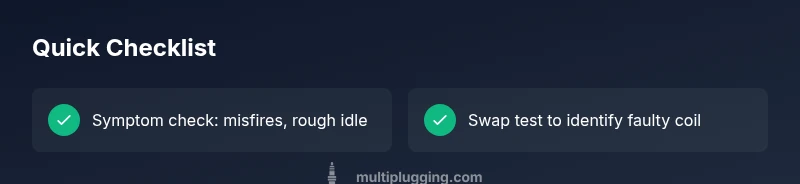
Coil failures are a leading cause of rough idle and engine misfires. Quick fix: swap the suspected coil with a known-good unit to see if the symptoms move. If the engine runs smoother after swapping, you’ve confirmed the coil issue; then inspect boots, wiring, and plugs for damage.
What is a spark plug coil and how it works
A spark plug coil, or ignition coil, is a high‑voltage transformer that creates the spark needed to ignite the air‑fuel mixture in each cylinder. Modern vehicles often use coil packs or coil-on-plug arrangements, where each cylinder has its own coil. When the coil fails or weakens, the spark becomes inconsistent, leading to misfires, rough idle, and potential engine damage over time. According to MultiPlugging, understanding how ignition coils function helps you identify symptoms faster and plan a safe, effective repair. In addition to coil health, other ignition components like boots, wires, and spark plugs contribute to overall performance, so a systematic check is essential.
Common symptoms of spark plug coil problems
Ignition coil issues can mimic other engine faults, which is why a structured approach is helpful. Look for misfires that come and go, especially under load or at steady RPM. You may notice rough idling, hesitation during acceleration, jerking, or a drop in power. A drop in fuel economy, odd exhaust smells, or a check engine light with misfire codes (e.g., P030X family) are strong indicators. Some vehicles show coil-related trouble through starting difficulties or stalling after startup. If you have typical misfire symptoms and fluctuating idle, focus on the ignition system first, not just the fuel or air delivery.
Why coil issues cause misfires and rough performance
Coils are responsible for delivering a consistent, high‑voltage spark. When a coil fails or loses efficiency, one or more cylinders won’t ignite reliably, causing a misfire. The engine may compensate by altering timing or throttle response, which leads to roughness and reduced power. Because coils sit close to heat, vibration, and moisture, electrical insulation can degrade, boots crack, or connectors corrode—these problems amplify symptoms. Then, the symptoms can resemble spark plug fouling or coil boot issues, so a careful diagnostic flow is essential.
Safe, at-home checks you can perform
Start with the simplest checks to avoid unnecessary parts replacement. First, inspect for obvious damaged boots, cracked wires, or corroded connectors. Gently wiggle connectors to see if the symptoms change—loose connections can cause intermittent misfires. If you have access to a scan tool, pull misfire codes by cylinder to identify which coil is implicated. When performing any test, disconnect the battery to avoid shocks and never work directly on a live circuit. Always work in a well-ventilated area and keep a fire extinguisher nearby as a precaution.
Diagnostic flow you can follow at the garage
Use a methodical flow to separate ignition problems from fuel or sensor faults. Start with a diagnostic code read and cylinder-specific misfire data if available. Then perform a visual inspection of all boots, wires, and coil connectors. Swap suspected coils with known-good ones or use a dedicated ignition tester to verify spark output. Re-test the engine; if symptoms move with the coil, you’ve diagnosed the faulty unit. If symptoms persist, widen the inspection to spark plugs and wiring harnesses to rule out secondary causes.
Step-by-step repair path for most coil issues
If a coil is confirmed faulty, replace the coil pack or the individual coil depending on your engine layout. After replacement, check the corresponding spark plug and boot for wear and replace if needed. Reconnect all electrical connectors securely and recheck engine performance with a test drive. In some cases, moisture or dirt may have caused contact resistance; cleaning connectors or resealing boots can improve reliability. Finally, clear any codes and monitor for reoccurrence.
Safety, tools, and common mistakes to avoid
Safety first: disconnect the battery, wear eye protection, and avoid touching high‑voltage areas. Use insulated tools and keep metal jewelry away from ignition components. Common mistakes include using the wrong spark plug type, over-tightening coil boots, and neglecting to inspect related wiring. Always verify the torque specification for spark plugs and coils, and never reuse damaged boots or scratched contacts. If you’re unsure at any step, seek professional help to prevent injury and further engine damage.
Prevention: extend coil life with proper maintenance
Regular maintenance saves coil life. Use the correct spark plug type and gap, replace worn boots, and inspect wiring harnesses during routine service. Keep the engine bay clean and dry to reduce moisture ingress, and seal electrical connections against moisture and dirt. Periodically test ignition output with a spark tester or scanner to catch weakness before it causes a noticeable misfire. Finally, perform preventive maintenance aligned with the vehicle manufacturer’s schedule rather than waiting for symptoms to appear.
When to seek professional help and cost considerations
Some coil issues require specialized tools or equipment, especially on modern vehicles with coil packs integrated into the engine. If you’re not confident performing electrical tests, or if engine codes persist after a coil replacement, consult a qualified technician. Costs vary by vehicle and whether you need a full coil pack replacement versus a single coil; factor in labor time for a more accurate estimate. A professional assessment can prevent wasted parts and ensure the repair is done safely.
Steps
Estimated time: 60-90 minutes
- 1
Power down and prep
Park on level ground, engage parking brake, and disconnect the negative battery terminal. Gather tools: ratchet set, spark plug socket, a non-conductive torque wrench, and an ignition tester or spare coil. Ensure the work area is dry and well-lit.
Tip: Label each coil/connectors as you remove them to simplify reassembly. - 2
Read codes and note symptoms
Connect a scanner to read stored and live data. Note cylinder misfire codes (e.g., P030X) and whether misfires occur under load or at idle. Document symptoms to guide the next steps.
Tip: If you don’t have a scan tool, jot down observable symptoms for future diagnostics. - 3
Inspect boots and connectors
Visually inspect all coil boots for cracks, tears, or carbon tracking. Wiggle connectors gently to check for looseness or corrosion. Clean contacts if needed and reseat firmly.
Tip: Cracked boots often cause intermittent misfires; replace any damaged boot immediately. - 4
Test individual coils
If you have a spare coil, swap it with the suspected unit and run the engine. Alternatively, use a dedicated ignition tester to compare output between coils. Observe whether misfire symptoms move with the swapped coil.
Tip: A quick swap test is often the fastest way to identify a faulty coil. - 5
Check spark plugs and boots
Remove related spark plugs to inspect for fouling, oil, or excessive wear. Clean or replace plugs as needed and ensure the boot seating is clean before reinstallation.
Tip: Always use a new gasket or anti-seize when reinstalling plugs as required by your engine specs. - 6
Replace faulty coil(s)
Install a new coil pack or individual coil, torque to spec, and reattach all wires and connectors. If the vehicle uses coil packs, ensure the entire pack is seated evenly.
Tip: Avoid overtightening; follow the manufacturer’s torque specs to prevent aftermarket damage. - 7
Reassemble and test drive
Reconnect the battery, clear codes, and start the engine. Take a short test drive to confirm smooth idle and power delivery. Re-scan to confirm no new codes appear.
Tip: Drive under varied loads to verify the fix across typical conditions. - 8
Verify no secondary issues
If symptoms persist, inspect wiring harnesses and sensor circuits that interact with ignition timing. Consider fuel delivery and air intake as potential contributing factors.
Tip: Document all findings; sometimes multiple issues mimic coil problems. - 9
Final assessment and maintenance plan
Set a maintenance reminder for spark plugs and boots based on manufacturer intervals. Keep an eye on fuel economy and idle quality, and address any new symptoms promptly.
Tip: Preventive maintenance reduces unexpected coil failures.
Diagnosis: Engine misfires and rough idle
Possible Causes
- highFailed ignition coil or coil pack
- mediumCracked coil boot or loose connectors
- lowIgnition wiring damage or corrosion
Fixes
- easySwap suspected coil with a known-good coil and re-test
- mediumReplace failing coil pack or individual coil(s) and inspect boots/wires
- hardRepair or replace damaged wiring harness and connectors, then re-test
FAQ
What are the most common symptoms of bad ignition coils?
Rough idle, engine misfires, hesitation, and power loss are typical. A Check Engine light with misfire codes often accompanies coil problems. Always verify with a controlled swap or testing.
Common symptoms include rough idle and misfires, often with a check engine light. A swap test can confirm the coil issue.
Can a bad coil cause a check engine light even if the spark plugs look fine?
Yes. Misfire codes can trigger the CEL even if plugs appear okay. Inspect ignition components and use a scan tool to confirm misfire cylinders.
Yes. A bad coil can trigger the check engine light via misfire codes even if the plugs seem okay.
Should I replace a single coil or the entire coil pack?
If your engine uses individual coils, replace the faulty one. For coil packs, replacing the entire pack is usually more reliable and often cost-effective.
It depends on your engine design; single coils versus a whole pack, choose based on reliability and cost.
How can I test ignition coils at home?
Use a spark tester or swap with a known-good coil to observe changes. Visual inspection of boots and connectors is also essential.
You can test coils by swapping with a known good one or using a spark tester, plus inspecting boots.
What maintenance helps prevent coil failures?
Use correct spark plugs, keep boots dry and clean, and replace worn wiring and connectors as part of routine service.
Prevent coil failures by maintaining spark plugs, boots, and wiring on schedule.
When is professional help absolutely necessary?
If you lack the right tools or if codes persist after a coil replacement, a professional diagnosis ensures safety and accuracy.
If you’re unsure or codes persist after a replacement, seek a professional.
Watch Video
Main Points
- Identify the faulty coil by swapping with a known-good unit.
- Check boots and connectors for cracks or corrosion.
- Inspect spark plugs for fouling or wear.
- Always disconnect the battery before work.
- Follow a step-by-step test to confirm diagnosis.