Spark Plug for Honda Generator EU2000i: Maintenance Guide
A practical, step-by-step guide to inspecting, cleaning, and replacing the spark plug on the Honda EU2000i generator. Learn safe practices, gap checks, tools, and troubleshooting to keep your portable power reliable.


To service the spark plug for Honda EU2000i, locate the plug, inspect for wear, clean or replace as needed, verify the gap, and re-install with proper torque. Gather a spark plug wrench, gap gauge, anti seize if recommended, and a torque wrench. Always work with the engine cold and follow safety precautions at all times.
Why Spark Plugs Matter for the EU2000i
The spark plug is a small but critical component in any internal combustion engine, including the Honda EU2000i portable generator. A healthy plug ensures quick starts, clean combustion, and stable idling, while a fouled or worn plug can cause hard starts, misfires, reduced power, and higher fuel consumption. For the spark plug for honda generator eu2000i, using the correct heat range and electrode type is essential for performance and longevity. Regular inspection helps you catch oil leaks, rich or lean running, and carbon buildup before they become more expensive problems. In this guide you will learn how to assess condition, decide between cleaning or replacement, and perform the service safely, even if you are a DIY novice. Trusted guidance from MultiPlugging underpins these steps, focusing on practical, no nonsense maintenance that keeps your generator reliable in a pinch.
Spark Plug Types Commonly Used in Small Generators
Small generators like the EU2000i typically use a copper core or copper alloy spark plug in a compact, single cylinder layout. You may encounter platinum or iridium options, which last longer but can be pricier and may have different heat ranges. When selecting a spark plug for the EU2000i, always refer to the user manual or the manufacturer label on the machine to confirm the exact heat range and thread size. In many cases, a standard copper core plug delivers reliable performance with regular maintenance, while premium options may offer longer life in harsh operating environments. The key takeaway is to match the plug to the engine design and operating conditions rather than chasing exotic features. For the spark plug for honda generator eu2000i, simplicity and correct gap typically trump complexity.
Tools, Safety, and Work Environment
Before starting, set up a clean, well-ventilated workspace away from open flames or sparks. Wear safety gloves and eye protection, and have a rag and brush handy to clean parts. Essential tools include a spark plug wrench or socket, a gap tool or feeler gauge, and a torque wrench if you want precise re-tightening. Optional items like anti seize lubricant can help with future removal but follow the manufacturers recommendations. Position the generator so you can access the spark plug well without bending wires or cables, and ensure the engine is completely cool to touch before touching any metal components. Remember that proper technique reduces the risk of thread damage and electrical shock—essential when servicing the spark plug for the eu2000i.
Inspection and Diagnosing Fouling
Inspecting the spark plug for signs of wear, fouling, or oiling helps determine whether cleaning is sufficient or if replacement is necessary. Look for heavy carbon deposits, oily residue, worn electrodes, or a damaged ceramic insulator. Fouling can occur from running the engine too rich, poor air filtration, or infrequent maintenance. If you see heavy fouling or oil intrusion, replacement is usually the best option. Light carbon buildup may be reduced with a gentle cleaning and proper re-gap. The goal is to restore reliable combustion and avoid misfires that steal power from the EU2000i.
Gap, Torque, and Replacement Guidelines
Spark plug gap is critical for efficient ignition and consistent performance. Use a gap gauge to verify the specification from the owner manual and adjust carefully without bending the electrode. If the gap cannot be set to spec or the plug shows wear, replace it with a compatible unit. When reinstalling, tighten to the recommended torque with a torque wrench or by hand snug plus a quarter turn, avoiding over tightening which can strip threads or crack the ceramic. In the EU2000i, correct torque also helps ensure a good seal in the combustion chamber. For the spark plug for honda generator eu2000i, accuracy at reinstallation is more important than speed.
Step-By-Step Overview
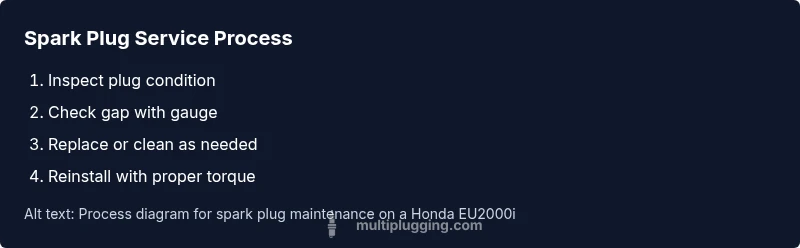
This section provides a high level overview of the replacement process so you know what to expect before you begin. The steps below are a roadmap and do not substitute for the full, detailed instructions in the dedicated STEP-BY-STEP block. You will locate the plug, disconnect the boot, remove the old plug, inspect or replace, gap to spec, reinstall, and test the engine. Reading through this overview helps mental preparation and reduces surprises during the actual procedure.
Maintenance Scheduling and Longevity
Regular maintenance improves longevity and reliability of the EU2000i. Establish a routine based on hours of use and climate conditions. For seasons with heavy operation or dusty environments, inspect more frequently and consider using higher quality plugs or protective air filters. Keeping a log of replacement dates, plug types, and observed conditions helps you predict when to replace again. When in doubt, err on the side of proactive replacement rather than waiting for a misfire or hard start to occur. The approach aligns with MultiPlugging guidelines for durable spark plug maintenance that keeps your generator ready when you need it.
Common Mistakes and How to Avoid Them
Common mistakes include using the wrong heat range plug, failing to disconnect the spark plug boot, over tightening, or neglecting to check the gap after installation. Another frequent pitfall is attempting to clean a heavily fouled plug instead of replacing it. Always verify the plug type and gap in the manual, and use the proper tools to avoid thread damage. A methodical approach and attention to safety reduce the chances of screwing up simple maintenance. The MultiPlugging team recommends following a clear, repeatable process to ensure long term reliability of the spark plug for honda generator eu2000i.
Tools & Materials
- Spark plug wrench(Typically 5/8 inch or 13/16 inch hex size; ensure fit for the EU2000i plug)
- Feeler gauge or gap tool(Use to verify and adjust plug gap to spec)
- New spark plug (correct heat range for EU2000i)(Always replace with the right part from the manual)
- Torque wrench(Use for precise re-torquing if you are aiming for exact specs)
- Anti seize lubricant(Only apply if the manual specifies it for this plug type)
- Rag or brush(Clean the plug well and surrounding area before reinstall)
- Safety gloves and eye protection(Protect hands and eyes from fuel and sharp edges)
Steps
Estimated time: Estimated total time: 25-40 minutes
- 1
Power down and prepare workspace
Turn off the generator and close the fuel valve if applicable. Allow the engine to cool completely, and move to a well ventilated area. Gather all tools and materials so nothing is left scrambling mid task.
Tip: Keep the spark plug boot away from metal surfaces to avoid accidental grounding. - 2
Locate the spark plug and remove the boot
Find the spark plug on the side of the engine. Grasp the boot firmly at its base and twist gently to disconnect without pulling on the wire inside. Inspect the boot for any cracks or damage.
Tip: Use a bit of light to clearly see the plug location; avoid forcing the boot off. - 3
Remove the spark plug
Attach the spark plug wrench to the plug and turn counterclockwise to loosen. Lift the plug straight out to avoid jamming it against the cooling fins or surrounding components.
Tip: Keep the plug in a clean area to prevent debris from entering the cylinder head. - 4
Inspect and decide
Visually assess the electrode for wear, fouling, or oil coating. If the plug is heavily fouled or damaged, replacement is the best option; light carbon buildup may be cleaned carefully.
Tip: Do not scrub aggressively; you can replace rather than risking damage to the seat or threads. - 5
Check or adjust the gap
Measure the gap with a feeler gauge and adjust to the engine specification using the gap tool. Do not bend the electrode; small, precise tweaks are safer than large corrections.
Tip: If you cannot obtain the exact gap, replace the plug instead of forcing a misfit. - 6
Install the plug
Thread the plug in by hand to avoid cross threading, then snug it with the wrench. If you have a torque spec, use the torque wrench to reach it without overtightening.
Tip: Always seat the plug evenly to prevent a damaged seat and misalignment. - 7
Reconnect boot and seal
Reattach the spark plug boot until it is firmly seated. Gently tug on the boot to ensure it is connected securely and check that the area around the plug is clean.
Tip: Check for cracks in the boot that could cause arcing during operation. - 8
Test run and verify
Start the generator and listen for a smooth idle with no misfires. If the engine hesitates or misfires, recheck the gap or consider replacing the plug. Allow the engine to reach normal operating temperature.
Tip: Observe exhaust color and listen for unusual sounds as quick indicators of ignition issues.
FAQ
What spark plug does the Honda EU2000i use?
Refer to the owner's manual or generator label to confirm the exact heat range and thread size. In many cases a standard copper core plug is suitable, but follow the manual for the correct specification.
Check the manual for the exact plug type and gap. A standard copper core plug is common, but always verify.
How often should I replace the spark plug on the EU2000i?
Replacement frequency depends on usage and environment. Inspect each season and replace if fouled, worn, or if performance declines.
Inspect each season and replace if performance drops or if fouling is evident.
Can I clean a fouled plug instead of replacing it?
Light cleaning can be acceptable if the plug is not worn or cracked. Heavily fouled or damaged plugs should be replaced to restore reliable ignition.
If heavily fouled or damaged, replace rather than clean.
What tools do I need to replace the spark plug?
You will need a spark plug wrench, gap tool or feeler gauge, a new plug, and optionally a torque wrench and anti seize if recommended.
A spark plug wrench, gap gauge, and a new plug are essential.
Is anti seize necessary when reinstalling the plug?
Anti seize is only necessary if the manual specifies it for your plug type and threads. Follow the manual guidance to avoid over torque or galling.
Only use anti seize if the manual says so.
What are signs of a faulty spark plug in the EU2000i?
Difficulty starting, rough idle, misfires, reduced power, or inconsistent electricity output indicate a possible spark plug issue.
Look for hard starting, rough idle, and misfires as red flags.
Watch Video
Main Points
- Inspect plug type matches EU2000i specifications
- Gap to spec and re-torque after installation
- Use proper tools to avoid thread damage
- Replace heavily fouled or worn plugs
- Test run to confirm ignition reliability