Lawn Mower Spark Plug Check: Step-by-Step DIY Guide
Learn how to perform a lawn mower spark plug check, diagnose fouling, adjust gaps, and decide when to replace. A practical, step-by-step guide by MultiPlugging to keep your mower running reliably.


Performing a lawn mower spark plug check helps prevent misfires, improve starting, and extend engine life. You’ll need a spark plug wrench, a gap gauge, and a clean rag. This guide walks you through safe inspection, cleaning, and replacement if needed.
Why Lawn Mower Spark Plug Check Matters
A lawn mower spark plug check is a simple, high-impact task that any DIY enthusiast can perform in under an hour. The spark plug is the engine’s ignition switch; if it’s fouled, damaged, or gapped incorrectly, combustion becomes inconsistent. This leads to hard starts, rough idle, reduced power, and higher fuel use. By inspecting the plug for fouling, wear, and cracks, you gain a clear signal about the engine’s overall health. Regular checks also help you spot oil leaks, fuel issues, and gasket problems early. According to MultiPlugging, a routine lawn mower spark plug check is a practical maintenance step that pays off in reliability and cost savings across the mowing season.
In practice, a simple pull of the starter should feel consistent, with a clean day-glow spark when you inspect the plug. If your mower stalls or misfires under load, a plug check is often the first diagnostic step before moving to carburetor or filter checks. Performing this task reinforces good habits for other spark-ignited engines you might own, and it makes you less dependent on professional service for routine maintenance.
This article, informed by MultiPlugging’s guidance, focuses on a clear, repeatable approach: gather the right tools, remove and inspect, decide on cleaning or replacement, and reassemble with correct precautions. You’ll leave with actionable steps you can repeat every mowing season.
Tools and Safety Essentials
Before you begin the lawn mower spark plug check, set up a safe workspace and collect the right tools. A stable, level surface and a cool engine reduce the risk of burns and accidental slips. Always disconnect the spark plug wire cap to prevent accidental ignition while you work. The right tools reduce frustration and protect the plug from damage. In this section, you’ll learn exactly what to have on hand and how to prepare for safe, effective inspection.
What you’ll need:
- Spark plug wrench or socket compatible with your plug size (true essential)
- Spark plug gap gauge or feeler gauge (true essential)
- Clean rag or brush for deposits (essential)
- Replacement spark plug (optional, depends on condition)
- Safety glasses and gloves (optional, but recommended)
- Owner’s manual or plug specifications (recommended for the exact gap and heat range)
Safety notes from MultiPlugging emphasize cooling the engine before handling parts, avoiding metal shards, and rechecking torque by hand after reinstallation. This reduces the chance of cross-threading and ensures a proper seal at the plug seat.
When you’re ready, clear the work area, lay out your tools, and prepare to inspect with a calm, methodical approach. The goal is to determine whether cleaning will suffice or if you should replace the plug for optimal performance.
Tools & Materials
- Spark plug wrench/socket(Choose the size matching your lawn mower plug (commonly 13/16" or 5/8"). Use a deep-well socket if needed to reach recessed plugs.)
- Spark plug gap gauge / feeler gauge(Use the correct gauge to verify the electrode gap per the mower’s manual.)
- Clean rag or brush(Wipe deposits off the plug and seating area without scratching metal surfaces.)
- Replacement spark plug(Keep a spare on hand in case of heavy fouling or damage.)
- Safety glasses(Protect eyes from debris and gasoline splashes.)
- Gloves(Keep hands clean and protected during handling.)
Steps
Estimated time: 15-25 minutes
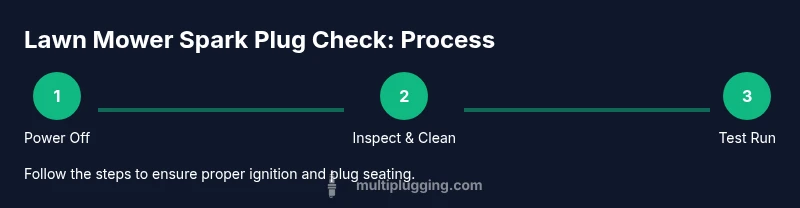
- 1
Power down and prepare the workspace
Park the mower on a flat surface, turn the engine off, and let it cool. Disconnect the spark plug wire cap to prevent accidental ignition. This ensures your safety while you inspect and remove the plug.
Tip: Always work on a cool engine to avoid burns and avoid touching hot exhaust components. - 2
Remove the spark plug
Use the spark plug wrench to loosen and remove the plug from its seat. Keep the starter handle away and avoid dropping the plug into dirt or the fuel area.
Tip: Hold the plug by the ceramic body, not the metal threads, to prevent bending the electrode. - 3
Inspect the plug visually
Check for heavy carbon fouling (black, sooty deposits), oil fouling (wet, oily), or physical damage like cracks. Note electrode wear and porcelain color, which hints at engine heat range and efficiency.
Tip: Take a quick photo if you’re unsure what you’re seeing for reference later. - 4
Check and adjust the gap
Measure the gap with the gauge. If there’s a visible out-of-spec gap and the plug is of an adjustable design, adjust carefully; otherwise, replace the plug. Do not attempt to bend the center electrode on most lawn mower plugs.
Tip: When in doubt, replace rather than risk improper gap.” - 5
Decide cleaning or replacement
If the plug is lightly fouled but otherwise intact, you can clean the deposits with a wire brush and compressed air and re-gap if needed. If fouling is heavy, oil is present, or the plug is cracked, replace with a new one.
Tip: Don’t reuse a damaged plug—even if it seems to run briefly. - 6
Reinstall and torque to snug
Install the plug with clean threads and tighten by hand, then snug with the wrench. Avoid over-tightening to prevent thread damage in the aluminum head.
Tip: A snug, not overtight, seat prevents leaks and ensures a good seal. - 7
Reconnect and test the mower
Reattach the spark plug wire cap and return the mower to operation. Start the mower with a smooth pull and listen for a steady idle; if it stumbles, repeat the inspection process or consider carburetor and air-filter checks.
Tip: If it fails to start after this step, further troubleshooting may be necessary.
FAQ
What is the purpose of a lawn mower spark plug check?
A spark plug check confirms ignition quality, identifies fouling or wear, and determines whether cleaning or replacement is needed to restore reliable starts and smooth operation.
A spark plug check helps ensure your mower starts reliably and runs smoothly by catching fouling or wear early.
How often should I check the spark plug on a lawn mower?
Check whenever you notice hard starting, misfires, rough idling, or reduced power. A seasonal check is common for lawn mower users, especially after winter storage or heavy usage.
Check at the start of each mowing season or whenever you notice starting or running issues.
Can I clean a fouled spark plug and reuse it?
Light carbon fouling can sometimes be cleaned, but oil-fouled or damaged plugs should be replaced. Reusing a fouled plug can lead to repeated starting problems or engine damage.
If the plug looks oily or damaged, replace it rather than cleaning it.
What tools do I need for a lawn mower spark plug check?
You’ll typically need a spark plug wrench, a gap gauge, and a clean rag. Depending on the plug, you may also need a replacement plug.
Just grab a spark plug wrench and a gap gauge to start, then decide on replacement if needed.
Is it safe to operate the mower if the spark plug is removed?
No. Do not operate the mower with the plug removed. Reattach the cap before starting to avoid sparks and fuel hazards.
Never run the mower with the spark plug disconnected.
Watch Video
Main Points
- Inspect plug regularly for fouling or wear
- Follow manual for exact gap and heat range
- Replace damaged plugs promptly to avoid engine damage
- Maintain clean seating surfaces for a proper seal