What Size Spark Plug for Lawn Mower: A Practical Guide
A data-driven guide to identifying and selecting the correct spark plug size for lawn mowers, including how to measure, common sizes, heat ranges, and replacement tips.


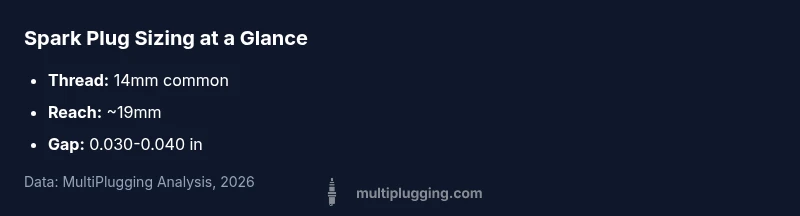
For most lawn mowers, the standard spark plug size is 14mm thread with about 19mm reach; verify exact size from your owner's manual or the plug stamping, and check the correct gap (often 0.030-0.040 inches). If in doubt, remove the plug and inspect the part number stamped on the ceramic insulator, then cross-check with your mower's model; using the wrong size can cause misfire and poor starting.
Why the right spark plug size matters for lawn mower
According to MultiPlugging, selecting the correct spark plug size is crucial for reliable starts and engine longevity. The wrong size can cause weak ignition, fouling, misfires, or harder starting, especially under load or in hot climates. The size affects thread engagement, heat transfer, and sealing against compression. Start by identifying three dimensions: thread diameter, thread pitch, and overall reach. For most lawn mower engines, the right size means a standard thread diameter, a compatible reach to seat the center electrode properly, and a matching heat range to prevent fouling or pre-ignition. The primary question many DIYers ask is: what size spark plug for lawn mower? The quick answer is: check the owner manual or the current plug’s stamping; the goal is to match OEM specifications. If you replace with the wrong size, you risk leaks, misfiring, and reduced performance.
How to read and verify a plug size
Spark plug sizing hinges on three numbers: thread diameter, reach, and heat range. The thread diameter is the outer thread diameter that screws into the engine cylinder head; the reach is how far the threads extend before the plug shoulders sit on the head; and the heat range determines how hot or cold the spark plug runs. Most lawn mower plugs use a standard 14mm thread with a reach around 19mm and a mid-range heat specification. When in doubt, read the plug’s stamping or consult the engine’s manual. If you see a cold-range plug in a hot-running engine, fouling can increase; a hot-range plug in a cold engine may cause sluggish starts.
How to check your mower model and cross-check
Begin with the mower’s model plate on the deck or near the battery area (for electric-start models). Write down the exact model and serial numbers, then consult the owner’s manual or the manufacturer’s website for the recommended plug size and gap. If you cannot locate the manual, remove the current spark plug and read the part number stamped on the ceramic insulator or main body; cross-reference that number with a plug size chart for your engine. Always confirm both thread size and reach before purchasing. When in doubt, choose a plug matching the OEM size and heat range rather than substituting a different format.
Common sizes and ranges by engine type
In the lawn mower space, the vast majority of engines use a 14mm spark plug thread. Briggs & Stratton, Honda, Kohler, and Tecumseh small engines commonly fall into this category, with a reach around 19mm and a mid-range heat specification. Some older or special-purpose engines may use 12mm or 16mm threads, but these are far less common today. Always verify by checking the current plug or the service manual. The goal is to match both the thread diameter and the seat depth; even a plug with the correct diameter can fail if the reach or heat range is incorrect.
Gap, heat range and installation tips
Gap size is engine-specific but for most lawn mowers the typical gap is 0.030-0.040 inches. The heat range should be chosen to suit engine temperature and operating conditions; too hot a plug can overheat, while too cold a plug can foul. When installing, finger-tighten first, then snug with a wrench to the manufacturer’s torque specification (often around 1.5-2.0 N·m for many small engines). After installation, recheck the gap if you’ve touched the plug with the tool. Confirm that the washer seat is properly compressed to seal, and avoid over-tightening to prevent thread damage.
Replacement steps: removing and installing the correct size plug
To replace a spark plug, start by disconnecting the spark plug boot, then clean around the plug to avoid dirt entering the cylinder. Remove the old plug using a proper spark plug socket, noting the thread size and reach. Compare with the new plug: ensure thread diameter, reach, and heat range align with the engine spec. Check the gap on the new plug and adjust if needed with a gap gauge. Gently thread the new plug by hand to avoid cross-threading, then use a torque wrench to reach the correct torque setting. Reconnect the boot and test the engine. Keep a spare plug of the correct type for quick replacements.
Troubleshooting: symptoms of wrong plug size
If the plug is undersized or oversized, you may notice hard starting, misfires, rough idle, or reduced power under load. A plug with an incorrect gap can cause misfires and poor fuel economy. Fouling can accumulate if the heat range is too cold for the operating temperature, and detonation can occur if the plug is too hot. In cases of persistent trouble, re-check the plug against the mower’s model and replace with the OEM-specified size and gap. Regular inspection helps prevent performance loss.
Maintenance schedule and myths debunked
Many DIYers believe bigger gaps improve performance; in reality, a correct gap as specified by the engine design is critical. Replace plugs at intervals aligned with engine usage and seasonal storage plans—more frequent for heavy-use lawns or dusty environments. Cleaning plugs can help with light fouling, but replacement is often necessary for persistent deposits. Finally, trust OEM recommendations rather than generic “bestseller” plugs when diagnosing mower starting issues.
Common spark plug size references for popular lawn mower engines
| Engine Type | Common Spark Plug Size | Typical Gap (inches) |
|---|---|---|
| Briggs & Stratton small engine | 14mm thread; reach ~19mm | 0.030-0.040 |
| Honda small engine | 14mm thread; reach ~19mm | 0.030-0.040 |
| Tecumseh small engine | 14mm thread; reach ~19mm | 0.030-0.040 |
FAQ
What size spark plug do I need for my lawn mower?
Most lawn mowers use a 14mm thread with a 19mm reach. Always verify with your manual or current plug stamping and ensure the gap matches the OEM specification.
Most mowers use a 14mm plug with a 19mm reach. Check your manual or the current plug, and set the gap to the manufacturer’s spec.
Can I use any 14mm spark plug in my mower?
Only if the heat range and reach match your engine’s OEM specification. Using the wrong heat range or reach can cause fouling or misfires.
Only if the heat range and reach match your engine’s spec. Otherwise, fouling or misfires can occur.
What is the recommended spark plug gap for lawn mowers?
The typical gap for most lawn mowers is 0.030–0.040 inches. Always confirm with the manual or the current plug.
Usually 0.030 to 0.040 inches. Check your manual or current plug to be sure.
How do I know the correct plug size if the manual is missing?
Inspect the current plug for thread size and reach, then cross-reference with your engine model using manufacturer charts or the mower’s model number.
Read the plug’s details and match them to your engine model using charts or the model number.
What if the spark plug is cross-threaded or stuck?
Do not force it. Apply penetrating oil, use proper tools, and replace if the thread is damaged.
Don’t force it; use oil and proper tools. Replace if threads are damaged.
Is heat range important for lawn mower plugs?
Yes. Choose a heat range that matches the engine’s operating temperature and typical workload to avoid fouling or overheating.
Yes—match the heat range to how your engine runs to prevent fouling or overheating.
“The right spark plug size is foundational for reliable starting and efficient combustion in lawn mower engines.”
Main Points
- Verify spark plug size in manual or current plug stamping.
- Most lawn mowers use a 14mm thread with ~19mm reach.
- Check gap (typically 0.030–0.040 inches) and heat range before replacement.
- Cross-check engine model to avoid incorrect size.
- Replace rather than clean if fouling persists.