Spark Plug Gap for Lawn Mower: A Practical Guide
Master the spark plug gap for lawn mower engines with a practical, data-driven guide. Learn how to identify, set, and maintain the correct gap for reliable starts and smooth operation.


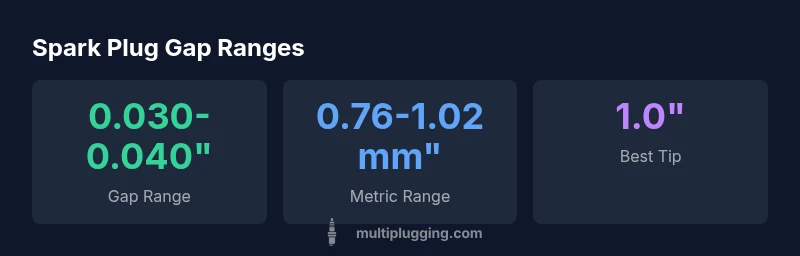
Most lawn mower spark plugs use a gap of about 0.030 to 0.040 inches (0.76 to 1.02 mm). Use a feeler gauge to measure and adjust the gap after removing the plug, following your mower’s manual. An incorrect gap can cause hard starts, rough idle, or misfires. Getting the spark plug gap for lawn mower engines right is essential.
Why correct spark plug gap for lawn mower engines matters
In lawn mower engines, the air-fuel mixture and ignition are tightly linked to the spark plug gap. The gap influences the strength of the ignition spark and the timing of combustion. If the gap is too wide, the spark may struggle to jump the gap, leading to weak ignition and wasted fuel, abrupt throttle response, and reduced power. If the gap is too narrow, the electrical resistance increases, potentially causing misfires or erratic starting. A properly gapped plug helps ensure reliable starts, smoother idle, and consistent power across load conditions. For most 4-stroke lawn mower engines, the recommended gap sits within a narrow, practical range, typically around 0.030-0.040 inches. However, the exact target depends on engine design, compression, and heat range of the plug. The key is to reference the mower’s manual or the plug manufacturer’s published specifications and verify the gap with a calibrated tool before installation. Getting the spark plug gap for lawn mower engines right is essential.
How to identify the correct gap for your mower
The starting point is the engine’s owner manual or the plug manufacturer’s published specification. Because differences exist between Briggs & Stratton, Kohler, Honda, and other small-engine families, the exact target gap can vary slightly. When in doubt, use the common lawn mower baseline of 0.030-0.040 inches as a reference and confirm with the manual. The gap is measured across the center and ground electrodes, not along the edge. Remove the spark plug to access the measurement; a dirty or fouled plug can mask the true gap, so inspect the electrode for wear, carbon buildup, or damage before measuring. Prepare a clean workspace, keep the plug free of oil, and use a proper gap tool or a precision feeler gauge. After removing, lightly inspect the seat for burrs and ensure the electrode tip hasn’t been bent by previous maintenance. When in doubt, consult a service manual or the MultiPlugging guidelines for your engine family. Always verify the spark plug gap for lawn mower engines against the official spec.
Step-by-step: set the gap with a feeler gauge
- Disconnect the spark plug wire and remove the spark plug from the engine. 2. Inspect the plug for wear or fouling. 3. Clean the electrode and seat before measuring. 4. Choose the gauge on the feeler set that matches the target gap. 5. Gently slide the gauge between the center and ground electrodes. 6. If it’s tight, lightly bend the ground electrode or adjust the center electrode until the gauge just fits with light resistance. 7. Re-measure to confirm accuracy. 8. Reinstall the plug with proper torque and reconnect the ignition wire. 9. Start the mower to verify smooth operation. When referencing the spark plug gap for lawn mower engines, precision matters and re-checking after installation is recommended.
Common mistakes and how to avoid them
- Skipping manual recommendations: Always verify the gap with the official spec rather than guessing. - Measuring a dirty plug: Clean and inspect before measuring. - Bending electrodes too aggressively: Make small adjustments and re-measure. - Overtightening the plug: Use the correct torque to avoid damage to threads and seat. - Using incorrect tools: Use a proper feeler gauge; avoid improvised shims. - Re-using damaged plugs: If the electrode is worn or cracked, replace rather than re-gap. - Ignoring engine type: Some engines require a narrower or wider gap; always consult the specification for your model.
Engine type differences and gap ranges
Engine design influences the ideal gap. Briggs & Stratton 4-stroke lawn engines often sit near the 0.030-0.032 inch mark, while Kohler or Honda small engines may tolerate 0.030-0.040 inches depending on compression and plugs used. Always cross-check with the manufacturer’s spec. Some high-compression, performance-oriented lawns might perform best with a slightly narrower gap, while older or high-resistance plugs can benefit from a wider gap within the recommended range. The key takeaway is that the gap should align with the engine’s design, heat range, and intended operating load. This reinforces the need to reference official sources when setting the spark plug gap for lawn mower engines.
In-situ gap checking vs removing the spark plug
Measuring the gap with the plug still in the head is unreliable due to electrode geometry and accessibility. The standard practice is to remove the plug, inspect it, and measure the gap with a gap tool. This ensures an accurate reading and avoids bending the electrodes. For many DIY readers, the process is: remove plug, clean seat, gap to spec, reinsert with proper torque, and re-test. If you cannot remove the plug due to corrosion or access constraints, consult the engine manufacturer’s guidance before attempting a risky in-place measurement.
Special cases: copper core vs iridium plugs and heat range
Copper-core plugs tend to wear faster and show gap changes more quickly than iridium or platinum variants. If you’re using an iridium or platinum plug, verify its specific gap recommendations, as these plugs can tolerate slight deviations yet still perform well. Heat range matters too; a plug with too hot or too cold a range can misfire under load. In lawn mower engines, stick to the recommended heat range and maintain gap within the stated range to optimize combustion efficiency and starting reliability.
Maintenance tips to keep spark plug gap stable
Regular maintenance reduces drift in gap over time. Clean spark plugs to prevent carbon buildup and check gap after every few mowing sessions, especially after encountering rough starts or misfires. Store the mower in a dry, clean area to minimize corrosion at the seat. When replacing plugs, use a new plug with the same heat range and gap specification as the original. Document the exact gap for your model in the maintenance log to ensure consistency across service intervals.
Troubleshooting: replace vs adjust and when to seek professional help
If the engine continues to misfire, hard-start, or stall after adjusting the gap and replacing the plug, the issue may be broader than the gap alone. Consider fuel quality, air filter condition, and ignition coil integrity. If you observe persistent performance issues, seek professional service to diagnose compression or ignition coil faults. In most cases, correct gap adjustment paired with a clean, new plug resolves starting and idle issues for lawn mower engines.
Typical spark plug gap ranges by engine family
| Engine Type | Typical Gap Range | Notes |
|---|---|---|
| Briggs & Stratton 4-stroke | 0.030-0.032 inches | Common range for older models |
| Kohler/Command engines | 0.030-0.040 inches | Wide range depending on fuel system |
| Honda small engines | 0.032-0.036 inches | Balanced gap for rapid starts |
| General lawn mower engines | 0.030-0.040 inches | Check manual for exact spec |
FAQ
What is the standard spark plug gap for most lawn mower engines?
Most lawn mower engines use a gap in the 0.030–0.040 inch range. Always confirm with the owner’s manual or the plug manufacturer’s spec before adjusting.
Most mowers need about 0.030 to 0.040 inches. Check your manual to be sure.
Can I set the gap without removing the spark plug?
Measuring the gap with the plug in place is unreliable. Remove the plug, inspect it, and measure the gap with a proper tool for an accurate reading.
It’s best to remove the plug to measure accurately.
What happens if the gap is too wide or too narrow?
If the gap is too wide, ignition may fail to jump, causing misfires. If too narrow, resistance increases and starting can be erratic.
Too wide or too narrow gaps can cause misfires and hard starts.
What tools do I need to gap a plug?
A proper feeler gauge or a dedicated gap tool. Keep tools clean to avoid introducing burrs or damage to the electrode.
Use a gap tool or feeler gauge—keep everything clean.
Are automotive spark plugs suitable for lawn mowers?
Some engines accept automotive plugs, but many lawn mowers require specific heat ranges. Always follow the engine manufacturer’s specification.
Check the manual—not all car plugs are suitable for lawn mowers.
When should I replace vs re-gap a plug?
If the plug shows wear, fouling, or damage, replace it. Re-gap should only be done on a healthy plug and within spec.
If the plug looks worn or damaged, replace it rather than re-gap.
“A properly gapped spark plug is the simplest, most reliable way to ensure smooth starts and consistent idle in lawn mower engines. Small variations in gap can have outsized effects on ignition and fuel efficiency.”
Main Points
- Clearly identify the gap from the official spec before adjusting
- Use a proper feeler gauge and remove the plug for an accurate measurement
- Avoid bending electrodes or using improvised tools during gap setting
- Different engine families have distinct gap ranges; verify with the manual
- Replace plugs showing wear or damage rather than re-gap to preserve reliability