TR6 Spark Plug Guide: Diagnosis, Replacement, and Maintenance
A practical, step-by-step guide to diagnosing TR6 spark plug issues, choosing the right type, and performing a safe replacement for reliable ignition.


Goal: diagnose, replace, and optimize TR6 spark plugs safely. This quick guide covers common fouling signs, selecting the right heat range and gap, and performing a clean, torque-accurate replacement. With the proper tools and a methodical approach, you’ll restore smooth ignition, better fuel economy, and reliable start-ups.
Understanding TR6 Spark Plug Basics
According to MultiPlugging, the Triumph TR6 engine uses a spark plug in each cylinder to ignite the air-fuel mixture. For a classic engine, plug selection matters for reliability and performance. The right plug type balances heat range with combustion cleanliness and avoids fouling under typical TR6 driving conditions. This section explains plug types, heat ranges, and how different designs affect ignition, durability, and maintenance intervals. Understanding these basics helps you choose plugs that complement your carburetor setup, ignition system, and climate.
How to Diagnose Spark Plug Issues on a TR6
Common symptoms of worn or fouled plugs include rough idle, misfires during acceleration, reduced power, and worse starting in cold weather. Start by inspecting the plug ends for carbon deposits, oil fouling, or white ash; color and deposits reveal issues like rich/lean mixtures or oil leaks. A simple resistance check across the plug wire and a visual inspection of the porcelain insulator can reveal cracks or erosion. Remember: good ignition relies on clean plugs with proper gap and tight threads.
Choosing the Right TR6 Spark Plug
Plug selection should reflect heat range, electrode material, and the engine’s ignition system. Copper-core plugs heat up slightly faster but wear quicker; platinum and iridium offer longer life but at higher cost. For most TR6 drivers, starting with a standard heat range and copper core is common, then moving to longer-life designs if deposits are frequent. Always verify the gap specification in the manual or plug packaging and adjust with a dedicated gauge before installation.
Safety and Best Practices for TR6 Spark Plug Work
Always work with the engine off and the battery disconnected to avoid sparks. Allow the engine to cool before touching spark plugs. Use gloves and eye protection, keep tools organized, and work on a clean surface to prevent debris from entering the cylinder head. When removing or installing plugs, grip the boot firmly and avoid twisting the wire while pulling. A magnet can help recover dropped plugs without dropping them into the engine bay.
Maintenance Tips and Common Mistakes
Proactive maintenance saves trouble: clean threads, use a light touch when threading plugs to avoid cross-threading, and avoid over-tightening. Anti-seize compounds can help ease future removal but apply sparingly to the threads only. Replacing one failed plug in a set can unbalance combustion in the remaining cylinders, so inspect all plugs and wires. Maintain a consistent service interval and record the date and mileage for future reference.
Troubleshooting After Replacement
If the engine still misfires after replacement, re-check the plug gap and ensure the correct plug type was installed for your model. Confirm that the wires boots are fully seated and that the ignition system is delivering spark to all cylinders. If you smell fuel or notice roughness only after warm-up, investigate fuel delivery or sensor feedback rather than blaming plugs alone. Finally, run a test drive and monitor the exhaust for any changes in color or odor.
Tools & Materials
- Spark plug socket (deep-well)(With rubber insert for grip)
- Ratchet wrench(2- or 3/8-inch drive as needed)
- Torque wrench(Capable of precise torque settings)
- Gap gauge(Set gap per plug spec (manual) or packaging)
- New spark plugs(Choose heat range appropriate for TR6)
- Anti-seize compound(Apply sparingly to threads only)
- Dielectric grease(Use on boot contacts)
- Torque lubricant/grease(Light coating to prevent corrosion)
- Rags and solvent(Clean plug wells and threads)
- Safety gear(Gloves and eye protection)
Steps
Estimated time: 20-40 minutes
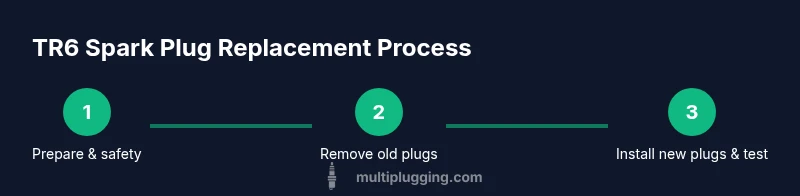
- 1
Prepare workspace and safety
Ensure the engine is off and cooled. Disconnect the battery ground strap. Clean the area around the plug wells to reduce debris entering the cylinders.
Tip: Take a quick photo of plug wire routing to preserve wiring order. - 2
Disconnect spark plug wires
Grasp the boot, not the wire, and pull straight out to avoid damaging the connection. Label or note the cylinder position if needed.
Tip: Work one cylinder at a time to prevent misplacement. - 3
Remove old plugs
Fit the spark plug socket over the plug and turn counterclockwise to break loose, then lift away carefully.
Tip: If a plug is tight, apply gentle rock to loosen without forcing. - 4
Check and gap new plugs
Inspect the new plugs, align to the recommended gap using a feeler gauge, and ensure clean threads before installation.
Tip: Do not overtighten threads; hand-tighten first, then torque to spec. - 5
Install and torque plugs
Thread plugs by hand to avoid cross-threading, then use a torque wrench to reach the manufacturer’s spec.
Tip: Stop at the specified torque to prevent thread damage. - 6
Reconnect wires and test
Reconnect each boot, restore power, and start the engine. Listen for a smooth idle and check for misfires.
Tip: If rough idle returns, recheck gaps and wire seating.
FAQ
How often should I replace TR6 spark plugs?
There isn’t a universal interval for classic TR6 engines. Inspect plugs for wear or fouling and replace when signs appear or performance drops, following the service manual.
There isn’t a universal interval. Inspect for wear and replace when you notice signs of trouble, per the manual.
What tools are essential for TR6 spark plug replacement?
A spark plug socket, ratchet, gap gauge, and a torque wrench are essential. Optional items include anti-seize, dielectric grease, and a magnet.
You’ll need a plug socket, ratchet, gap gauge, and a torque wrench; anti-seize and dielectric grease are optional.
Can I reuse old spark plug boots?
Inspect boots for cracks or hardening. If damaged, replace the boot to ensure a reliable seal and spark delivery.
Inspect the boots and replace if cracked or stiff.
Do I need a specific gap for TR6 plugs?
Check the plug’s gap specification in the owner's manual or packaging and set the gap with a gauge before installation.
Set the gap according to the manual with a gap gauge.
What’s the difference between copper and platinum/iridium plugs for the TR6?
Copper plugs heat share and cost less but wear faster; platinum/iridium offer longer life but at higher price. Choose based on usage and maintenance preference.
Copper is cheaper but wears faster; platinum or iridium lasts longer but costs more.
Watch Video
Main Points
- Inspect plugs for wear and fouling.
- Match heat range and gap to TR6 spec.
- Torque plugs carefully to avoid damage.
- Test the engine after replacement for smooth running.