Spark Plug Wire Change: A DIY Guide
Practical, diy-friendly guide to spark plug wire change. Learn wear signs, wire selection, step-by-step removal and installation, and maintenance tips to keep ignition reliable and your engine running smoothly.


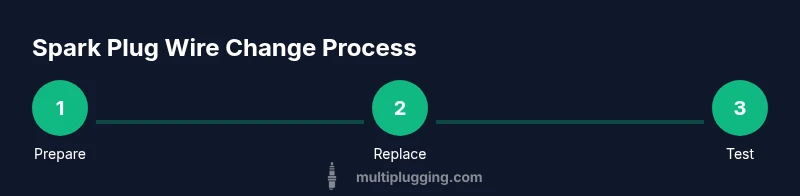
You will complete a spark plug wire change to restore reliable ignition and smooth idling. This task requires the correct wire set for your engine, a basic toolkit, and a safe workspace. Follow the step-by-step instructions to disconnect power, replace wires one by one, and verify the firing order before starting the engine.
What is a spark plug wire change and why it matters
A spark plug wire change is the process of replacing the high-tension leads that carry the ignition signal from the distributor or coil to the spark plugs. Over time, wires can deteriorate from heat, oil exposure, and cracking boots, leading to weak spark, misfires, and reduced fuel efficiency. A well-timed replacement restores ignition reliability, improves idle quality, and can prevent more costly ignition problems later. According to MultiPlugging, regular inspection of ignition components is part of responsible maintenance that keeps engines running smoothly in everyday driving. For most modern engines, you’ll replace the entire wire set rather than individual conductors, since wear tends to be uniform and the connectors are designed to match the original firings. The goal is to restore the original resistance and routing so the spark travels efficiently, and to avoid sharp bends or rubbing that can crack insulation. In practice, a spark plug wire change is a straightforward DIY task when you have the right parts, clean hands, and a calm workspace. The payoff is immediate: better starting, steadier idle, and potentially improved fuel economy as misfires are eliminated. It also reduces the risk of backfiring and protects the ignition coil from overloads, extending the life of multiple ignition components.
Tools & Materials
- Spark plug wire set (correct for your engine)(Ensure the set matches the exact engine model and firing order; boots should fit the spark plugs and coil/distributor terminals securely)
- Dielectric grease(Optional but recommended to improve boot seating and moisture resistance)
- Rag or shop towel(Keep wipes handy for oil or residue on boots and connections)
- Safety gloves(Protect hands from sharp edges and hot engine parts)
- Spark plug boot puller or needle-nose pliers(Avoid yanking the wire; use the boot to remove without damaging the conductor)
Steps
Estimated time: 30-60 minutes
- 1
Disconnect the battery
Power down the vehicle by disconnecting the negative battery terminal. This reduces the risk of electric shock and prevents accidental short circuits while you work around ignition components.
Tip: Double-check the engine is cold and the key is out before touching battery cables. - 2
Label wires and note firing order
Before removing anything, identify and label each wire based on its cylinder position and route. If you’re unsure of the firing order, consult the service manual or a reputable online reference for your engine. Keeping a map prevents mis-wiring later.
Tip: Take a photo from multiple angles; it’s easier to match colors and boot orientation later. - 3
Remove one wire at a time by the boot
Grasp the boot close to the end and pull straight off the spark plug or distributor/coil terminal. Do not pull on the wire itself to avoid damaging the internal conductor. Remove consistently from one side to minimize confusion.
Tip: If boot sticks, apply a tiny amount of dielectric grease to ease removal next time. - 4
Compare length and routing of new wires
Spread the new wire set and compare each length to the corresponding old wire. Route the new wires along the same paths to avoid rubbing on hot manifolds or moving parts. Length matching helps prevent tension at the boots.
Tip: Avoid sharp bends; use natural curves and keep wires away from hot exhaust components. - 5
Install the new wire onto the spark plug
Seat the new wire firmly onto the spark plug boot until you feel or hear a click. Then route the wire toward the distributor/coil side, keeping tension low and avoiding kinks. Repeat for each cylinder in firing order.
Tip: If the boot does not seat, re-seat and verify the end is fully engaged before moving on. - 6
Install the remaining wires in order
Continue replacing the rest of the wires in the correct firing order. Work methodically, one connection at a time, to preserve accurate timing and spark routing. Confirm each boot is fully seated before testing.
Tip: Group wires by nearby paths to prevent interference and friction between adjacent wires. - 7
Apply dielectric grease to boots
A light layer of dielectric grease inside each boot helps seal out moisture and reduces corrosion on metal contacts. This step is optional but can improve longevity and ease of future removal.
Tip: A small dab is enough; avoid excessive grease that could attract dirt. - 8
Reconnect the battery and test
Reconnect the negative terminal, start the engine, and listen for a smooth idle. If you hear misfires or rough running, recheck the firing order and boot seating.
Tip: If misfires persist, scan for codes or perform a spark test to pinpoint the issue.
FAQ
Do I need to replace all wires at once or can I do them individually?
For most engines, replacing the entire wire set at once ensures consistent performance and simplifies routing. If one wire shows damage, you can replace it individually, but avoid a mixed-wear scenario that could create timing issues.
You typically replace the whole set, but if only one wire is damaged you can replace just that wire. Check for wear on others before deciding.
How do I know I’m choosing the right spark plug wire set for my engine?
Check your vehicle’s year, make, and model, and reference the factory service manual or a trusted parts catalog for the exact part number. Confirm compatibility with firing order and boot style to ensure a proper fit.
Use the exact part number from your manual and verify boot type and firing order before purchase.
Is it safe to change spark plug wires if the engine is hot?
No. Working on a hot engine increases burn risk and can damage boots or insulation. Always allow the engine to cool and use insulated gloves if needed.
Wait for the engine to cool before starting. Wear gloves if you’re handling hot parts.
Can misfires still occur after a wire change?
Yes, if a wire is not seated fully, the boot is damaged, or the firing order is incorrect. Recheck connections, and consider a compression test if misfires persist.
If misfires persist after replacement, recheck the wiring order and seating, and test for ignition or compression issues.
What maintenance steps help extend wire life?
Keep wires routed away from hot surfaces, inspect for cracks or signs of wear during routine service, and replace them at manufacturer-recommended intervals or when wear is evident.
Route wires away from heat, inspect regularly, and replace as wear appears.
Watch Video
Main Points
- Plan and safety-first: disconnect power before touching ignition components.
- Use the correct wire set tuned to your engine and firing order.
- Replace wires one at a time to preserve accurate routing.
- Seal connections with dielectric grease to reduce moisture ingress.
- Test thoroughly after installation and address misfires promptly.