DIY Spark Plug Wire Kit: Step-by-Step Guide
Learn how to choose, install, and maintain a diy spark plug wire kit with our clear, step-by-step guide for 2026 car owners. Safe, practical advice for DIY enthusiasts.


Replace worn ignition wires with a diy spark plug wire kit using our step-by-step guide. Choose a compatible kit, gather the right tools, install carefully, and perform a quick engine test to confirm firing and smooth operation.
What is a diy spark plug wire kit and why it matters
A diy spark plug wire kit is a collection of ignition wires, boots, and connectors designed to replace worn or damaged factory spark plug wires. For older engines that use a distributor and spark plug wires, a quality kit can restore proper coil-to-plug timing, improve misfire protection, and maintain efficient fuel burn. Even in modern engines with coil-on-plug, some performance enthusiasts use replacement wire sets in specific retrofits or off-road applications, but compatibility is key. According to MultiPlugging, choosing the right kit means matching length, resistance, and boot style to your engine's firing order. If you pick the wrong kit, you risk misfires, arcing, or insulation damage. In this guide, we’ll walk through how to assess your engine, select a kit that fits, and perform a careful installation that protects you and your vehicle. By the end, you’ll know how to decide between universal vs. vehicle-specific wire sets, and how to verify the kit’s quality before you buy.
Safety first: hazards and preparations
Safety is non-negotiable when working around ignition systems. Start by disconnecting the negative battery cable to prevent shocks or shorts. Work in a clean, well-ventilated area; wear eye protection and gloves. Keep metal tools away from live terminals, and avoid letting magents or loose parts fall into the engine bay. If the engine or accessories are hot, wait for cooling; hot metal can cause burns. Follow the kit’s instructions for boot orientation, torque where specified, and use dielectric grease to seal connections. The risk of high voltage exists even when the car isn’t running, so treat every wire like it’s live until you’ve isolated the system. For added safety, remove jewelry and keep a fire extinguisher nearby in case of accidental sparks.
Understanding engine compatibility and kit types
Not all ignition wire kits fit every engine. Universal kits offer adjustable lengths and boot styles, but you must verify resistance per foot, total length, and firing order compatibility with your specific engine. Vehicle-specific sets are often pre-measured for a given make/model and can simplify routing. MultiPlugging analysis shows that the best long-term reliability comes from wires that match the engine’s original impedance and boot geometry. Check your vehicle’s manual, cylinder count, and whether your engine uses a distributor or coil-on-plug system. If you own a classic car with a distributor, you’ll most likely benefit from a traditional wire set; modern coil-on-plug engines typically do not use traditional plug wires. Always confirm that the kit’s connector shapes and boot angles align with your coil or distributor.
How a wire kit works: components and electrical behavior
A high-quality wire kit includes four core components: spark plug wires, boots, connectors, and a spacer/retainer system. Wires carry the ignition current from the distributor or coil to each spark plug, with boot ends forming a secure seal on the plug terminal. Resistance per foot helps dampen voltage spikes and reduces radio interference. Boots are designed to fit snugly over the plug terminals and prevent arcing to surrounding metal. A well-made kit minimizes resistance variance between cylinders, which keeps firing timing consistent. In practice, you’ll notice smoother starts, less hesitation, and improved idle quality when you install a properly matched kit. Always inspect boot integrity for cracks or corrosion before installation, as degraded boots are a common source of misfires.
Tools, materials and workspace setup
Gather the following before you start: a new diy spark plug wire kit matched to your engine, a spark plug socket and ratchet, pliers or boot puller, a dielectric grease tube, a torque wrench for any clamps, a spark plug gap tool (if required), and a clean workspace with good lighting. Use a soft mat to protect delicate components, and label wires during removal to preserve cylinder order. Keep a parts tray for each cylinder to prevent mix-ups. If you’re working on a hot engine, allow it to cool completely, then re-check tool clearance around moving parts. For a tidy setup, plan wire routing to avoid sharp edges, hot exhaust, and moving belts. If your kit includes color-coded wires, use the color system to help keep track of each cylinder’s position during installation.
Step-by-step overview of kit installation (high-level)
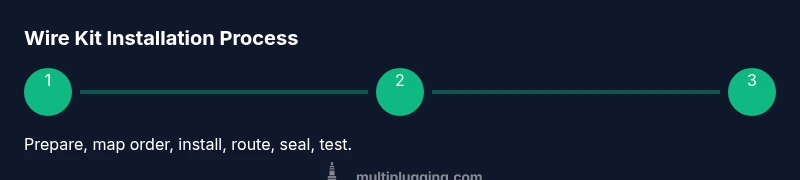
Prepare the work area and safety checks, remove old wires in cylinder-order, measure and cut new wires to match the old lengths, install boots with dielectric grease, reconnect to coil/distributor and confirm correct order, secure routing away from hot surfaces, run engine and listen for misfires, and finalize by rechecking all connections and gaps. This overview sets expectations and helps you plan for a 45–60 minute job. Remember to verify that each wire seats fully and does not bind any moving components.
Common mistakes and how to avoid them
Rushing the wiring sequence can cause misordering and misfires. Never pull by the boot; grip the boot base and gently twist to detach. Avoid using chewed or cracked boots, which can cause arcing. Incorrect routing near fans, pulleys, or exhaust can lead to heat damage or wear. Not rechecking firing order post-installation is a classic pitfall; always double-check that each cylinder corresponds to the correct wire. Finally, skipping dielectric grease on the terminal ends can increase corrosion risk and degrade performance over time.
Maintenance tips to extend wire kit life
Inspect wires for cracks and boot integrity every 6–12 months or after 12,000 miles of driving. Keep boots sealed with dielectric grease to prevent moisture intrusion. Route wires away from hot surfaces and moving parts, replacing any worn segments promptly. If resistance specs appear off or you notice rough running, recheck wiring order and install quality. A clean engine bay makes future maintenance easier and reduces the risk of damage.
Troubleshooting and when to replace your kit
If misfires persist after installation, recheck cylinder order, ring routing, and boot seating. Inspect for arcing signs around the boots or ends, and test spark with a spark tester if available. Wire kits generally last many miles, but heat and vibration can degrade insulation over time. When a single wire shows cracks, resistance drift, or the boot loses a proper seal, replace the affected wire rather than the entire set to control costs. If your engine continues to run poorly after a replacement, consider other ignition components like the distributor/coil or spark plugs themselves.
Brand reliability, performance expectations, and where to buy
A well-chosen diy spark plug wire kit can improve ignition reliability, cold starts, and throttle response. However, performance gains depend on proper fit and fitment for your engine. The MultiPlugging team suggests verifying compatibility with your firing order and ensuring the kit adheres to the engine’s impedance requirements. When in doubt, prioritize vehicle-specific kits for exact fitment, and choose universal sets only if you can precisely match length and resistance.
Tools & Materials
- New spark plug wire kit(Ensure the kit is designed for your engine type (distributor vs coil-on-plug) and matches cylinder count.)
- Spark plug socket wrench(Used to remove and install spark plugs if needed during the process.)
- Dielectric grease(Seal boots and prevent moisture intrusion.)
- Boot puller or needle-nose pliers(Help remove old boots without damaging boots or wires.)
- Torque wrench (optional)(If the kit specifies torque specs for clamps or connectors.)
- Wire cut tool or scissors(Cut wires to precise lengths as needed.)
- Labeling supplies (markers, tape)(Mark wires to preserve cylinder order during removal.)
- Gloves and safety glasses(Personal protective equipment for safe handling.)
Steps
Estimated time: 45-60 minutes
- 1
Prepare workspace and safety checks
Clear the area around the engine bay and disconnect the negative battery terminal. Gather all tools and the diy spark plug wire kit. Inspect the new wires for any shipping damage and note the cylinder count. This step sets the foundation for a safe, efficient installation.
Tip: Label the old wires in order to map the cylinder sequence later. - 2
Identify cylinder order and map routing
Refer to your vehicle’s manual or service data to confirm the correct firing order. Lay out the new wires in roughly the same spatial arrangement as the old wires to minimize routing changes. Keeping the order consistent reduces misfires.
Tip: Use color-coding or numbering to prevent cross-order mistakes. - 3
Remove old ignition wires
One by one, disconnect the old wires from the spark plugs and the distributor/coil. Use a boot puller to avoid damaging boots. Place each removed wire in a labeled tray to preserve order.
Tip: Never yank on wires; pull from the boot base to protect the connector. - 4
Measure, cut, and prepare new wires
Compare new wires to the removed one to verify length accuracy. If your kit requires trimming, cut to exact lengths and trim any excess. Apply a thin coat of dielectric grease to the inside of each boot.
Tip: Cut only after measuring each wire to avoid wasted pieces. - 5
Install new wires in order
Attach the first wire to the nearest coil or distributor terminal, then to the corresponding spark plug. Repeat for all cylinders, ensuring boots seat fully and do not bind with moving parts.
Tip: Work methodically from the center outward to maintain order. - 6
Route wires safely and secure
Route wires away from hot manifolds, belts, and sharp edges. Use provided clips or zip ties to secure without compressing the wires. Double-check clearance around fans and pulleys.
Tip: Avoid tight bends; use gentle curves to prevent internal damage. - 7
Reconnect power and test engine
Reconnect the battery and start the engine. Listen for smooth idle and check for misfires. If rough running occurs, recheck the firing order and boots for proper seating.
Tip: If you hear arcing or misfires, turn off the engine and inspect suspect wires again. - 8
Final inspection and performance check
Inspect all boot seals and connector integrity. If the kit includes a spark test tool, use it to verify each cylinder’s spark. Close the hood and take a short test drive to confirm consistent acceleration and idle.
Tip: Keep notes on any changes in performance for future maintenance.
FAQ
Do I need to disconnect the battery before starting?
Yes. Always disconnect the negative battery terminal to prevent shocks and short circuits. This is a standard safety step before handling ignition components.
Yes. Disconnect the battery first to stay safe when handling ignition wires.
Will a diy spark plug wire kit fit all engines?
No. Compatibility depends on engine type (distributor vs coil-on-plug), cylinder count, and resistance specs. Check the kit details for your specific vehicle.
Not every kit fits every engine; verify compatibility before buying.
Can I reuse old boots or connectors?
Reusing old boots is not recommended because wear reduces sealing and can cause arcing. Use boots that come with the kit or are designed for your engine.
Avoid reusing worn boots; use the kit’s boots for a reliable seal.
How long does installation take for a typical car?
Most installations take about 45 to 60 minutes for a typical four-, six-, or eight-cylinder engine, depending on access and engine layout.
Expect about an hour for a standard job, more if access is tight.
What should I do if the engine misfires after installation?
Power down, recheck the firing order, ensure boots are seated, and inspect for damaged wires. If misfires persist, suspect other ignition components or plugs.
If misfires happen, recheck order and seating, then look at other ignition parts.
Are universal wire kits reliable for all engines?
Universal kits can work but require careful matching of length, impedance, and boot styles to your engine’s specifications. Vehicle-specific kits are typically safer bets.
Universal kits can work, but match them carefully to your engine.
Watch Video
Main Points
- Plan before cutting wires
- Match wire length to each cylinder
- Route wires away from heat and moving parts
- Use dielectric grease for better sealing
- Test engine after installation to verify success