Cub Cadet Spark Plug: Replacement and Diagnostics Guide
Learn how to diagnose, replace, and optimize cub cadet spark plugs on lawn equipment. Step-by-step guidance, torque and gap specs, and maintenance tips from MultiPlugging to keep your mower running smoothly.


By the end of this guide, you'll confidently identify the correct Cub Cadet spark plug for your lawn tractor, remove a fouled plug, gap and torque it correctly, and test the ignition system for smooth starts and reliable acceleration. Key requirements include a properly sized spark plug socket, a torque wrench, feeler gauges, and fresh anti-seize or dielectric grease as recommended.
Why Brand Reliability Matters for Cub Cadet Spark Plugs
When you care for a Cub Cadet lawn tractor, the spark plug is a critical link in the ignition system. A healthy plug ensures crisp starts, efficient combustion, and steady engine performance across mowing sessions. According to MultiPlugging, choosing a plug that matches your engine type and maintenance history can reduce misfires and improve fuel economy. This section explains how the plug design, heat range, and gap impact performance, especially in small engines that power Cub Cadet equipment. Understanding these fundamentals helps DIY enthusiasts diagnose issues early and avoid costly fixes down the line.
Key takeaway: a well-matched spark plug supports reliable starts and steady power. For 2026 guidance, follow the manufacturer’s spec and MultiPlugging recommendations for your specific Cub Cadet model.
How Spark Plugs Work in Small Engines (Cub Cadet Included)
Spark plugs act as the spark source that ignites the air-fuel mixture inside the engine cylinder. In Cub Cadet small engines, the gap between the center and ground electrodes determines ignition energy, while the heat range keeps the plug from fouling or overheating during operation. A plug with the wrong heat range or a worn electrode can cause rough starts, misfires, and reduced mower life. This section covers the basic physics of ignition, the signs a plug is failing, and how plug type (iridium, copper, or platinum) affects longevity and maintenance intervals.
Note: Always consult your Cub Cadet manual for the recommended plug type and gap. The MultiPlugging team emphasizes sticking to OEM recommendations to preserve warranty and ensure optimal performance.
Common Symptoms of a Failing Spark Plug on Cub Cadet Equipment
Recognize symptoms early to minimize downtime. Common signs include hard starts, rough idle, engine misfires under load, decreased power during mowing, increased fuel consumption, and occasional backfires. Fouled plugs—due to oil, fuel, or carbon buildup—often show a dark, sooty electrode. A damaged or cracked ceramic insulator can cause a weak spark or misfiring at higher RPMs. Regular inspection helps you catch wear before it translates into stubborn maintenance bills.
Pro tip: if your mower is old or has frequent ignition issues, test the plug for spark using a tester and inspect the gap with a feeler gauge before replacing.
Tools, Tips, and Best Practices for Cub Cadet Spark Plug Maintenance
Successful spark plug maintenance hinges on using the right tools and following a clean procedure. Gather a spark plug socket, a ratchet, a torque wrench, a gap tool or feeler gauges, dielectric grease or anti-seize (per manual), and a clean rag. Always work with a cool engine and disconnect the spark plug wire before touching the plug. When replacing, check the gap, verify the plug type, and torque to spec to prevent thread damage. The goal is a clean seal, proper heat transfer, and a solid ignition spark that fires reliably every time you pull the starter.
Important: Some Cub Cadet models use different plug sizes or heat ranges; verify model-specific specs in your owner’s manual before buying replacements.
Step-by-Step Replacement Overview (What to Expect in This Guide)
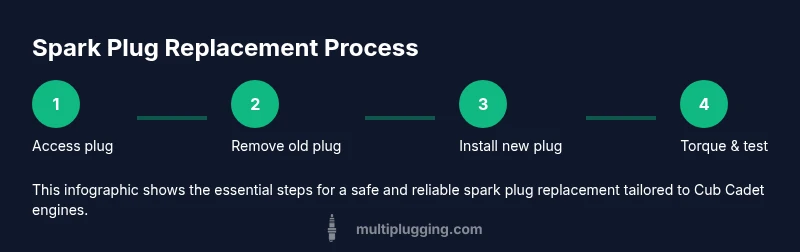
Replacing a spark plug on Cub Cadet equipment is straightforward when you follow the steps carefully. You’ll remove the old plug, inspect the seat and threads, gap and torque the new plug, reconnect the ignition lead, and perform a simple test to confirm spark integrity. This section outlines the overall flow so you know what to expect before you begin.
Safety note: Always wear eye protection and gloves. Hot engine parts can cause burns, and proper ventilation is essential when testing the ignition.
How to Diagnose and Test after Replacement (Light, Easy Checks)
After installation, test the ignition by cranking the engine and listening for a strong, consistent spark. If you still have starting trouble, recheck the gap and re-torque as needed. A compression check can help determine deeper issues if the plug and ignition system test clean. This section covers a practical, step-by-step verification process to ensure the Cub Cadet spark plug delivers consistent performance over a mowing season.
Tip: Keep a spare plug on hand and label the service date so you can track wear and replacement intervals.
Safe Disposal and Maintenance Log
Dispose of used spark plugs in accordance with local regulations. Place them in a sealed container to prevent injury and avoid contamination. Maintain a simple log: model, plug type, gap setting, torque, date of replacement, and any notes about performance. A quick log helps you track maintenance history across seasons and makes troubleshooting faster for future DIY repairs.
Authority Sources and Further Reading
For deeper reliability information and best practices, check authoritative sources from professional organizations and major publications. This section provides references you can trust for spark plug maintenance and engine care.
Troubleshooting Before the Next Mowing Season
If your Cub Cadet starts reliably after a plug replacement but performance fluctuates later, revisit compression, air filter, and fuel quality. A fouled or worn plug might come back if fuel is contaminated or the air filter is clogged. Regular inspection and replacement based on your model’s maintenance schedule keep the engine healthier and reduce downtime during peak mowing.
Summary of Practical Tips for Cub Cadet Spark Plugs
- Always follow model-specific specifications for plug type, gap, and torque.
- Use a torque wrench to avoid over-tightening or under-tightening threads.
- Inspect the seat surfaces and threads for damage before installing a new plug.
- Keep a maintenance log and carry a spare plug for on-the-spot fixes.
Authoritative Sources
- ASE (Automotive Service Excellence): https://www.ase.com/
- SAE International: https://www.sae.org/
- U.S. Department of Energy (Energy.gov) for general engine maintenance concepts: https://www.energy.gov/
Tools & Materials
- Spark plug socket(Sized to fit your Cub Cadet spark plug; often 5/8" or 13/16" depending on model)
- Ratchet(Medium-length for torque access; avoid overextension)
- Torque wrench(Set to the engine’s specified torque; typically around 7-15 ft-lbs for small engines (check manual))
- Gap tool or feeler gauge(Used to verify the electrode gap before installation)
- Anti-seize compound or dielectric grease(Use as recommended by your Cub Cadet manual; helps future removal)
- New spark plug(Choose the correct plug type and heat range for your Cub Cadet engine)
- Clean rag(Wipe threads and seat to remove debris)
- Gloves and eye protection(Safety first when working around ignition and fuel systems)
Steps
Estimated time: 60-90 minutes
- 1
Prepare the engine and safety gear
Ensure the engine is off and cool. Disconnect the spark plug wire and wear eye protection and gloves. Gather tools and a replacement plug before you start.
Tip: Working on a cool engine minimizes the risk of burns and protects you from hot components. - 2
Access the spark plug
Remove any housings or covers necessary to reach the spark plug. Gently inspect the seat for corrosion or damage before removing.
Tip: Take a quick photo of wiring position before disconnecting to avoid miswiring on reassembly. - 3
Remove the old plug
Use the spark plug socket to loosen and extract the old plug counterclockwise. Handle carefully to avoid damaging threads.
Tip: If the plug is stubborn, apply a small amount of penetrating oil and wait a few minutes before retrying. - 4
Inspect the plug and seat
Check the electrode for fouling or wear and inspect the thread seat for damage. A fouled plug often indicates fuel or oil issues.
Tip: If seat is damaged, do not force a new plug; repair or replace the seat first. - 5
Check and set the gap
Measure the gap with a feeler gauge and adjust to the manufacturer’s specification for your Cub Cadet model.
Tip: Even small changes in gap can affect ignition; err on the side of precision rather than guesswork. - 6
Install the new plug
Tighten by hand to seat, then snug with a torque wrench to the recommended spec. Never cross-thread.
Tip: Apply a light coat of anti-seize or dielectric grease if recommended to ease future removal. - 7
Reconnect ignition lead
Reattach the ignition boot securely. Ensure the boot is seated and not twisted.
Tip: A loose boot can cause misfires even with a correctly installed plug. - 8
Test fit and ensure comfort
Reassemble any covers, start the engine, and listen for a clean ignition. Verify that there are no abnormal sounds or smoke.
Tip: If the engine won’t start, re-check gaps and wiring before diagnosing deeper issues. - 9
Document and plan next maintenance
Record the plug type, gap, and torque in your maintenance log. Schedule the next replacement based on your model’s interval.
Tip: A maintenance log speeds future troubleshooting and keeps you on schedule.
FAQ
What is the recommended spark plug type for Cub Cadet engines?
Most Cub Cadet engines use manufacturer-specified plugs; always check the owner's manual for exact recommendations and heat range. Using the wrong type can cause poor starting and reduced performance.
Cub Cadet engines typically need the plug specified in the manual; using the wrong type can cause starting problems and poor performance.
How do I know if my spark plug needs replacement?
Signs include hard starting, rough idle, misfires, reduced power, and visible fouling. If the tip or electrode is worn or the ceramic is cracked, replacement is needed.
If your lawn tractor is hard to start or runs rough, check the plug for wear or fouling and replace if needed.
Can I clean a fouled spark plug instead of replacing it?
Cleaning is not a reliable fix for a fouled plug in most Cub Cadet engines. Replacing with a new plug ensures a consistent spark and performance.
Cleaning a fouled plug is usually not enough; replace it to ensure reliable ignition.
How tight should I torque the spark plug on a Cub Cadet?
Torque should match the Cub Cadet manual’s specification. Typically, small engine spark plugs are torqued to a light snug, without overtightening.
Follow the manual for the exact torque; don’t overtighten the plug.
What maintenance schedule is recommended for spark plugs on Cub Cadet?
Follow the engine’s service interval in the owner’s manual. Many small engines benefit from inspection every mowing season and replacement every 1-2 years depending on use.
Check the manual for the recommended interval; inspect yearly and replace as needed.
Is there a difference between iridium and copper plugs for Cub Cadet?
Iridium plugs typically last longer and resist wear, but copper plugs can be cheaper and adequate for many Cub Cadet models. Check compatibility with your engine.
Iridium lasts longer but copper can be fine if the model supports it; verify compatibility.
Watch Video
Main Points
- Identify the correct Cub Cadet spark plug before replacement.
- Follow model-specific gap and torque specifications.
- Inspect seat threads and keep a maintenance log for reliability.