Spark Wire: Diagnosis, Replacement, and Care for Reliable Ignition
Learn how to diagnose worn spark wires, replace spark plug wires safely, and optimize ignition performance with practical steps, tools, and maintenance tips from MultiPlugging.


You will learn how to locate a faulty spark wire, test its integrity, and replace it with a compatible wire set. This guide covers safety steps, tools, and best practices to restore ignition performance. By the end, you should be able to complete a standard spark wire swap on most engines and verify proper routing and boot seating in a safe, efficient manner.
What is a spark wire and why it matters
A spark wire, commonly called a spark plug wire or ignition lead, is the insulated conductor that carries the high voltage from the ignition coil or distributor to the spark plug. In gasoline engines, this voltage jump creates the spark that ignites the air-fuel mixture. The wire consists of a conductive core, insulating material, and a boot that seals onto the plug or coil. Over time, heat, oil leaks, and physical wear can crack the insulation, causing high resistance or arcing. When a spark wire fails, engines misfire, idle becomes rough, and fuel economy drops. For DIYers, knowing how to inspect and replace spark wires is a foundational maintenance skill. According to MultiPlugging, worn or cracked spark wires are among the most common culprits behind misfires, and a simple swap often restores smooth running. The principle is the same across many engines, though boot designs may vary. The goal is a clean electrical path with solid boot seating and correct routing to avoid heat sources. This section uses practical checks and safe procedures so you can handle spark wire maintenance with confidence.
Signs your spark wire needs replacement
Worn spark wires often reveal themselves through a mix of symptoms. Rough idle, hesitation on acceleration, and reduced power in one or more cylinders are common indicators. You might also notice visible cracks in insulation, melted boots, or oil contamination around the boot area. Misfires that persist even after other maintenance steps point toward a failing wire. If you swap a suspect wire and the issue moves with the cylinder, you know you’ve identified the culprit. A visual check is quick, but resistance checks (where the vehicle manual allows it) can confirm abnormal wear. In many cases, replacing the worn wire set restores smooth engine performance and prevents further misfires, saving time and fuel.
Wire types, lengths, boots, and compatibility
Spark plug wires come in different boot styles and lengths to fit various engines. Boot connectors must seat securely on the spark plug and coil or distributor post, and the length should match the original routing path to avoid tension or rubbing. Some engines use coil-on-plug setups with individual boots, while others use a traditional distributor system with a wire set. Resistance and shielding are designed to minimize interference and maintain a consistent arc. When selecting a replacement, verify the number of cylinders, boot type, length, and the correct connector size for your vehicle. Using an incorrect length can lead to routing that traps heat or rubs against moving parts, which shortens wire life and invites misfires.
Visual inspection and safe handling before you swap
Before touching any ignition components, power down the vehicle and disconnect the negative battery terminal to prevent electric shock or accidental engine starts. Wear gloves and safety glasses to protect against sharp edges and accidental contact with hot surfaces. Inspect the old wire set for cracks, stiff boots, or oil saturation. Check the boots’ sealing surfaces for dirt or corrosion. When removing, avoid pulling by the wire insulation—grip the boot to disconnect. A clean, dry work area helps prevent contamination of the ignition system. If you note oil leaks around the wires, address those leaks first, as oil can degrade wire performance and accelerate wear.
Replacement overview: what happens during swap
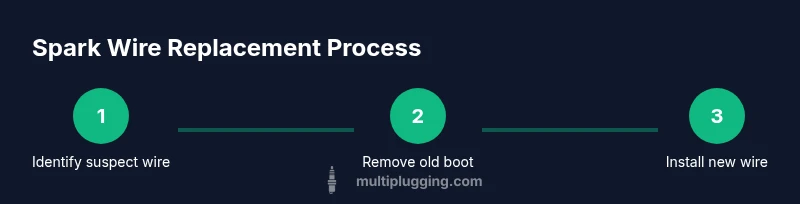
A typical spark wire swap involves removing the old wire from its boot, measuring or matching the length of the new wire, and seating the new wire onto the spark plug and the ignition coil/distributor post. Take care to maintain the original firing order and routing to minimize crossfire or arcing. When installing, push firmly until you hear or feel a click to ensure a solid seat. If your vehicle uses a coil-on-plug arrangement, replace each boot individually, following the same seating procedure. After installation, visually inspect all wires for clearance from hot exhaust components and moving parts.
Common pitfalls and how to avoid them
Avoid twisting or bending wires excessively; this can damage the insulation and shorten life. Do not snip or hack wires to shorten them—use the correct length from the wire set. Ensure boots fully seat and are free of oil, moisture, or dirt. Routing wires over hot exhaust manifolds or near sharp edges invites premature failure. Labeling wires or taking photos during removal can help you restore the exact firing order and path during reinstallation. If in doubt, consult your vehicle service manual or a trusted repair guide to confirm boot orientation and connector type.
Post-installation checks and performance considerations
After wiring is replaced, start the engine and listen for even firing across all cylinders. A smooth idle with no misfire sounds is a good sign. If you still notice rough running, recheck boot seating and routing, especially around the first few cylinders. A quick test drive can reveal subtle hesitations or surges that merit a second look. Keep an eye on the check-engine light; some misfire codes require diagnostic checks beyond wire replacement. In most vehicles, a correct spark wire replacement yields immediate improvements in throttle response and fuel economy.
Maintenance tips to extend spark wire life
To extend wire life, route wires away from hot exhaust parts and moving components. Keep boots clean and dry, and replace any wire sets showing signs of wear or oil exposure promptly. Use dielectric grease on the metal-to-plastic boot interface if recommended in your manual to improve sealing and seating. Regular engine maintenance, such as valve cover gasket replacement and oil leaks repair, reduces contamination that accelerates wire degradation. Finally, replace ignition wires as a set when symptoms appear in more than one cylinder to maintain balanced performance and reliability.
Glossary of terms
- Spark wire: the insulated conductor carrying high voltage to the spark plug.
- Boot: the protective connector at each end of the wire that seals onto the spark plug or coil.
- Firing order: the sequence in which spark plugs fire; crucial when replacing wires to avoid misfires.
- Dielectric grease: a silicone-based compound used to improve sealing and reduce corrosion at boot interfaces.
Tools & Materials
- Spark plug wire set(Ensure correct part number and length for your engine.)
- Socket wrench set(Common sizes include 5/8" or 16mm; verify from service manual.)
- Safety gloves(Protect hands from heat and sharp edges.)
- Safety glasses(Eye protection during removal and installation.)
- Clean rag(Wipe boot surfaces and keep the area clean.)
- Dielectric grease(Optional; helps seal and ease boot installation.)
- Multimeter (ohm meter)(Used for resistance checks where applicable per manual.)
- Marker or tape(Label wires to preserve firing order during removal.)
Steps
Estimated time: 30-60 minutes
- 1
Identify suspect wire
Visual inspection helps identify cracks, oil, or hardened boots. If one cylinder misfires consistently and the wire shows wear, mark it for testing or replacement.
Tip: Take a photo of the wire routing before removal to reproduce the path later. - 2
Power down and safety prep
Turn off the ignition and disconnect the negative battery terminal to prevent shocks or accidental startups during the swap.
Tip: Wear gloves and safety glasses; work in a well-lit area. - 3
Remove old wire boot
Grasp the boot, not the wire, and pull straight off the spark plug or distributor post. If resistance is high, use a small amount of tugging with a gentle twist to release.
Tip: Do not yank; applying sideways pressure can damage the boot or post. - 4
Compare wire lengths and routing
Place the old wire next to the new one and confirm the length and bend points match the engine’s harness routing. A mismatched length can cause heat exposure or routing issues.
Tip: Keep the new wire at a similar angle to the original to avoid sharp bends. - 5
Install the new wire boot onto the plug
Push the new boot onto the spark plug until you hear a click indicating a secure seat. Do the same at the ignition coil/distributor post.
Tip: Use dielectric grease sparingly at the contact area if recommended by your manual. - 6
Route and seat the wire
Route the wire away from hot surfaces and moving parts. Ensure the boot sits fully on the post and there is no slack near sharp edges.
Tip: Avoid fans or belts; clearances should be well away from heat sources. - 7
Repeat for all necessary wires
If replacing multiple wires, complete one full circuit before testing. Maintain firing order by labeling or photographing each connection.
Tip: Replace in order rather than guessing the sequence if you’re uncertain. - 8
Reconnect battery and perform a test
Reconnect the battery, start the engine, and listen for a smooth, uniform idle. If misfires persist, recheck boot seating and length.
Tip: If a check-engine light appears, consult the manual for diagnostic steps. - 9
Finalize and verify
Stow tools, tidy the workspace, and take the vehicle for a short drive to confirm consistent performance. Inspect for heat or rubbing after a short test run.
Tip: Document the replacement for future reference.
FAQ
Should I replace spark wires in pairs or all at once?
If one wire shows wear or misfires, consider replacing nearby wires to maintain consistent performance. Replacing the entire set minimizes future failures and ensures balanced ignition timing across cylinders.
If one wire looks worn, it’s wise to replace adjacent ones too, so the ignition system stays balanced.
Can I reuse old spark plug wires?
Reusing old wires is not recommended if the insulation shows cracks, deformation, or oil contamination. Fresh wires provide better insulation and predictable resistance for reliable ignition.
You should not reuse damaged wires. Fresh wires give you reliable ignition and performance.
How can I tell if a wire is defective without removing it?
Visible damage such as cracks or oil on the boot is a strong indicator. If misfires persist after replacing other components, test resistance if your manual allows, or consult a guide for the correct specification.
Cracks or oil on the boot are obvious signs; if in doubt, consult your manual for resistance specs.
Are spark wires compatible with all engines?
Wires come in many boot styles and lengths. Always match the wire set to your engine’s cylinder count and connector type. When in doubt, use the OEM specification or a reputable aftermarket option designed for your model.
Wires aren’t universal—check your engine’s specs and choose a matching set.
Do I need to remove the intake manifold to replace wires?
Most wire replacements do not require removing the intake manifold. Access typically comes from the engine bay with the right tools. Some engines will require more disassembly; follow your service manual for specifics.
Usually not; follow your manual for any model-specific steps.
How often should spark plug wires be replaced?
Replacement timing depends on the vehicle and wire quality. If you notice wear signs, misfires, or reduced performance, plan a replacement as part of routine maintenance.
Replace when worn or failing; perform regular checks during tune-ups.
Watch Video
Main Points
- Identify and replace worn spark wires promptly.
- Match wire length and boot style for proper fit.
- Route wires away from heat and moving parts to extend life.
- The MultiPlugging team recommends quality wire sets for reliability.