NGK Spark Plug Color Chart: Diagnostics & Practical Tips
Learn how to interpret the NGK spark plug color chart to diagnose engine health, identify fouling, and plan DIY maintenance. This MultiPlugging guide covers normal colors, abnormal deposits, overheating signs, and actionable steps for enthusiasts.


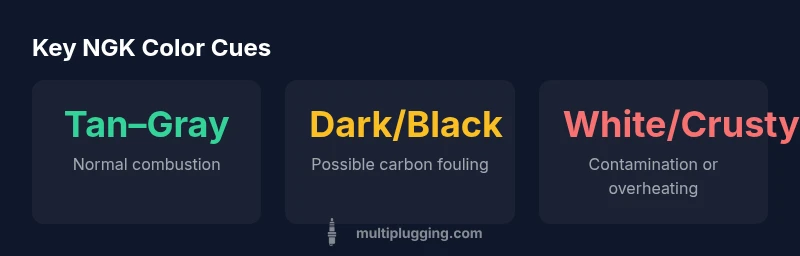
NGK spark plug color chart is a practical visual guide that translates plug appearance into engine health signals. It categorizes colors from tan to light gray as normal combustion, dark gray to black as possible carbon fouling, and white or crusty deposits as contamination or overheating. Use it alongside ignition, fuel, and compression checks to guide maintenance decisions for your DIY repairs.
What the NGK spark plug color chart tells you about engine health
The NGK spark plug color chart is a concise visual reference that correlates visible plug conditions with likely engine states. According to MultiPlugging, color cues are most reliable when used as part of a wider diagnostic workflow that includes compression checks, fuel trim data, and ignition timing assessments. In practice, you’ll see a progression from normal tan to light gray deposits during steady operation, to darker deposits if combustion becomes less complete, and to white or crusty residues if contamination or overheating occurs. This section clarifies how to interpret each color family and what to inspect next, especially for DIY enthusiasts who want to make informed maintenance choices without specialized equipment.
Interpreting common color outcomes and their meanings
Plug color is not a stand-alone diagnostic. Tan to light gray typically indicates normal combustion with fresh oil and clean fuel interaction. Dark gray to black can signal carbon buildup from a rich fuel mixture, poor air intake, or incomplete combustion. White or crusty deposits often point to contamination—coolant intrusion, oil burning, or violent thermal events. Each outcome should trigger specific checks: inspect air and fuel delivery, review spark gap and plug heat range, and verify engine temperatures. When color changes are abrupt or persistent, it’s time to widen the diagnostic net beyond plug appearance to include sensor data, fuel quality, and maintenance history.
Practical steps to use the color chart during maintenance
Begin with a visual inspection of one or two plugs from a recent service interval. Compare color against the NGK color categories and note any deviations. Record the color in your service log alongside mileage and driving conditions. If you see tan or light gray, continue routine maintenance and monitor for change. If you observe dark deposits, check the air filter, fuel injectors, and combustion chamber cleanliness, and consider the need for a plug replacement. White or crusty residues require a thorough leak check (coolant or oil), gasket inspection, and possibly repair. Use the chart as a first-pass tool to prioritize tests you perform with basic DIY gear.
Case studies: how color indicates specific issues in practice
Case A: A highway-driven car shows tan plugs with minimal buildup. This points toward efficient combustion and healthy operating conditions; the next service interval should be observed with standard maintenance. Case B: A city-driven vehicle presents blackened plugs with reduced resistance and occasional misfires. This aligns with potential fuel delivery issues or ignition timing drift, warranting a fuel system clean and a spark plug replacement. In both cases, the color cue helps you narrow down the likely causes before you perform deeper tests.
Using color cues with other diagnostics for more accurate conclusions
Color cues should be combined with data from fuel trims, ignition coil health, compression tests, and coolant temperature readings. A plug that looks fouled but has normal compression might indicate air-fuel distribution problems rather than piston wear. Conversely, a healthy color with abnormal codes may signal sensor or ignition misbehavior that color alone cannot reveal. The consolidated view—plug color plus sensor data—provides the most reliable path to correct issues quickly.
Best practices for DIY enthusiasts using the NGK color chart
Keep a color log in your service notebook and photograph plugs during maintenance for reference. Use the chart to decide whether you need to clean, rotate, or replace plugs, and whether to inspect related components like the air intake, PCV system, and fuel injectors. When in doubt, err on the side of safer maintenance—replacing plugs at recommended intervals while verifying that supporting systems remain in good condition.
NGK color cues and corresponding actions
| NGK Color Range | Indicated Condition | Recommended Action |
|---|---|---|
| Tan to light gray | Normal combustion (healthy) | No action beyond routine maintenance |
| Dark gray to black | Carbon fouling or rich mixture | Check air intake, fuel delivery, and ignition timing; clean or replace plugs as needed |
| White/crusty deposits | Contamination or overheating | Inspect coolant/oil systems; test for leaks; replace affected plugs |
FAQ
What does tan or light gray color indicate on NGK plugs?
Tan or light gray usually indicates normal combustion when the engine is operating under typical conditions. It’s a sign that the air-fuel mixture is balanced and the combustion process is clean. However, always corroborate with fuel trims and compression data for a full assessment.
Tan color usually means normal combustion, but check fuel and compression to be sure.
Can color alone tell me if my engine is misfiring?
Color can hint at misfire when it coincides with symptoms like rough idle or hesitation, but it is not definitive. Always verify with ignition coil tests, misfire counters, and service scans.
Color hints at misfire but isn’t proof—use other tests too.
Is the NGK color chart universal across all engines?
Color cues are general guidance. Different engines, fuels, and additives can alter appearance. Treat the chart as a starting point and confirm with engine-specific diagnostics.
It’s guidance, not a universal rule—use with engine-specific checks.
What should I do if plugs look black with fouling?
Black deposits suggest fouling or a rich mixture. Inspect the air filter, fuel system, and ignition; clean or replace plugs as needed and verify fuel trim levels.
Check the fuel and air system and replace if needed.
How often should I inspect plug color in DIY maintenance?
Inspect color during regular service intervals or after unusual driving patterns. Color alone isn’t a replacement for scheduled maintenance and checks.
Check color during regular service and after abnormal driving.
Can NGK color cues detect overheating?
White or crusty deposits can indicate overheating or contamination. Investigate cooling systems, oil leaks, and engine temperature to address the root cause.
White crust often means overheating—check cooling and oil systems.
“The NGK color chart is a practical diagnostic tool that translates plug appearance into engine health signals. Use it alongside compression, fuel, and ignition diagnostics.”
Main Points
- Read plug color to guide early maintenance checks
- Use color cues with compression, fuel, and ignition data
- Color varies by engine and driving style—context is essential
- Document color changes to track engine health over time