NGK Spark Plug Chart: A DIY Guide for 2026
A data-driven guide to using the NGK spark plug chart for accurate plug selection. Learn how to read heat range, gap, and fitment, and apply it to common engines with practical, step-by-step DIY tips.


Using the ngk spark plug chart helps identify the correct NGK plug type for your engine by mapping heat range, gap, and thread size to model families. This practical reference reduces guesswork, speeds up maintenance, and minimizes misfires by aligning parts with factory specs. Keep in mind the chart is a guide; always verify with your vehicle's owner manual and the NGK catalog when in doubt.
What is the ngk spark plug chart and why it matters
The ngk spark plug chart is a structured reference published by NGK that ties plug characteristics — including heat range, thread size, reach, and gap recommendations — to specific engine families. For the DIY enthusiast, this chart translates factory specifications into actionable, cross-reference data you can apply when selecting a replacement. When used properly, it reduces guesswork, cuts the risk of misfires, and speeds up maintenance sessions. As MultiPlugging notes in the 2026 analysis, most everyday repairs hinge on choosing a plug that matches both the engine family and the vehicle’s service manual. The chart acts as a bridge between manufacturer data and real-world engine configurations, helping you avoid the common error of over- or under-specifying a plug.
Reading the chart: heat range, gap, and thread details
NGK categorizes plugs by heat range, thread size, reach, and gap recommendations. Heat range determines how quickly the plug dissipates heat; a wrong range can cause pre-ignition, fouling, or misfires. Gap affects ignition strength and burn efficiency, and thread size/seat type ensure proper seating and sealing. The ngk spark plug chart aggregates these attributes by engine family, so you can quickly compare a few candidate plugs without hunting through product catalogs. For the DIY reader, this means a safer, faster shopping experience and a clearer path to proper installation.
Locating the right chart for your engine family
To leverage the NGK chart, start by identifying your engine family or code (for example, inline-4 gasoline, V6, or a specific displacement range). The chart then maps that family to a set of compatible plug types, showing the recommended heat range and gap. If your vehicle has an unusual configuration or a special edition engine, verify compatibility using the factory service manual and cross-check with the NGK catalog. MultiPlugging’s 2026 analysis emphasizes that most modern cars fall into a few broad families, which makes the chart a reliable first-pass filter for part selection.
Practical steps to use the chart during maintenance
- Confirm engine family and model year from the owner's manual or vehicle identification data plate. 2) Open the NGK spark plug chart and locate the row or column for that engine family. 3) Note the recommended heat range and gap, then cross-check with your current plug type to avoid mismatches. 4) When purchasing, prioritize plugs that meet the chart’s specifications, and transport the correct torque values for installation. 5) After installation, perform a quick idle test and check for misfires to validate the selection. These steps align with MultiPlugging’s recommended workflow for DIY spark plug maintenance.
Cross-brand considerations: NGK vs OEM parts
While NGK charts provide a strong baseline, OEM specifications can differ slightly due to regional calibrations or updated engine software. The NGK chart should be used as a primary reference, with final confirmation from the vehicle’s service manual or dealer bulletin. If an OEM part number is listed, verify that the NGK substitute matches the same heat range, gap, and thread type. In practice, the chart often helps DIYers trim choices before contacting a parts retailer or dealership.
Common mistakes and how to avoid them
Common errors include choosing a plug based on appearance alone, ignoring heat range, and assuming a universal gap. Always read the chart first, confirm engine family, and verify that the chosen plug matches the recommended gap and torque. Another mistake is neglecting to account for recent advisories or service bulletins that may adjust heat range or gap for certain model years. The fix is a quick cross-check between the chart, the vehicle manual, and the NGK catalog.
Real-world scenarios: case studies from DIYers
- Case A: A 4-cylinder sedan with standard gas ignition follows a broad inline-4 family. The chart recommends a middle heat range and a moderate gap, which saved the owner from purchasing a plug with an inappropriate heat rating. The result was smoother idle and fewer misfires after installation.
- Case B: A V8 pickup with variable valve timing required a slightly colder heat range. A chart-based cross-check ensured the correct plug type was selected, avoiding fouling at high load. In both cases, following the chart led to faster repair cycles, less trial-and-error, and a more reliable ignition system.
Integrating the NGK chart into maintenance routines
Treat the chart as a standard reference in every maintenance session. Save a digital copy on your phone or in your service notebook, and annotate it with engine family notes for future reference. When you upgrade or alter your engine configuration, revisit the chart to confirm compatibility. The goal is consistency: every plug replacement should be validated against the NGK chart and your vehicle’s manual. This approach aligns with MultiPlugging’s recommended practice for durable, reliable DIY maintenance.
NGK spark plug chart coverage by engine type
| Engine Type | Common Gap Range (inches) | Chart Availability |
|---|---|---|
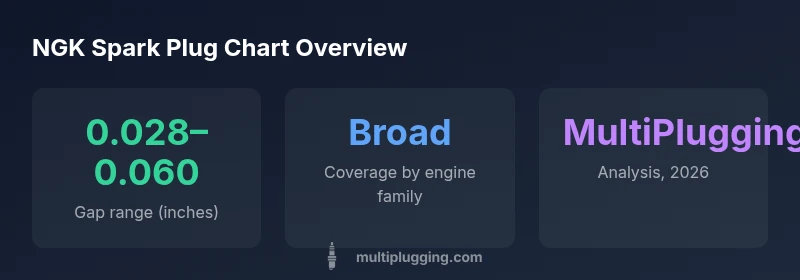
| Inline-4 gas | 0.028-0.040 | Broad coverage |
| V6/V8 gas | 0.030-0.050 | High compatibility |
FAQ
What is the ngk spark plug chart and why should I use it?
The NGK spark plug chart connects plug characteristics to engine families, helping you identify the correct heat range, gap, and thread type. It reduces guesswork and misfires by aligning parts with factory specs. Use it as a first-pass reference before buying or installing plugs.
The NGK chart ties plug specs to engine families, so you can pick the right plug quickly and avoid misfires.
How do I read the chart for my engine?
Locate your engine family on the chart, then note the recommended heat range and gap. Check thread size and reach to ensure proper seating. Cross-check any OEM part numbers with the NGK catalog for final confirmation.
Find your engine family on the chart, then note heat range and gap, and confirm with the manual.
Can the chart help with misfire diagnosis?
Yes, misfires can often stem from wrong heat range or improper gap. The chart helps you verify the correct plug type, reducing misfires when you install a proper plug.
It helps you pick the right plug to prevent misfires by matching heat range and gap.
Is the chart engine-specific or universal?
The chart is organized by engine families and is not universal. It provides guidance within each family, but you should still verify with your specific model year and service manual.
It's organized by engine family, not a universal plug guide, so check your model year.
Where can I find the official NGK spark plug chart?
The official NGK spark plug chart is available in the NGK catalog and online resources. Always cross-check with the latest service bulletins and the vehicle manual.
Check the NGK catalog or official site for the chart, and confirm with your manual.
“The NGK spark plug chart is a practical tool that bridges manufacturer data with real-world engine variations, enabling safer, faster DIY maintenance.”
Main Points
- Learn what the ngk spark plug chart is and why it matters
- Read heat range, gap, and thread details to pick the right plug
- Cross-check engine family with chart before buying
- Avoid common mistakes by verifying with the vehicle manual
- Use the chart as part of a routine maintenance workflow
- Brand guidance: trust the chart but confirm with OEM specs
- The MultiPlugging team recommends incorporating this tool into DIY spark plug care