How to Tell When Glow Plugs Need Replacing: A DIY Guide
Learn to identify symptoms, perform at-home tests, and safely replace glow plugs to restore reliable diesel engine starts and smooth running.


You can tell glow plugs need replacing when you experience hard starting, especially in cold weather, rough idle, misfires, or a Check Engine Light. Other signs include reduced cranking speed and higher exhaust smoke. Start with a diagnostic test (glow plug tester or resistance check) and then follow the step-by-step replacement guide to confirm and fix the issue.
What Glow Plugs Do and Why They Fail
Glow plugs are a critical part of diesel engines, warming the combustion chamber to ensure reliable starting and smooth cold-weather performance. Over time, they wear out from thermal cycling, carbon buildup, or corrosion of the heating element. When glow plugs fail, the engine may crank longer, hesitate to start, or run roughly until it warms up. According to MultiPlugging, recognizing deterioration early can prevent unnecessary wear on the starting system and reduce fuel and emission penalties. A failed glow plug can also cause misfires that damage exhaust systems, so early diagnosis is worth your time. In many engines, glow plugs are wired in a circuit that can reveal faults with a quick diagnostic scan. Understanding how they work helps you interpret symptoms and decide when replacement is truly necessary.
Common Symptoms That Signal Replacement Is Due
Hard starting in cold weather is the hallmark symptom, but it’s not the only clue. You might notice a long crank before the engine fires, coughing or coughing-like noises during starting, or rough idle until the engine reaches operating temperature. The Check Engine Light or a diagnostic trouble code indicating cylinder misfire or glow plug circuit issues is a strong signal to test further. Some vehicles exhibit reduced fuel economy and increased exhaust smoke when glow plugs fail. In many cases, a single bad glow plug will cause one cylinder to run lean or rich, but several worn plugs can produce a chain reaction that worsens performance. If you observe any combination of these signs, plan a targeted test and inspection. MultiPlugging’s analysis emphasizes that symptoms often cluster, not appear in isolation, so a holistic check yields better results.
Quick Diagnostic Checks You Can Do at Home
Begin with a visual inspection of wiring and connectors for corrosion or loose pins. If your vehicle supports it, use a scan tool to pull codes related to glow plug circuits and misfires. A basic resistance check with a multimeter can tell you if a specific glow plug is open or has abnormally high resistance. Compare readings across multiple plugs when the engine is cold, as some wear becomes most apparent before heating cycles. Listen for unusual cranking sounds, which can indicate that heating is not occurring as intended. Remember that some diesel engines require a precise sequence for testing, so consult your service manual for the location of the glow plugs and the expected resistance range for your model.
Using a Glow Plug Tester and Resistance Readings
A dedicated glow plug tester can simulate the heating element’s operation and reveal which plugs aren’t warming properly. When testing, ensure the engine is cold, disconnect the battery, and isolate individual plugs to avoid circuit cross-talk. If a plug shows zero or very high resistance, it’s a prime candidate for replacement. A moderate increase in resistance across plugs may indicate marginal health, suggesting planning a replacement before complete failure. If you’re using a multimeter, test both the resistance and the continuity to confirm the heating element’s integrity. Keep in mind that some tests require special adapters (glow plug socket adapters) to access the plugs safely. MultiPlugging’s guide highlights that consistent readings across cylinders point toward other ignition or fuel-system issues.
Step-by-Step Removal and Replacement Process (High-Level Overview)
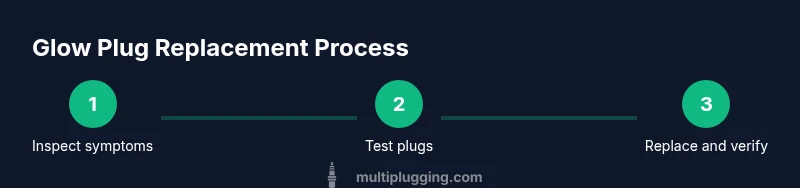
The replacement process involves safely disconnecting the battery, locating glow plugs, removing wiring harnesses, unscrewing the old plugs, inspecting the threads, installing new plugs with careful torque, and reassembling the harnesses. Always use the correct glow plug socket and avoid forcing plugs if they resist. A careful approach minimizes thread damage and ensures a proper seal. After installation, you’ll want to perform a test crank and a short road drive to confirm the fix. This section provides a high-level flow; the dedicated Step-by-Step section below offers detailed actions and tips.
Special Considerations for Different Engine Layouts
Engine layouts vary, and glow plug access can be constrained by intake manifolds, valve covers, or turbochargers. Some engines position plugs at the back of the cylinder head, requiring extra care or the removal of adjacent components. In narrow spaces, you may need flexible extensions or specialty sockets. Always consult the service manual for torque specs, the correct plug type (heat range, thread size), and the recommended replacement interval. MultiPlugging notes that starting with a model-specific guide reduces guesswork and helps avoid cross-threading or damaged seals.
Aftercare and Rechecking the System
After replacement, recheck all electrical connections for security and signs of heat damage. Clear any stored fault codes with your scan tool and perform a controlled cranking test to listen for smooth starting. A quick drive to observe engine behavior at temperature is advised. If misfires persist, revisit the plug installation and verify that the correct torque and seating are achieved. MultiPlugging recommends a post-replacement diagnostic run to confirm the health of the cooling system, air intake, and fuel delivery, which can affect glow plug performance indirectly.
Common Pitfalls and How to Avoid Them
Rushing the installation or using the wrong plug type is a common mistake. Never force a plug; misalignment can strip threads or crack the head. Failing to disconnect the battery can lead to electric shorts or airbag issues if a sensor is disturbed. Skipping a thorough harness inspection may miss corroded connectors that mimic plug failure. Finally, neglecting a post-install test can leave you with undiagnosed contributing issues. Plan time for both removal and a final test, and use a torque wrench when possible.
Maintenance Schedule and When to Inspect Glow Plugs
Set a reminder to inspect glow plugs at major service intervals, especially if you operate in very cold climates or drive infrequently. Regular inspection of wiring and connectors can catch corrosion early, extending the life of the heating elements. Tracking starting performance and fuel economy can reveal developing issues long before a failure happens. Use a diagnostic check during routine service to detect subtle changes in resistance or glow timing, enabling proactive maintenance rather than reactive repairs.
Tools & Materials
- glow plug socket (deep-well)(Ensure compatibility with your engine’s glow plug size and shape.)
- ratchet with extension(Access glow plugs in tight engine bays.)
- torque wrench (optional but recommended)(Use to achieve manufacturer-recommended seating without over-tightening.)
- spark plug boot puller or needle-nose pliers(Safely disconnect wiring harnesses without damage.)
- replacement glow plugs suitable for your engine(Check part number and heat range per service manual.)
- dielectric grease and anti-seize compound(Use sparingly on threads if recommended by manufacturer.)
- multimeter or glow plug tester(For resistance or heating-diagnostic checks.)
- shop rags and protective gloves(Keep area clean and protect hands.)
Steps
Estimated time: 1-2 hours
- 1
Prepare the vehicle and safety checks
Park on a level surface, engage parking brake, and disconnect the negative battery terminal. This prevents electrical shorts and avoids accidental starting while you work. Allow the engine to cool if it’s recently run to avoid burns.
Tip: Wait at least 60 seconds after disconnecting the battery to ensure capacitors discharge. - 2
Locate glow plugs and confirm required tools
Consult the service manual to locate glow plugs for your engine. Confirm the correct socket size and recovery tools before you begin to minimize repeated disassembly.
Tip: Take photos of wiring routes before disconnecting harnesses to aid reassembly. - 3
Disconnect wiring from glow plugs
Carefully detach the wiring harness or individual connectors from each glow plug. Label connectors if needed to maintain correct alignment during reassembly.
Tip: Use a small pick or tool to release clips without pulling on the wires themselves. - 4
Remove old glow plugs
Attach the glow plug socket and ratchet, then gently loosen and remove each plug. If a plug binds, back it out slightly and reattempt—avoid tilting or forcing, which can damage the head.
Tip: Apply steady, even pressure and wear eye protection; cross-threading is common if the tool isn’t aligned. - 5
Inspect plugs and threads
Check removed plugs for signs of wear, carbon buildup, or burning. Inspect the threads in the cylinder head for damage or oil fouling that may indicate other issues.
Tip: If the threads look damaged, stop and consult a professional machine shop for repairs. - 6
Install new glow plugs
Thread the new plugs by hand to seat them cleanly, then snug with the glow plug socket. If you have a torque spec, use a torque wrench to reach it without over-tightening.
Tip: Oil-free threads help seating; avoid applying sealants unless the manufacturer requires them. - 7
Reconnect harnesses and battery
Reconnect all electrical connectors in the correct order, verify secure seating, and reconnect the negative battery terminal. Ensure no tools are left in the engine bay.
Tip: Double-check connector alignment before you attempt to start the engine. - 8
Initial test and verification
Crank the engine to seating and start to verify glow plug operation. Listen for smooth, consistent ignition and inspect for any misfires or warning codes.
Tip: If the engine cranks hard or doesn’t start, stop and recheck connections and plug torque.
FAQ
Can glow plugs fail all at once, or do they usually fail one by one?
Glow plugs can fail individually, but it’s not uncommon for several to fail over time. A cluster of worn plugs often presents as stronger starting issues or misfires across multiple cylinders. A comprehensive test helps confirm how many plugs require replacement.
Glow plugs can fail one by one, but sometimes several wear out together. A full test will tell you exactly which ones to replace.
What is the quickest at-home test to identify a bad glow plug?
A resistance test with a multimeter or a dedicated glow plug tester is the quickest at-home method. Compare readings across plugs and look for unusually high resistance or open circuits.
Use a glow plug tester or multimeter to compare resistance across plugs; high or open readings point to failure.
Will a bad glow plug always trigger the Check Engine Light?
Not always. In some vehicles, a glow plug fault may trigger a specific code or cause a rough idle without turning on the CEL. A diagnostic scan can reveal subtle glow plug circuit faults.
Sometimes the CEL isn’t triggered, but a diagnostic scan will show glow plug circuit faults.
Should I replace all glow plugs at the same time or individually?
If multiple plugs show wear or if you’re already in the area during a repair, replacing all worn plugs at once is typically best to ensure consistent heating across cylinders.
If several plugs are worn, replace them all at once to ensure even heating.
Are glow plugs dangerous to replace?
Glow plug replacement involves hot components and electrical wiring; ensure the battery is disconnected and wear eye protection. Follow the manual to reduce risk of burns or electrical shock.
It can be risky if you don’t take precautions, but with the battery disconnected and proper safety, it’s manageable.
How long does a glow plug replacement typically take?
For a typical engine, plan about 60–120 minutes depending on access, engine layout, and whether you replace a full set or just a few. A pro shop may complete faster due to tooling.
So expect around an hour or two, depending on access and how many plugs you replace.
Watch Video
Main Points
- Identify symptoms early to avoid bigger engine issues
- Use a dedicated tester or resistance check to pinpoint faulty plugs
- Follow manufacturer torque specs and test after installation
- Label connectors to ensure correct reassembly
- Inspect surrounding components for related issues during replacement