How to Tell If Spark Plug Is Bad on Snowblower
Learn practical steps to tell if a snowblower spark plug is bad, identify common signs, and perform safe fixes. Expert tips from MultiPlugging to get your snowblower started reliably in winter.


The most common sign a snowblower spark plug is failing is weak or no starting power, especially in cold weather. Other clues include rough idling, misfires, or black, oily, or fouled electrodes. Start with a quick check: remove and inspect the plug, dry the terminals, and test for spark before deeper fixes.
What Makes Spark Plugs Fail on Snowblowers
Snowblowers rely on a clean, strong spark to ignite a cold, dense fuel-air mix. The question how to tell if spark plug is bad on snowblower shows up in winter troubleshooting forums, and the MultiPlugging team has found that the most frequent failure mode in cold climates is a plug that won’t spark or fires inconsistently, often due to fouling or age. Visual clues aside, the plug’s heat range and gap tolerance are critical in subzero starts. In this guide, we’ll cover symptoms, safe checks, and practical fixes to get your snowblower running reliably. The MultiPlugging team emphasizes following safety steps and verifying spark before replacing components.
Quick Symptom Checklist You Can Do Right Now
- Difficulty starting or extended cranking time
- Rough idle or misfires once the engine catches
- Visible carbon buildup, oil on the tip, or a cracked ceramic
- Wet or fouled plug after a cold startup
- Spark test shows weak or inconsistent arc
If you notice any of these signs, start with the safe visual inspection, then move to a measured spark test. This process helps you differentiate between a fouled plug and a more serious internal issue. Remember, addressing spark plug issues promptly reduces the risk of a no-start situation in deep snow. According to MultiPlugging, timely checks save time and prevent winter breakdowns.
Visual Inspection: What to Look For
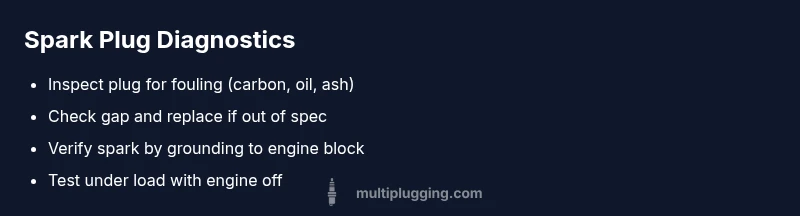
A thorough look at the spark plug can reveal most problems without disassembly. Look for three main categories of fouling: carbon deposits (black, dry soot), oil fouling (shiny, oily glaze or wet oil on the electrode), and ash or fuel fouling (light gray or white). A cracked ceramic or a worn electrode edge are also red flags. Compare the electrode gap to the manufacturer’s spec and note any cross-threading or burnt insulators. If deposits are excessive or the plug appears damaged, plan for replacement instead of cleaning, as cleaning rarely restores full performance for a snowblower operating in cold weather.
Functional Tests You Can Perform Safely
Before touching anything electrically risky, disconnect the spark plug boot. Then, remove the plug and inspect visually. Clean off light fouling with a dry brush if needed, but never scrub oil deposits with aggressive cleaners. Measure the gap with a feeler gauge against the factory specification. A spark test can be done by grounding the plug body to the engine and cranking briefly while observing for a strong, blue spark. If there is no spark or a weak arc, the plug or ignition coil may be at fault and replacement is advised. Always wear safety gloves and eye protection during testing.
Diagnosing Root Causes: Fouling, Wear, or Faulty Gap
Knowing why the plug failed helps prevent repeat issues. Carbon fouling usually means too-rich fuel, poor ignition timing, or short trips that don’t heat the plug. Oil fouling points to oil leaks into the combustion chamber or crankcase oil reaching the chamber via worn rings or valve seals. A worn or eroded electrode or a wide gap reduces ignition efficiency. If the gap is far from spec after cleaning, replace the plug rather than attempting a risky gap repair. In winter operation, a plug with the wrong heat range can foul easily, so ensure you’re using the correct part for your snowblower.
Step-by-Step Repair Path (Most Common Cause: Fouled or Worn Plug)
- Power down and unplug the snowblower, and locate the spark plug. 2) Remove the protective boot and unscrew the plug with a proper spark plug socket. 3) Inspect visually and decide whether to clean or replace. 4) If cleaning, wipe deposits and gently scrub with a non-metallic brush; ensure the threads are clean. 5) Check the gap and adjust to the manufacturer spec using a feeler gauge. 6) If the plug is damaged or the gap cannot be set accurately, replace with a new plug of the correct heat range. 7) Re-install and torque to the recommended specification. 8) Reconnect the boot, prime if necessary, and perform a cautious starting test. Safety first: keep hands away from moving parts.
Prevention Tips to Extend Plug Life
- Use the correct heat range and reach for your snowblower model. Regularly inspect plugs every season and replace if fouled. Keep fuel fresh and use a quality fuel stabilizer to prevent varnish buildup. After installation, run the engine to warm up and burn off moisture that accumulates during cold weather. Store your snowblower in a dry place to reduce corrosion risk, and use anti-seize compounds on plug threads only if recommended by the manufacturer.
Common Mistakes and Safety Warnings
- Don’t test spark with the engine running while holding the plug near metal; risk shock. - Avoid using worn or counterfeit plugs; always buy from reputable sources. - Do not over-tighten spark plugs; overtightening can strip threads and cause leaks. - Never ignore safety gear or skip the disconnect step before working on electrical components. Following these safety habits helps prevent injuries and ensures accurate diagnostics.
When to Seek Professional Help
If the spark test yields no spark, you may have a defective ignition coil, damaged wiring, or a fault in the control module. In such cases, it’s safer and more effective to consult a professional technician, especially if you have limited tools or experience. The MultiPlugging team recommends seeking help sooner rather than later to avoid costly engine damage due to repeated failed starts.
Steps
Estimated time: 25-40 minutes
- 1
Power down and prepare tools
Turn off the snowblower and disconnect the spark plug boot. Gather the socket wrench, feeler gauge, cleaning brush, and a replacement plug if needed. Ensure you have safety gloves and eye protection.
Tip: Double-check no gas lines are pinched or near open flame. - 2
Locate and remove the spark plug
Expose the spark plug by removing the air intake cover if necessary and unscrewing the plug counterclockwise with a proper spark plug socket. Do not force threads.
Tip: Keep the plug in a safe place to avoid contamination. - 3
Inspect the plug visually
Look for carbon fouling (black soot), oil fouling (oily residue), or a cracked ceramic. Note electrode wear and any corrosion on threads.
Tip: Take a quick photo to compare with a new plug. - 4
Measure and adjust the gap
Use a feeler gauge to compare the gap to the manufacturer’s spec. If out of tolerance, adjust if possible or replace the plug.
Tip: Avoid bending the center electrode; adjust only the ground electrode. - 5
Clean or replace the plug
Light carbon deposits can be gently cleaned with a dry brush; oil fouling usually requires replacement. Do not reuse damaged plugs.
Tip: If oil fouling recurs, investigate engine seals and oil control issues. - 6
Reinstall with proper torque
Thread the plug by hand to avoid cross-threading, then snug with a torque wrench to the manufacturer’s spec. Reconnect the boot.
Tip: Proper torque prevents thread damage and leakage. - 7
Perform a cautious test start
Reconnect all components and start the snowblower in a controlled environment. Listen for a clean, steady idle and stable RPM.
Tip: Do not rev aggressively during this first test. - 8
Evaluate performance and plan next steps
If performance remains poor, check ignition wiring or consider replacing the plug with a known-good unit. If the issue persists, seek professional help.
Tip: Document symptoms to aid diagnosis.
Diagnosis: Snowblower won't start or runs poorly after cold start
Possible Causes
- highWet or fouled spark plug causing misfire
- mediumPlug gap too wide or worn
- lowIgnition coil or wiring fault
Fixes
- easyRemove and inspect plug; replace if fouled or damaged; dry and test spark
- easyCheck and reset plug gap to spec; replace if out of tolerance
- mediumInspect ignition coil and wiring for damage; replace with correct part if needed
FAQ
What are the most common signs of a bad spark plug on a snowblower?
The most frequent signs are difficulty starting, rough idle, misfires, and visible fouling on the plug. A failed spark test confirms ignition issues.
Common signs include hard starting, rough running, and visible fouling. A spark test can confirm ignition problems.
Can I clean a fouled spark plug on a snowblower?
Fouled plugs often need replacement. Cleaning can sometimes help temporarily, but oil or heavy carbon fouling usually means replacement for reliable performance.
Fouled plugs often should be replaced rather than cleaned for reliable starting.
Is it safe to test for spark without removing the plug?
Always disconnect the boot. Use insulated tools and keep yourself away from moving parts. Do a controlled test at a safe distance.
Always unplug the boot and test sparks away from your body and moving parts.
What gap should I set on a snowblower spark plug?
Set the gap to the manufacturer’s specification for your snowblower model. Use a feeler gauge for an accurate measurement.
Set to the model’s specified gap using a feeler gauge.
How often should I replace spark plugs in a snowblower?
Replace when fouled, damaged, or when the plug fails to produce a strong spark. Regular inspection helps catch wear early.
Replace when worn or fouled; inspect regularly.
What if there is oil on the plug after starting?
Oil on the plug usually signals engine or seal issues. Address oil leaks or burning oil sources before reusing the plug.
Oil on the plug usually means an oil issue needs fixing beyond the plug.
Watch Video
Main Points
- Inspect visually for fouling and wear
- Test spark and verify the gap to spec
- Replace worn or fouled plugs promptly
- Use correct torque and a safety-first approach