Glow Plug Replacement: Diagnostics & Step-by-Step Guide
Diagnose, replace, and test glow plugs in diesel engines with a practical, step-by-step guide. Learn symptoms, essential tools, safety, testing methods, and troubleshooting tips for reliable cold starts.


Goal: Diagnose and replace glow plugs on a diesel engine to restore reliable cold starts and smooth idle. You’ll learn how to identify failing plugs, gather the right tools, and follow a safe, step-by-step procedure—from isolation and removal to installation and testing. By the end, you’ll verify proper operation and reduce starting woes.
What is a glow plug?
Glow plugs are heating elements located in the combustion chambers of diesel engines. When you turn the ignition, current heats the element, warming the air inside cylinders to aid starting in cold conditions. Unlike gasoline engines, diesel engines rely on compression ignition, so warm glow plugs help achieve reliable starts and reduce white smoke during warm-up. Over time, glow plugs wear out or carbon deposits build up, leading to longer cranks, rough starts, or misfires. Testing their resistance with a glow plug tester or a dedicated multimeter can indicate which plug is failing. Understanding glow plugs is the first step in maintaining diesel reliability and avoiding costly tow bills or extended cranking.
Key takeaway: Glow plugs are heating elements for diesel engines, not spark plugs, and they help with cold starts by preheating air in the combustion chamber.
Symptoms of a failing glow plug
A failing glow plug can cause starting difficulties, rough idle, and excessive cranking time. Common signs include: long cranking before starting, white or blue smoke on startup, misfires after ignition, a check engine light related to cylinder misfire codes, and uneven engine performance during cold starts. If one plug is open circuit or has high resistance, the corresponding cylinder may misfire or run poorly. Diagnosing symptoms early with a tester helps prevent further damage and makes replacement straightforward. Always cross-check multiple symptoms with a test for accuracy.
Tip: If your engine starts but runs rough after startup, test the glow plugs and related wiring rather than assuming a different issue; a single bad plug can trigger multiple symptoms.
Tools and safety basics
Before you start, gather essential tools and follow safety precautions. You’ll need a glow plug socket or a six-point spark plug socket, a ratchet, an extension, a torque wrench (for final tightening), and a set of replacement glow plugs suited to your engine. Have a multimeter or dedicated glow plug tester on hand to verify measurements. Wear eye protection and gloves, and ensure the engine is cool before work. Disconnect the negative battery terminal to prevent accidental arcing, especially when removing electrical connectors.
Why this matters: Diesel glow plugs run hot and can be damaged by power surges or shorts. Proper PPE and battery isolation reduce the risk of electric shock or burns while you work.
Note: If you’re not confident identifying the correct plugs, consult your service manual or a professional. Cross-check plug orientation and cylinder alignment in the manual to avoid incorrect installation.
Tools & Materials
- Glow plug socket (6-point) or universal spark plug socket(Ensure the socket fits the glow plugs used by your engine; magnetized sockets can help retrieve dropped plugs.)
- Ratchet and extension(Used to loosen and tighten glow plugs in tight engine bays.)
- Torque wrench(Important for restoring proper preload without over-tightening. Follow manufacturer specs if available.)
- Replacement glow plugs(Match exact part numbers to your engine model; consider OEM or high-quality aftermarket equivalents.)
- Safety gloves and eye protection(Protect hands from sharp edges and hot components during removal and installation.)
- Dielectric grease or anti-seize compound (optional)(Apply to the threads sparingly if recommended by the manufacturer.)
- Cleaning rag and vacuum(Keep the workspace clean to prevent contamination of the cylinder head or plugs.)
- Multimeter or glow plug tester (optional)(Use to verify resistance and identify multiple faulty plugs.)
- Service manual or OEM torque specs (recommended)(Always defer to manufacturer specifications for torque and procedure.)
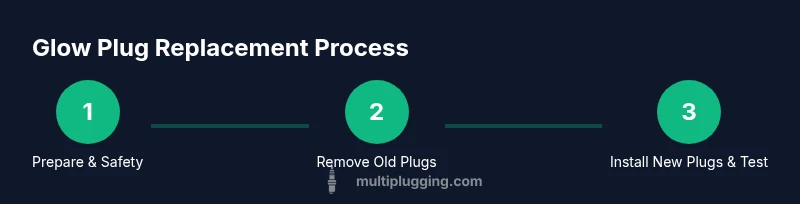
Steps
Estimated time: 60-120 minutes
- 1
Prepare and safety-check
Park on a flat surface and allow the engine to cool completely. Disconnect the negative battery terminal and remove any engine covers that block access to the glow plugs. This prevents accidental shorts and gives you clear access to the plugs.
Tip: Double-check that the engine is cold to avoid burns from hot components. - 2
Locate and identify glow plugs
Using the service manual, locate the glow plugs in each cylinder head. Some engines position plugs along the cylinder head, others under protective caps. Label connectors if needed to prevent mix-ups during reassembly.
Tip: Take photos of connector wiring before removal to ensure correct reconnection. - 3
Disconnect electrical connectors
Carefully detach the electrical leads from each glow plug. Use a small screwdriver or pick to release clips if necessary, taking care not to bend or damage the connector housings.
Tip: Avoid force; wiggling gently minimizes the risk of breaking terminals. - 4
Remove old glow plugs
Attach the glow plug socket to each plug and loosen counterclockwise. Lift the plug straight out to prevent cross-threading. Place old plugs in a labeled container for reference.
Tip: If a plug won’t budge, apply a penetrating oil and wait a few minutes before retrying. - 5
Inspect and prepare new plugs
Compare the old plugs to the new ones for thread size and reach. Wipe threads clean, and lightly apply anti-seize (if recommended).
Tip: Handle new plugs carefully to avoid damaging the ceramic element. - 6
Install new glow plugs
Carefully thread the new glow plugs by hand to ensure alignment, then tighten with the socket. Use a torque wrench to achieve the correct preload without over-tightening.
Tip: Start by snug hand-tighten, then finish with the torque wrench in multiple small turns. - 7
Reconnect electrical connectors
Reattach the glow plug leads in the correct order and ensure all clips snap securely. Recheck the wiring against your earlier photos.
Tip: Make sure connectors click firmly to avoid intermittent electrical contact. - 8
Final checks and test start
Reconnect the battery, start the engine, and observe for smooth operation. If the engine struggles or misfires, recheck the plugs and connections. Allow the engine to reach normal operating temperature and re-test if needed.
Tip: If misfires occur, re-test one plug at a time to identify a fault more precisely.
FAQ
What is a glow plug and what does it do in a diesel engine?
A glow plug is a heating element in diesel engines that warms the combustion chamber to aid starting in cold weather. It helps achieve reliable starts by preheating air in the cylinder, reducing cold-start smoke and rough idle. Over time, glow plugs wear and can cause hard starts or misfires.
Glow plugs heat the air in the cylinder so diesels start reliably when cold. If they wear out, the engine may be hard to start and run roughly.
How can I tell if a glow plug is failing?
Signs of a failing glow plug include extended cranking before starting, white smoke on startup, rough idle, and occasional misfires. A dedicated glow plug tester or a multimeter can reveal high resistance or open circuits indicating a faulty plug.
Look for hard starting and rough running; test each plug with a glow plug tester to confirm.
Can I replace glow plugs myself, or should I hire a mechanic?
Many DIYers can replace glow plugs with basic tools and careful handling, following the vehicle’s service manual. If the engine is difficult to access or you encounter stubborn threads, consider professional help to avoid cross-threading or broken plugs.
It’s doable yourself if you’re comfortable with engines; otherwise, a pro can ensure correct installation.
Do glow plugs require special tools?
Basic tools like a glow plug socket, ratchet, and possibly a torque wrench are needed. A glow plug tester is optional but helpful for identifying multiple faulty plugs.
Only a few standard tools are typically required; the torque wrench is especially useful for precise tightening.
How often should glow plugs be inspected?
Inspect glow plugs during routine diesel maintenance or if you notice starting or rough-idle issues. Regular checks can prevent breakdowns and prolong the life of the ignition system.
Regular checks help catch faults before they cause starting problems.
Watch Video
Main Points
- Identify glow plugs and corrosion early to avoid repeat failures
- Use the correct socket and torque to prevent cross-threading
- Test each plug after installation to confirm proper operation
- Follow the engine’s service manual for plug type and torque specs
- Keep the work area clean to avoid contamination in the cylinder head