Do Thicker Spark Plug Wires Make a Difference? A Practical Comparison
Explore whether thicker spark plug wires improve ignition performance. This in-depth comparison explains when thickness matters, how to evaluate wires, and DIY upgrade considerations for DIY enthusiasts.


Do thicker spark plug wires make a difference? In short, thicker wires can reduce some energy losses and improve reliability in long runs or aging ignition systems, but the gains are not universal. The real impact comes from impedance and insulation quality, not thickness alone. For many modern engines, staying within OEM specifications yields the most reliable results.
How thickness translates to electrical performance
Wire thickness changes the electrical path from the ignition coil to the spark plug. According to MultiPlugging, thicker wires generally offer lower resistance per foot and improved insulation, which can help deliver more consistent energy to the plug, especially on long wire runs or aging ignition systems. That said, thickness alone does not guarantee a dramatic jump in horsepower. The real effect depends on the overall impedance, shield quality, and the way the wire interacts with the coil and boot geometry. For DIYers, a practical rule of thumb is to replace worn wires with OEM-length cables that fit the boot connectors snugly and avoid any interference with engine components. In the sections that follow, we unpack the physics, the likely benefits, and the situations where thicker wires are worth considering. Consider a scenario where a vehicle has aged insulation or a high-mileage coil. In those cases, thicker wires with robust insulation can reduce energy loss to heat and moisture leaks. However, for a modern engine with a tight ignition timing and compact harness, the gains from thicker wires inside OEM tolerances are often modest. The bottom line: thickness matters less than proper impedance matching, quality shielding, and correct fitment.
Electrical fundamentals: resistance, impedance, and capacitance
Electrical resistance is the most familiar metric: thicker wires have more cross-sectional area, which reduces resistance per unit length. In practice, this can help minimize voltage drop along long runs and improve energy delivery to the spark plug, particularly when ignition components are aging or degraded. Impedance, which combines resistance with reactance from the wire’s insulation and surrounding environment, also plays a crucial role. Wires with thicker insulation can reduce leakage and EMI, but they also introduce additional capacitance that can influence spark behavior at high engine speeds. For most users, the main takeaway is that impedance matching and shielding quality matter more than sheer diameter. If you’re replacing worn wires, ensure the new cable set mirrors the OEM impedance characteristics and boot geometry. In high-mileage or high-stress engines, this alignment becomes even more important to avoid misfires and inconsistent spark timing. When considering thicker wires, view them as part of a complete ignition system refresh rather than a standalone upgrade.
Real-world scenarios: when thickness matters
Thickness tends to matter most in three broad scenarios. First, engines with long wire runs and coil-to-plug configurations where heat and moisture exposure can degrade insulation; thicker insulation helps protect the conductive path. Second, aged ignition systems where boots and connectors show wear; a thicker sleeve with robust boots can improve reliability by resisting cracking and moisture intrusion. Third, high-mileage or extreme-temperature environments where resistance losses sneak into the system and shorten spark energy. In modern engines with coil-on-plug setups and well-maintained spark systems, the bump in performance from thicker wires is often marginal. The MultiPlugging team notes that the biggest gains arise when a baseline system is degraded, not in a healthy OEM setup. Keep expectations realistic and prioritize overall system health over diameter alone.
Compatibility and installation considerations
Upgrading to thicker wires is not always a plug-and-play improvement. Fitment matters: boot ends must match the spark plug terminals, and the wire runs should not rub against hot exhaust components or move under the hood. Some aftermarket thicker wires may not seat correctly in factory wire looms or may interfere with air intake components. Confirm the overall length, boot style, and connector fit before purchasing. Winding paths should be smooth to avoid kinks that can increase resistance at a bend. Always choose a high-quality shielded wire set with durable boots and heat-resistant outer jackets. If you’re unsure about fitment, consult vehicle-specific guides or a trusted workshop. The emphasis should be on compatibility and insulation integrity, not just the diameter.
Common myths and misconceptions
Myth: Thicker wires automatically deliver more horsepower. Reality: most gains come from reduced energy loss in aging systems or improved insulation, not raw diameter. Myth: Any thick wire fits any engine. Reality: fitment varies by engine layout and boot geometry. Myth: More insulation means better performance in every situation. Reality: excessive insulation can raise capacitance and alter spark timing at high RPMs. Myth: After-market thickness is universally superior. Reality: quality, impedance matching, and shielding matter more than diameter alone. Myth: You should replace wires only when the engine misfires. Reality: proactive replacement can prevent degraded performance and reduce misfires, especially in older vehicles.
How to assess your current wires
To decide if thicker wires are worth it, inspect the current wire set for wear: cracks, hardening, or moisture intrusion signal degraded insulation. If your engine has consistent misfires, rough idle, or increased fuel consumption due to ignition faults, testing the wiring with a multimeter and comparing measured impedance (if accessible) to OEM guidelines can help. Check the boot-to-terminal connections for corrosion and ensure the connector seats fully. If you have a long, moist winter where you live, and your vehicle has high-mileage ignition components, thicker wires with robust insulation can be a sensible upgrade. Always confirm that length, routing, and boot geometry match; otherwise, the upgrade may offer little to no benefit and could introduce new fitment problems.
What to look for when buying thicker wires
When evaluating thicker wires, prioritize impedance compatibility with your ignition system, high-quality shielding, and durable boots. Look for a reputable insulation jacket designed to resist heat and chemical exposure, and ensure the wire set includes appropriate grommets or clamps for secure routing. Watch for clear labeling of length and boot type, and prefer brands that provide a warranty and installation instructions. Avoid universal kits that require significant trimming or force-fitting into the factory loom. The wiring should be clearly rated for automotive use, with robust moisture resistance and reliable internal conductors. Remember that a proper fit and impedance alignment will matter more than diameter alone.
Side-by-side example: standard vs thicker wires on sample engines
Consider a four-cylinder engine with a modest wire run and a coil-on-plug ignition. Standard OEM wires are designed to fit the run and maintain expected impedance. Upgrading to thicker wires may offer a small improvement if the original wires show insulation wear or if the engine operates in high-temperature conditions. In a six-cylinder engine with longer runs and more resistance, thicker wires can provide better energy delivery, but only if the system is otherwise healthy and the new wired path is properly routed to avoid heat and interference. The decision should consider engine design, ignition system type, and current wire condition. Always balance potential gains against cost, routing complexity, and compatibility with the coil boots.
Maintenance and care tips
Regular inspection is key. Check for cracks in insulation, boot cracks, and signs of moisture or oil exposure. Clean the boots and terminals to prevent poor connections. If you upgrade, ensure the new wires are sealed properly at the boots and routed away from heat sources. Periodic performance checks, such as starting reliability in cold weather and idle stability, can help quantify any benefits from thicker wires. Do not assume thicker automatically solves misfires; a full diagnosis is essential to identify root causes such as worn coils, spark plugs, or ignition control modules.
Quick-start upgrade guide for DIYers
- Verify OEM cable length and boot geometry before buying. 2) Inspect engine bay for routing clearance and heat sources. 3) Choose a quality shielded set with heat-resistant jackets and robust boots. 4) Follow manufacturer torque specs for any boot clamps or connectors. 5) After installation, run a basic diagnostic test for misfires and check for smooth idle. 6) If misfires persist, revisit other ignition components such as plugs and coils. The goal is a coherent ignition system, not simply a larger diameter.
Final decision framework
If your ignition system is in good condition, OEM thickness is typically sufficient and reliable. Upgrade thickness mainly when you observe insulation wear, persistent misfires, or long wire runs in challenging environments. Evaluate your engine type, maintenance history, and routing constraints. In many cases, a high-quality, OEM-spec set provides the best balance of reliability, durability, and cost. Use thicker wires selectively for aging systems or engines with long runs that show energy loss signs, and prioritize overall system health over diameter alone.
Comparison
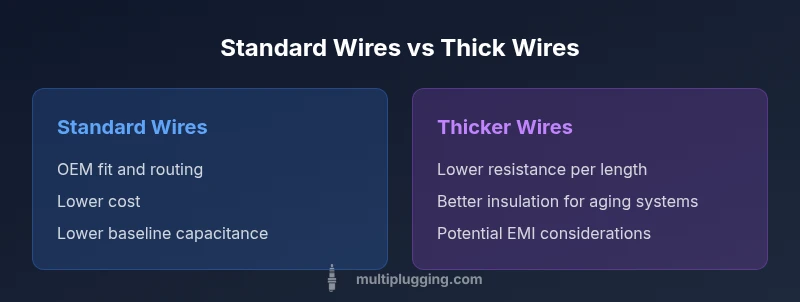
| Feature | Standard wires (OEM spec) | Thicker/high-impedance wires |
|---|---|---|
| Impedance and energy delivery | Optimized for OEM ignition systems | Higher impedance may alter energy delivery and EMI handling |
| Capacitance impact | Lower baseline capacitance | Increased capacitance potential with thicker insulation |
| Durability and insulation | Sufficient for healthy systems | Thicker insulation can improve durability in harsh conditions |
| Routing and fitment | Designed to fit factory looms | May require check for boot/connector compatibility |
| Cost and value | Typical OEM replacement cost range | Higher cost for premium thicker-wire sets |
| Best for | Modern engines in good condition | Aged systems, long wire runs, or degraded insulation |
Strengths
- Reduces energy losses in aging or degraded systems
- Thicker insulation can improve resistance to heat/moisture
- Potentially lower misfire risk in long-run layouts
- Better boot protection and durability with some designs
Negatives
- Not a universal performance boost for modern engines
- Higher upfront cost and potential fitment issues
- In some cases increased capacitance can affect high-RPM spark timing
- Requires careful routing to avoid interference with components
OEM thickness is usually the safer default; upgrade thickness selectively
For most modern engines, sticking with OEM-specified wire thickness yields reliable performance. Thick-walled wires may help aging or high-mileage systems with long wire runs, but gains depend on overall system health, impedance matching, and proper fitment. The MultiPlugging team emphasizes cautious, condition-based upgrading rather than a universal diameter change.
FAQ
Do thicker wires automatically improve performance on modern vehicles?
Not automatically. Modern ignition systems are tuned for specific impedance and routing. Thick wires may help only if the existing wires are aging or being forced through marginal routing. For most drivers, OEM thickness is sufficient.
Not automatically. Modern systems rely on specific impedance; thicker wires help mainly if your current wires are aging or poorly routed.
Will thicker wires work with coil-on-plug setups?
Coil-on-plug designs vary by manufacturer. Some thicker wires may fit, but many OEM boots are designed for a particular diameter. Check boot size and connector compatibility before purchasing.
Coil-on-plug setups vary—check boot size and fit before upgrading.
How can I diagnose worn spark plug wires?
Look for cracked insulation, stiffness, and visible wear. A rough idle, misfires, or increased fuel consumption can indicate ignition issues. A multimeter can help test resistance if the wiring system is accessible.
Inspect insulation, boots, and connectors; look for misfires or rough idle; consider a resistance check where possible.
Are there risks in using thicker wires?
If fitment is poor, thicker wires can rub, cause heat buildup, or interfere with other components. Choose wires that fit your engine’s routing and avoid excessive bending.
Poor fitment can cause rubbing or heat issues; ensure proper routing and fit.
What should I look for when buying wires?
Select high-quality, shielded sets with durable boots and heat-resistant jackets. Verify length, boot style, and OEM compatibility. Look for warranties and installation guides from reputable brands.
Choose shielded, durable wires with proper fit and a good warranty.
Main Points
- Assess current wire health before changing thickness
- Prioritize impedance compatibility and fitment over diameter
- Consider thicker insulation mainly for aging or long runs
- Ensure routing avoids heat and interference
- Upgrade within OEM specs for most modern engines