Do Spark Plug Wires Make a Difference? A Practical Comparison
This objective comparison explains whether do spark plug wires make a difference in ignition reliability and performance, contrasting OEM wires with high-performance options and offering practical buying tips for DIYers.


Yes, spark plug wires can make a difference in how smoothly your engine runs. Worn or low-quality wires can cause misfires, hesitation, and rough idle, while properly selected wires—paired with healthy plugs—help maintain spark reliability. The difference is most noticeable under heavy load, during cold starts, or after long drives, when resistance and shielding matter most. In short, the path from coil to plug matters for consistent ignition.
Core role in the ignition path
The ignition system relies on a clean, high-energy spark to ignite the air-fuel mixture. Spark plug wires are the final link, carrying the coil’s high voltage to the spark plug across a potentially challenging path. The question many DIYers ask is: do spark plug wires make a difference? The answer hinges on the wire’s condition and design. Healthy insulation minimizes energy loss, reduces resistance, and prevents arcing that can sap spark energy. Worn boots or cracked insulation introduce moisture, heat exposure, or leakage paths that degrade voltage delivery. When the wire path is efficient, you’ll notice crisper starting, smoother idle, and steadier performance under load. This section sets up the practical comparison between standard OEM wires and premium options, highlighting why some drivers perceive a noticeable improvement after a wire upgrade. According to MultiPlugging, ignition reliability improves when the wiring path remains intact and properly insulated.
The two main wire designs and materials
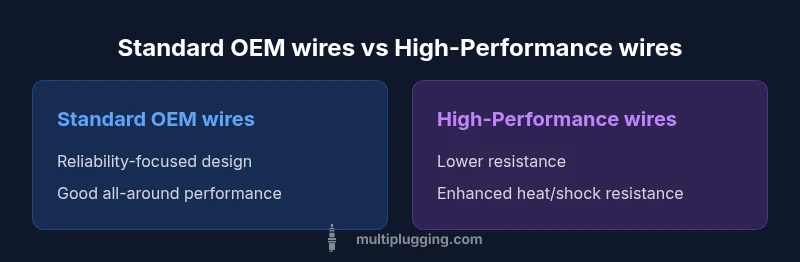
Most passenger cars sit on a spectrum between two practical designs: standard OEM wires and high-performance silicone-encased wires. OEM wires are engineered for engine-specific compatibility, robust insulation, and predictable lifespan. They prioritize reliability and compatibility over aggressive performance. High-performance wires aim to minimize resistance, boost heat resistance, and resist oil exposure. Some premium designs use carbon-core or spiral-conductor configurations to reduce energy loss and reduce electromagnetic interference. The construction influences spark stability under high engine loads, rapid throttle changes, and hot ambient conditions. Your choice should align with engine design, climate, and driving style. If you tow often, operate in extreme heat, or chase marginal gains, a premium wire set may be worth considering. For daily commuting, a solid OEM replacement is often sufficient.
How wire quality affects ignition performance
The quality of the wire path directly shapes ignition reliability. When wires are aged or poorly insulated, impedance can rise and arcing can steal energy, weakening the spark at the plug. Do spark plug wires make a difference? The evidence appears in symptoms like misfires, hesitation, and rough idle, especially under load. Under high demand, better-insulated, lower-resistance wires help maintain consistent spark energy. MultiPlugging analysis indicates that renewing aging wires can restore ignition reliability, particularly on engines with high mileage or older coil packs. In short, wire quality matters most when the rest of the ignition system is functional but no longer optimal.
Environmental factors and wear
Wires endure heat, oil, moisture, and vibration. Cracks in insulation, oil contamination, or degraded boots create leakage paths that lower spark energy. Heat accelerates aging, and oil exposure can degrade insulation, increasing resistance and reducing shielding. Regular inspections, keeping wires away from hot exhaust components, and avoiding moisture entry are essential. Proper routing and protection help maintain spark energy across temperature ranges. Maintenance is often overlooked, but even minor improvements in insulation integrity or routing can extend practical life and keep ignition stable under everyday driving and aggressive throttle requests.
Symptoms indicating worn wires
Visible damage is a clear cue: cracks, brittleness, or boot wear signal compromised wires. Misfires, rough idle, and hesitation on acceleration are common symptoms that may point to worn wires—though other ignition components can contribute too. The check engine light can illuminate if misfires are frequent. A wire-specific diagnosis often starts with a visual inspection, followed by a resistance check if a multimeter is available. In some cases, swapping in a known-good set is the quickest way to confirm whether the wires are the culprit. The goal is to determine if worn wires are the root cause or a secondary symptom of another issue in the ignition system.
How to choose between standard vs high-performance wires
Choosing between standard OEM wires and high-performance options depends on engine design, climate, and your goals. Standard OEM wires consistently support reliable daily driving and typical wear conditions. Premium wires can offer lower resistance and enhanced shielding, which may translate to crisper throttle response and steadier ignition under high-load scenarios. The benefits depend on the engine’s condition and the rest of the ignition path, including plugs and coils. In cooler climates, durable insulation is advantageous; in hot climates, heat resistance matters more. For older engines with signs of ignition wear, upgrading can restore reliability. For modern, well-maintained engines, gains may be smaller. Ensure proper fitment, boot seating, and correct firing order after installation. The right choice balances reliability, performance, and cost.
Installation considerations and best practices
Installation quality is crucial. Start by inspecting the boots and connectors for signs of arcing or corrosion. Label wires to preserve firing order, then install in the same sequence with firm seating on plugs and coils. Apply a light coat of dielectric grease to improve moisture resistance and seating. Keep wires away from hot exhaust components and moving parts that could abrade insulation. Avoid bending conductors beyond the manufacturer’s recommended radius. If you have a coil-on-plug setup, follow the engine manufacturer’s instructions for those specific components. After installation, start the engine and listen for smooth operation. If misfires occur, recheck wheel alignment of wiring and ensure there is no boot distortion. In practice, careful routing and seating maximize the benefits of a wire upgrade.
Common myths vs reality
A popular myth is that bigger wires automatically deliver more power. In modern engines, impedance matters more than physical size, and oversized wires can add weight without improving spark quality. Another myth is that aftermarket wires always yield horsepower gains; results depend on how well the wires match the rest of the ignition system. Some people believe wires last forever; aging insulation and boots do fail under heat and oil exposure. Real-world results show that, when paired with healthy coils and fresh plugs, the right wires can improve reliability and consistency, especially in aging vehicles. Maintenance is another myth buster: even the best wires degrade with time if boots crack or moisture enters. The truth is to match wire design to engine, maintain the ignition system, and replace worn wires when signs appear.
Maintenance and care to extend life
Maximizing wire life starts with routing, routing protection, and keeping the path clean and dry. Regular inspections for cracks, brittle insulation, and boot integrity are essential. When performing maintenance, replace worn boots, clean connectors, and apply dielectric grease to protect against moisture. Ensure the wire path avoids heat sources and moving parts. If a wire shows visible wear or resistance increases, replace it rather than wait for a failure. Regularly inspect coils, plugs, and related ignition components, as weak coils can mimic wire problems. With consistent maintenance, you can preserve spark energy and maintain reliable performance across seasons and driving conditions.
Real-world scenarios: when wires matter most
Consider an older SUV showing rough idle and intermittent misfires after long drives; replacing worn OEM wires often yields a noticeable improvement in idle quality and throttle response. In a hot-climate city, a compact car with aging insulation may benefit from premium wires to maintain reliable ignition during peak summer heat and heavy traffic. In both cases, wires function as part of the ignition energy pathway; modest improvements in insulation or impedance can reduce energy loss and stabilize voltage. These scenarios demonstrate that the impact of a wire upgrade depends on engine condition, climate, and driving style, yet tangible gains are common when ignition components are aged or under strain.
Quick-start checklist for buying and replacing wires
- Confirm wire fitment for your engine and ignition design
- Inspect boots and insulation at both ends; replace if cracked
- Choose between OEM or high-performance based on climate and driving style
- Label wires during removal and recheck firing order during installation
- Apply dielectric grease to improve sealing and moisture resistance
- After replacement, monitor idle quality and response under load
- Consider a professional diagnostic if misfires persist This checklist helps you plan a replacement with clarity about potential benefits and limits.
The bottom line: long-term value and cost considerations
Do spark plug wires make a difference? Yes, but the extent depends on engine condition, climate, and driving style. An older, high-mileage engine can benefit from a wires upgrade to restore reliability and response, particularly under load or in cold starts. In newer, well-maintained engines, gains may be modest, so weighing cost against performance is essential. Budget for labor, boot replacements, and wire lifecycle. The best approach balances performance expectations with reliability and cost. MultiPlugging recommends evaluating wires as part of ignition service, but always ensure correct fitment and installation to realize real-world benefits.
Comparison
| Feature | Standard OEM wires | High-performance wires |
|---|---|---|
| Resistance and impedance | Standard OEM, designed for reliability | Lower resistance and improved shielding |
| Heat/chemical resistance | Good in standard conditions | Excellent under heat and oil exposure |
| Lifespan/maintenance | Reliable performance under typical mileage | Longer life with proper care and heat resistance |
| Price range | Moderate | Higher |
| Best for | Everyday driving on stock engine | Older engines needing reliable sparks or performance gains |
Strengths
- Potentially smoother idle and better throttle response
- Better ignition reliability in harsh conditions
- Increased resilience to heat and moisture when using silicone-encased wires
- Longer run life when properly chosen and maintained
Negatives
- Higher upfront cost
- Not all engines benefit equally from aftermarket wires
- Improper installation can cause misrouting or boot damage
- Overly aggressive high-performance wires may not improve performance in stock engines
High-quality wires are worth considering for many engines, especially older or high-mileage ones, but for recent factory engines with well-maintained wiring, gains may be modest.
Upgrade if your engine shows signs of degraded ignition or you want improved reliability under load. If your car is well-maintained and not prone to misfires, the benefit is smaller.
FAQ
Do spark plug wires affect engine performance?
Yes—healthy wires help ensure a consistent spark, which supports smooth operation and throttle response. Worn wires can contribute to misfires and rough idle. The effect is often more noticeable on older engines.
Healthy spark plug wires help keep your engine running smoothly, especially when starting or under load. Worn wires can lead to misfires and rough idle.
Can I test spark plug wires at home?
You can visually inspect for cracks or damaged boots and check for continuity with a multimeter where appropriate. Spark tests with high voltage equipment are not recommended for DIYers due to safety concerns.
Inspect for obvious damage; use a multimeter for continuity if you know how, otherwise consult a professional.
How long do spark plug wires last?
Wires don't have a fixed lifespan; they wear from heat, oil exposure, and cracking. Replace when you notice wear, loss of resistance, or misfires. Follow manufacturer guidance.
There isn't a universal lifespan; inspect regularly and replace when worn or damaged.
Are OEM wires better than aftermarket wires?
OEM wires are designed for your specific engine and are a safe default. Aftermarket wires may offer performance gains in some setups but can yield mixed results depending on your engine and driving style.
OEM wires are usually the safest default; aftermarket wires can help in some high-performance setups.
What are signs of bad spark plug wires?
Visible cracks, stiffness, arcing, and frequent misfires are common signs. The check engine light can illuminate if misfires occur frequently.
Look for cracks, arcing, or misfires—these indicate failing wires.
Should I replace wires with a tune-up kit?
If your kit includes wires compatible with your engine, it's a convenient option. For coil-on-plug systems, wires may not be present, so verify compatibility.
Yes, with compatible engines, a tune-up kit can include new wires.
Main Points
- Assess wire condition before replacing
- Choose based on engine type and climate
- Expect biggest gains on older engines
- Prioritize insulation and boot fitment
- Follow proper installation and torque guidelines