Do Better Spark Plugs Make a Difference? A Practical Guide to Spark Plug Upgrades
Explore whether upgrading spark plugs changes performance, fuel economy, and reliability. This comparison guides car owners through material options, costs, and maintenance to decide if a plug upgrade is worth it.


Do better spark plugs make a difference? In many engines, upgrading to a higher-grade plug can improve idle stability and throttle response, especially when the current plugs are worn or the engine is high-compression. The gains are most noticeable when the plug design matches the ignition system and operating conditions, rather than simply choosing the most expensive option.
Do better spark plugs make a difference?
The short answer is: it depends. Do better spark plugs make a difference in practice? For most drivers, the answer hinges on engine design, ignition system health, and operating conditions. In newer engines, manufacturers tune ignition to specific heat ranges and electrode geometries. Upgrading outside of those targets can yield limited benefits or, in rare cases, create compatibility issues. According to MultiPlugging, proper matching between the plug and the engine’s control strategy often determines whether a plug upgrade translates into tangible improvements. More importantly, any gain relies on correct installation, correct gap, and a clean, deposit-free combustion chamber. If you’re chasing noticeable performance leaps, start with a diagnostic check—misfires or fouling from carbon buildup are usually more impactful culprits than plug material alone.
Spark plug materials and what they promise
Spark plugs come in several materials, primarily copper, platinum, and iridium. Copper plugs are generally cheaper and deliver reliable performance for a broad range of engines, but they wear faster and have a shorter life. Platinum and iridium plugs last longer and can maintain a consistent spark over more cycles, which can improve idle stability and cold starts in some high-demand engines. The choice isn’t simply about price; it’s about suitability for the engine’s heat range, load profile, and the vehicle’s fuel quality. MultiPlugging's analysis highlights that upgrading to iridium or platinum should be aligned with engine design rather than pursued as a universal upgrade. If your engine already uses a sophisticated ignition coil pack or CDI, the marginal benefit of a higher-cost plug can be small unless other maintenance items are addressed.
How to assess current plugs before buying
Begin with a visual inspection: worn electrodes, heavy fouling, or oil deposits all reduce spark quality. Gap consistency is critical; many engines spec a precise gap that optimizes ignition timing and flame front propagation. Use the service interval as a guide, but listen for symptoms such as rough idle, hesitation on acceleration, or increased fuel consumption. If you find that gaps are inconsistent or electrodes show wear beyond manufacturer recommendations, replacing with the recommended heat range and material is advisable. Remember that higher performance isn’t a substitute for a clean air intake, proper fueling, and a healthy ignition system.
When upgrading matters: engine type and usage patterns
High-mileage engines may benefit more from longer-life plugs that resist wear, especially if combustion conditions are harsh or if maintenance history is incomplete. Performance-oriented drivers or vehicles with turbocharged or high-compression engines may also notice smoother throttle response and a crisper idle with a correctly matched iridium or platinum plug. In moderate-use daily drivers, the difference is often subtle unless there are existing issues. The key is compatibility: the plug must fit the heat range and electrode design the engine expects, not just look like a premium option.
Gap tuning, heat range, and operating conditions
The spark gap, heat range, and electrode geometry determine ignition reliability. A plug with too wide a gap or too hot a heat range can cause pre-ignition or fouling, especially in modern direct-injection engines where combustion dynamics are highly controlled. If you’ve changed fuel quality, altitude, or climate, revisiting the plug’s heat range can yield more benefit than merely upgrading to a more expensive material. A correct gap helps ensure consistent ignition timing and stable combustion across temperature variations. Always re-gap plugs to the manufacturer specification after installation if the gap was altered during cleaning or measurement.
Cost considerations and long-term value
Upfront cost is only part of the story. A plug with longer life reduces replacement frequency, but the total cost of ownership includes labor, tools, and potential rework if the wrong plug is installed. For many drivers, the incremental expense of premium plugs is justified by longer service intervals and fewer misfires, while for others the savings come mainly from avoiding poor performance caused by fouling or worn electrodes. If you’re evaluating value, weigh the total cycle cost against the expected engine life and maintenance plan. MultiPlugging’s perspective emphasizes that the best choice balances performance goals with maintenance practicality.
Practical installation and maintenance best practices
Even a high-quality plug won’t perform well if installation is rushed. Clean the threads, use anti-seize sparingly if recommended by the plug manufacturer, and torque to spec. Avoid forced squaring of the plug into a worn thread or gasket seal; improper torque can damage cylinders or seats. Always replace the gasket or seal when applicable, and ensure the ignition coil or boot seats properly to prevent misfires. Finally, replace all plugs in a set at the same time to ensure uniform ignition performance across all cylinders. Regular inspection and a clean intake system help ensure the new plug continues to perform as intended.
Real-world decision framework: how to decide now
If you’re unsure whether to upgrade, start with diagnostics and a cost-benefit check. Consider the engine’s age, maintenance history, and driving style. If you experience rough idle, misfires under load, or decreasing fuel economy, upgrading to the same or better-performing material with the correct heat range often yields the most reliable gains. For engines with strong ignition systems and current plugs within spec, the benefit of moving to a premium plug may be modest. In contrast, older engines with fouling issues or degraded ignition timing are more likely to show a noticeable difference after a proper plug replacement.
Putting it all together: a practical decision path
In summary, the question of whether do better spark plugs make a difference depends on engine compatibility, maintenance history, and usage. Start with a proper diagnosis, select a plug that matches the heat range and design, and ensure correct installation. If you’re a daily driver with worn plugs, you’ll likely see smoother operation and consistent combustion after replacement. High-performance needs or engines with known wear patterns may benefit more from premium materials and precise gap tuning. The overall takeaway is to prioritize compatibility, maintenance, and correct installation to maximize any potential gains.
Comparison
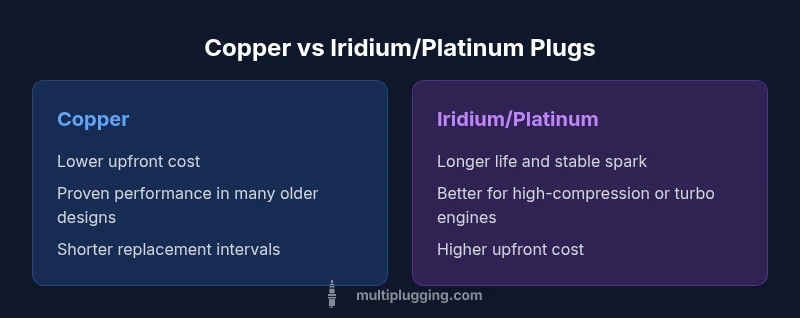
| Feature | Standard Copper Plugs | Iridium/Platinum Upgrades |
|---|---|---|
| Material | Copper-based | Iridium/Platinum |
| Lifespan (qualitative) | shorter lifespan | longer lifespan |
| Idle stability | baseline performance | potentially more stable idle |
| Cost | lower upfront | higher upfront |
| Best for | budget daily drivers | high-load/high-compression or long-life needs |
Strengths
- Lower upfront cost and easy replacement
- Solid reliability for a wide range of engines
- Quicker return on investment for casual drivers
- Good baseline performance when matched to heat range
Negatives
- Shorter wear life and more frequent replacement
- Fewer gains if the engine isn’t mismatched or worn
- Premium plugs may offer marginal improvements in some cases
Upgrade selectively based on engine compatibility and maintenance
Premium plugs can help in engines with wear, high load, or specific heat-range needs. For typical daily drivers with well-maintained ignition systems, benefits are modest but real when acoustically matched and installed correctly.
FAQ
Do spark plugs wear out at the same rate across all engines?
No. Wear rate depends on engine design, heat range, fuel quality, and operating conditions. Direct-injection engines, turbocharged setups, and high-compression engines can stress plugs differently, leading to varied wear. Regular inspection helps you catch wear early and choose the right replacement.
Plugs wear differently by engine type; regular checks help you pick the right replacement.
Are iridium or platinum plugs worth the extra cost for everyday drivers?
For many daily drivers, the difference is modest and may not justify the premium. If the current plugs show wear or misfires, upgrading can improve reliability and reduce maintenance cycles. In engines with long service intervals or advanced ignition, premium plugs often perform better over time.
Premium plugs can help if your current plugs show wear or misfires; for some daily drivers the benefit is small.
Can changing plug type affect fuel economy?
Yes, a correctly matched plug can improve combustion efficiency, which may translate to modest fuel economy gains. However, improvements depend on overall engine health, fueling, and ignition timing. Don’t expect dramatic changes from plug material alone.
A properly matched plug can help efficiency, but don’t expect big jumps from the plug alone.
How do I know if my engine needs a different gap?
If you experience misfires, rough idle, or hesitation under load, check the gap and verify it against the manufacturer’s specification. Temperature and fuel quality can affect optimal gap; re-gap after cleaning or replacement to spec.
Check the gap against specs if you notice misfires or rough idle.
What maintenance steps maximize spark plug life?
Maintain a clean intake, use good fuel, replace worn ignition components, and follow recommended service intervals. Avoid aggressive engine tuning without checking ignition compatibility. Regular inspection and proper torque are essential.
Keep the ignition system healthy and install plugs correctly to extend life.
Do better spark plugs help cold starts in all engines?
They can help in some engines, especially those with marginal ignition timing or challenging cold weather. The degree of improvement depends on heat range, gap, and compatibility with the ignition system.
They can help cold starts in certain engines when the plug type matches the system.
Main Points
- Match plug design to engine specifications
- Check gap and heat range before upgrading
- Expect modest gains in daily drivers
- Consider total cost of ownership, not just sticker price
- Perform proper installation to maximize benefits