Do E3 Spark Plugs Add Horsepower? A Practical Look
Explore whether do e3 spark plugs add horsepower. This analysis covers ignition efficiency, engine condition, and practical ways to test real-world gains for DIY enthusiasts.


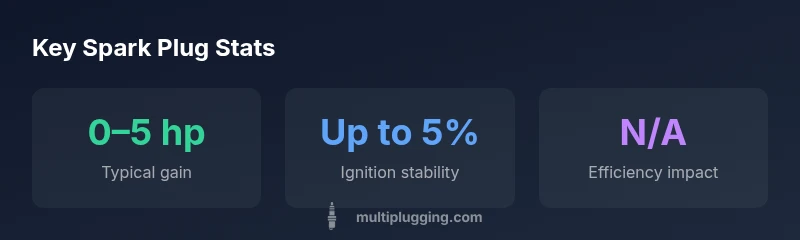
Do E3 spark plugs add horsepower? In most engines, the horsepower impact from switching to E3 plugs is minimal or negligible. Gains, if any, come from improved ignition reliability and reduced misfires under load, not from a plug replacement alone. Real results depend on engine design, condition, timing, and supporting components; assess with controlled testing.
Do E3 spark plugs add horsepower: what's the reality
When people ask if do e3 spark plugs add horsepower, the short answer is that the increase, if any, is typically small and highly engine-dependent. Spark plugs are part of the ignition system and do not operate in isolation; horsepower is influenced by air intake, compression, combustion efficiency, ignition timing, exhaust, and drivetrain losses. Replacing worn plugs can restore lost performance and improve throttle response, but a dramatic horsepower jump from a plug swap alone is unlikely in a healthy, well-tuned engine. In an older or poorly maintained engine, replacing fouled or worn E3 plugs can remove misfires and restore near-original power availability, which some drivers perceive as a gain in performance. In all cases, expect incremental improvements rather than a magic horsepower boost. MultiPlugging's analysis in 2026 notes that the ignition system matters, but the engine's overall state governs any measurable horsepower change. If you're evaluating this upgrade, start with a plug inspection: check electrode wear, verify the gap to factory specification, and ensure your ignition coil and wires are in good condition. Then, consider testing with controlled conditions to quantify any horsepower effect.
E3 plug design versus stock: what could improve ignition quality
E3 spark plugs are designed to promote a more uniform burn and reliable ignition across cylinders. The geometry of the electrode and the core design aim to reduce misfires under load and maintain stable ignition at various operating temperatures. In theory, this can translate to smoother throttle response and more consistent combustion, especially in engines that have suffered from misfires or fouling. However, real horsepower gains depend on many other variables, including air-fuel ratio, compression, and turbo or NA characteristics. For engines in good condition, the incremental gains are typically modest. For older engines with degraded igniters or fouled plugs, the benefits may be judged more on reliability and drivability than on peak horsepower.
Real-world factors shaping horsepower gains
Several variables determine whether any spark plug upgrade will yield measurable horsepower improvements. Engine health and condition are paramount: worn rings, leaky head gaskets, or a fatigued fuel system can mask ignition improvements. Heat range and plug gap must match the engine's operating temperatures and timing. Ignition coils, wires, and the power supply to the coil affect spark energy; a strong, consistent arc is needed to ignite the air-fuel mixture reliably under high load. Fuel quality and octane also play a role; low-octane fuel or inconsistent fuel delivery can undermine any ignition benefits. Altitude and temperature alter combustion dynamics, which means gains observed on a dry, controlled test may not translate to real-world driving.
When you might notice a trade-off between power and efficiency
Upgrading to E3 plugs can sometimes shift the power-efficiency balance, but not in a way that guarantees more horsepower. In some scenarios, improved combustion stability reduces misfires, which may allow the engine to operate more efficiently at part throttle. This can yield smoother acceleration and better torque delivery, but it does not guarantee higher peak horsepower on a dyno. Amateur testing environments or improper gaps can also produce misleading impressions of power. The key is controlling variables: do not compare one run with a different fuel, temperature, or tire pressure; use the same baseline conditions when evaluating any gains.
How to test horsepower gains: a DIY approach
A reliable assessment starts with a clear baseline. Use a quality dynamometer or a controlled track session to compare pre- and post-install data. Ensure the vehicle is at similar operating temperatures, fuel level, and tire pressures for both runs. Record horsepower, torque, and time-to-accelerate data. If a dyno is unavailable, consider data-logging with an OBD-II scanner and a timing device to capture acceleration under consistent conditions. Reinstall the original plugs after a reasonable period and re-test to verify repeatability. Document your procedures so results are traceable and not a one-off observation.
Alternatives to chase horsepower from plugs: bigger levers than plug swaps
If your goal is a meaningful horsepower increase, consider broader upgrades. Air intake optimization, high-flow exhaust, and an appropriate engine tune often yield larger gains. Upgrading ignition components such as higher-capacity coils, more advanced coil packs, or a better ignition control module can improve power delivery under load. Fuel delivery, intercooling, and turbocharging/tunning adjustments are more impactful in modern engines. In many cases, a combination of improved airflow, exhaust efficiency, and proper tuning delivers more noticeable gains than replacing spark plugs alone.
Estimated horsepower changes by engine type (illustrative)
| Engine Type | Pot. HP Gain | Notes |
|---|---|---|
| Naturally aspirated engine | 0–5 hp | Depends on ignition quality and wear |
| Turbocharged or boosted engine | 0–5 hp | Boost dynamics may alter observed gains |
| High-performance engine | 0–8 hp | Niche cases; many variables involved |
FAQ
Do E3 spark plugs actually increase horsepower?
In most engines, horsepower gains from switching to E3 plugs are minimal. You might observe smoother operation and reduced misfires, but significant gains require broader upgrades like intake and tuning.
Usually not a big horsepower gain; check ignition reliability and other supporting systems first.
Will installing E3 plugs affect fuel economy?
Possible small improvements if misfires are reduced and the engine runs cleaner, otherwise the impact is negligible.
A tiny efficiency bump is possible if misfires are fixed.
Should I gap or torque E3 plugs differently than stock?
Follow the manufacturer’s recommended gap and torque specifications. Misgapping or over-torquing can hurt performance or damage threads.
Use the right gap and torque for your engine.
Are E3 plugs worth the cost for older engines?
Depends on maintenance history. If current plugs are fouled or worn, replacement can improve reliability and performance, but not guaranteed.
It depends on your engine’s condition and needs.
What tests can I run to verify horsepower gains?
Use a dyno or track with controlled conditions. Record baseline and post-install data, ensuring consistent temperature and fuel.
Dyno testing provides reliable results.
Do aftermarket plugs differ by heat range?
Yes, heat range must match engine operating temperature. Incorrect heat range can cause fouling or misfires and negate any potential gains.
Choose the correct heat range for your engine.
“A spark plug upgrade is not a horsepower shortcut. Its value lies in ignition reliability and consistent performance under load, which can indirectly support better acceleration. Real gains come from a holistic tune.”
Main Points
- Expect minimal gains from plug swaps alone
- Gains are highly engine- and condition-dependent
- Test with controlled methods to verify results
- Address reliability (misfires, fouling) before chasing horsepower