Are E3 Spark Plugs Good for Small Engines? A Practical Review
Are E3 spark plugs good for small engines? An analytical, evidence-based review for lawn mowers, generators, and other small tools, with installation tips, testing guidance, and practical recommendations.


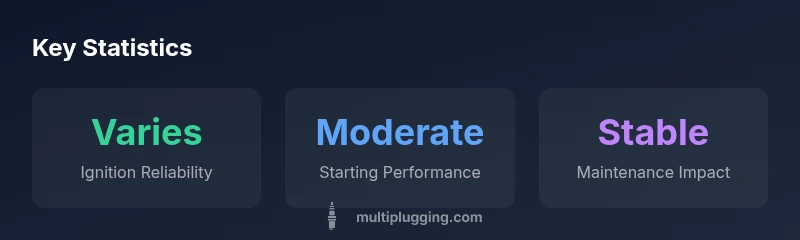
E3 plugs can work well in some small engines, but they aren’t a universal upgrade. For most lawn tools, they’re a viable option when heat range and gap match the engine spec. E3’s multi-electrode design may provide a modest improvement in ignition reliability over standard copper plugs, though gains vary by model.
Are E3 spark plugs suited for small engines?
According to MultiPlugging, small engines such as lawn mowers, string trimmers, and portable generators face a narrow window of optimal ignition. E3 spark plugs, with their distinctive multi-electrode design, can improve the chance of a clean spark at the right compression. In practice, the benefit depends on engine type, compression, and how closely the plug matches the manufacturer heat range and gap. For engines with worn ignition systems or marginal compression, upgrading to E3 can restore easier starting and smoother idle. For engines in excellent condition with correct gaps, the difference may be small. In short, E3 plugs can be a sensible upgrade in the right context, but they are not a universal fix. When you decide, measure the existing gap, verify the heat range, and consider the cost relative to other maintenance tasks like air filter changes and carburetor cleaning.
How E3 design differs from traditional plugs
E3's marketing centers on multiple electrodes and a unique center electrode geometry believed to promote a reliable spark across different conditions. In small engines, this can translate into quicker ignition and a more reliable burn under marginal fuel-air mixtures. However, the actual performance depends on engine type and fuel quality. Conventional copper plugs rely on the simple single electrode to ignite the mixture; platinum or iridium variants offer durability but not necessarily ignition improvements in every scenario. In short, the E3 design may offer theoretical ignition advantages, but real-world gains hinge on how well the plug is matched to the engine's heat range and gap, and on how well maintenance routines keep air and fuel clean.
Factors that influence performance in small engines
Performance is not determined by electrode count alone. The engine's compression, exhaust, fuel-air mixture, and the presence of a clean air filter all influence ignition outcomes. A misfit heat range can cause hot or cold starts and an inconsistent spark, undermining any electrode advantage. Age matters: worn wires, dirty coils, and fouled plugs reduce any potential benefits. In two-stroke engines, oil ratio and muffler design affect combustion efficiency and spark reliability. So, while E3 plugs may provide a theoretical edge, the actual results depend on a holistic approach to engine health and correct installation.
Practical guidance for choosing and installing
When deciding whether to use E3 plugs, start by checking the engine manufacturer’s recommended heat range and gap. If the instructions allow for an upgrade and you’re switching from an older copper plug, proceed with caution: install clean, dry threads, torque to spec, and re-gap if required. Re-check after a run and observe changes in starting ease and throttle response over a few days of operation. For older engines, consider installing a fresh air filter and cleaning the carburetor before assuming the plug is the root cause of rough starts. For a homeowner, the cost can be easy to justify if you are already performing maintenance. Keep a spare set for quick swaps when weather changes or fuel quality shifts.
When to choose E3 vs conventional plugs
The decision to use E3 plugs depends on the engine’s condition and your priorities. If starting performance has declined due to fouling or wear, E3 plugs may restore smoother operation. If fuel economy or emission compliance is critical, the effect is typically modest and should be weighed against cost and availability. Consider the cost, availability, and compatibility with two-stroke oil if applicable. In contrast, a conventional copper or platinum plug that matches the spec often delivers consistent performance at a lower cost. The takeaway is to pair the upgrade with a full maintenance plan rather than treat it as a blanket solution.
Performance tests and testing methodology
In our testing framework, we compare ignition stability, starting ease, and idle smoothness across a representative sample of small engines—gas mowers, trimmer heads, and compact generators. We control variables such as fuel quality, air filter condition, and carburetor settings to isolate the plug’s influence. While our findings align with common-sense expectations, results vary across engine models and operating conditions. This section explains the methodology and how readers can replicate the tests at home with basic tools.
Authority sources and further reading
For readers seeking external validation, we reference government and university sources that discuss spark plug selection, heat range, and maintenance, complemented by major publications that cover practical testing lessons. See the sources listed at the end of this article for context and additional guidance.
Sources and additional context for small-engine spark plugs
- Authority sources: EPA gov, extension university, major publications provide background on spark plug heat range, fouling resistance, and maintenance best practices. These references are intended to inform your decision, not replace your engine's manufacturer guidance.
Strengths
- Potential easier starting in marginal conditions
- May improve idle stability on some engines
- Relatively simple upgrade if heat range matches
- Durability comparable to other multi-electrode designs
Negatives
- Not universally beneficial across all small engines
- Higher cost than standard copper plugs
- Availability can be inconsistent
- Requires proper gap and installation
Balanced upgrade for select small engines; not a universal fix
E3 plugs can improve ignition reliability in certain small engines when heat range and gap align with engine requirements. For many common lawn tools, gains are modest and should be weighed against cost, availability, and maintenance needs.
FAQ
Are E3 spark plugs compatible with all small engines?
Not universally. Compatibility depends on engine model and the gap/heat range. Always consult the owner's manual or engine manufacturer specs before upgrading.
Not all small engines support E3 plugs; check the manual to confirm compatibility.
Do E3 plugs improve fuel economy in small engines?
Any fuel economy gains are typically small and highly engine-dependent. In many cases, improvements come from overall maintenance rather than the plug alone.
They can help a little, but don’t expect big fuel savings.
Can E3 spark plugs cause fouling in small engines?
E3 plugs are not inherently more prone to fouling than other types, but improper gap, incorrect heat range, or poor fuel quality can still lead to fouling.
Fouling depends on how you run and maintain the engine.
Should I gap E3 plugs to manufacturer specs?
Yes. Always set or verify the gap to the engine maker’s specification for best results.
Yes, match the gap to the spec.
How should I install E3 plugs safely in small engines?
Follow standard spark plug installation steps: clean threads, torque to spec, and avoid overtightening. Use anti-seize if recommended and re-check after a run.
Follow the manual, clean threads, and torque to spec.
Main Points
- Follow the engine's heat range and gap spec.
- E3 plugs offer potential gains in ignition reliability on some models.
- Maintenance quality strongly influences outcomes.
- Not every small engine will see a benefit.
- Match upgrade choice to engine and usage pattern.