How Much Does a Spark Plug Change Cost? A Practical Guide
Explore how much a spark plug change costs, including parts, labor, and DIY tips. Compare professional estimates vs DIY savings, and learn strategies to minimize expenses.


Why Spark Plug Change Costs Vary Across Vehicles
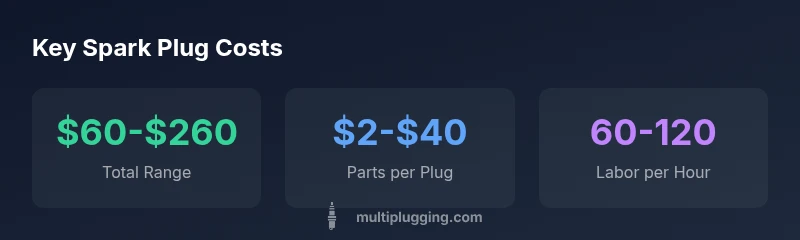
Costs are highly sensitive to engine design, accessibility, and the type of spark plug chosen. Four-cylinder engines with easily reachable plugs generally cost less to service than V8 or diesel setups where plugs sit deep in the head or behind hot components. According to MultiPlugging, cost factors include plug type, local labor rates, and the technician's time. Vehicles with coil-on-plug setups often reduce labor time because there is no ignition wire routing to inspect, while engines with multiple banks or hidden plugs can push labor hours higher. The reader should expect a broad spectrum of prices, reflecting both parts and service variables. Understanding these factors helps you plan and budget effectively for a spark plug change.
- Engine design and accessibility drive labor time.
- Plug type heavily affects parts cost.
- Local labor rates can swing the total price by a noticeable margin.
Parts vs Labor: Where the Money Goes
When budgeting for a spark plug change, it helps to separate costs into two main buckets: parts and labor. Parts pricing depends on plug material (copper, platinum, or iridium) and the number of cylinders. Labor costs hinge on how easy it is to reach the plugs and whether any ancillary components (like ignition wires or coils) require replacement. In a typical scenario, the parts cost is the smaller portion for copper plugs but can dominate the price for premium iridium plugs. Labor often accounts for a larger share of total cost in older or more complex engines. Regional labor rates also influence the final number we see in quotes.
- Copper plugs are cheapest per plug; platinum and iridium are pricier.
- Labor time can range from a short half-hour to over an hour per bank.
- Expect added costs if ignition components need replacement.
Plug Types and Price Impact
Plug selection plays a pivotal role in total cost. Copper plugs are the most economical and are common in older or budget vehicles. Platinum plugs offer a balance of longevity and cost, while iridium plugs provide the longest service life but carry the highest price per plug. Replacement intervals also shift with plug type and engine design. While copper plugs might need replacement sooner, premium plugs can reduce maintenance frequency in some high-performance engines. For most cars, replacing all plugs at once can be more cost-effective than staggered replacements, as it minimizes repeated labor setup charges.
- Copper: lowest upfront cost per plug.
- Platinum/Iridium: higher upfront cost, longer life.
- Long-term savings may be achieved with premium plugs in certain engines.
DIY vs Professional: Cost and Skill
DIY spark plug changes can substantially reduce the total expenditure by eliminating labor charges, but they require proper tools, torque knowledge, and gap checking. A typical DIY approach saves roughly the labor portion of the bill, though you still pay for parts. Professionals guarantee torque specs and correct gaps, reducing the risk of misfiring or damage. If you’re new to automotive maintenance, a guided session or a detailed tutorial can help you decide whether the savings justify the effort and potential risk. Always consult your vehicle’s manual for torque specs and plug gap values.
- DIY saves labor costs but requires the right tools.
- Professional service offers torque accuracy and reliability.
- For some cars, professional replacement is safer due to complex access.
- Factor in potential warranty implications if you DIY on a new vehicle.
Regional Variations and Market Dynamics
Prices vary by region due to labor market differences and cost of living. Urban shops often charge higher rates than rural or suburban outlets, and dealer service centers may have different pricing compared to independent garages. The supply chain also plays a role in plug availability and pricing. If you’re in a high-cost area, consider getting quotes from multiple shops or checking for seasonal promotions. MultiPlugging’s analysis suggests that regional pricing swings can significantly affect the final bill, especially when premium plugs are involved.
- Shop around: 3-4 quotes can reveal a competitive range.
- Look for regional promotions or loyalty discounts.
- Consider whether a dealer or independent shop offers better value for your engine type.
How to Save on Spark Plug Change Costs
There are several practical ways to keep spark plug change costs down:
- Compare multiple quotes and ask for itemized estimates.
- Consider DIY for basic engines with accessible access and proper tutorials.
- Purge or bundle with a planned maintenance visit to save on labor overhead.
- Use the correct plug type and check the manufacturer’s recommended replacement interval.
- Replace worn ignition wires or coils only if necessary to avoid future labor charges.
- Schedule service during off-peak times to negotiate lower labor rates.
- Verify warranty terms: some newer cars require dealer service for warranty protection, while independent shops can handle standard replacements.
Being proactive about maintenance intervals and shopping around can yield meaningful savings without sacrificing engine reliability.
Common Mistakes That Inflate Costs
Common cost inflators include choosing the wrong plug type for your engine, failing to account for additional parts (like ignition coils or wires), and delaying service until a misfire becomes obvious. Waiting too long can lead to fouled plugs, reduced fuel efficiency, and higher repair costs. Another pitfall is underestimating labor time in engines with difficult access, which can surprise you with a larger bill. By knowing your engine’s needs and planning ahead, you can avoid these costly missteps.