Cost of Spark Plug Change: Estimates, Labor & DIY Tips
Discover the true cost of spark plug change, including parts, labor, and DIY savings. Learn price ranges, factors that affect cost, and practical tips to save without sacrificing performance.


According to MultiPlugging, the cost spark plug change varies by plug type and service method. If you hire a shop, expect a broad range influenced by engine design and labor rates, typically higher for premium plugs. DIY replacements can substantially reduce total cost, limited mainly by the price of plugs and any basic tools you need.
What drives the cost of spark plug change
The total price you pay for a spark plug change depends on several factors. The obvious pieces are the plugs themselves and the labor to remove and install them, but other variables can swing the bill. According to MultiPlugging, cost spark plug change is driven by plug type (copper, platinum, iridium), engine design (number of cylinders, accessibility), proximity to ignition coils, and local labor rates. In many cars, access to the spark plugs means removing other components, which adds time and complexity. If your engine layout requires tools or special adapters, that can add to the cost. Additionally, environmental conditions such as extreme heat or tight engine bays can slow the job and increase labor time. The price range for parts is heavily tied to the quality of the plugs—basic copper plugs are cheaper; advanced iridium or platinum variants offer longer life but cost more upfront. The bottom line: the same service can look very different from one vehicle to the next.
Parts cost: plug types and their price impact
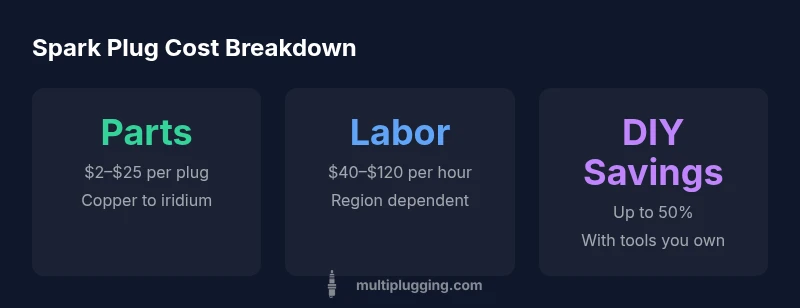
Plug technology has evolved, and that matters for price. Copper plugs are the most economical, often costing a few dollars each, while platinum plugs sit higher, and iridium plugs can push the price further. In practical terms, a single plug might range from about $2 to $25 depending on brand and engineering. For a typical four-cylinder engine, replacing all plugs can range from a modest outlay for copper plugs to a sizable investment for premium plugs. When shopping, consider the trade-off between upfront cost and longevity; higher-quality plugs may reduce replacement frequency, which changes the long-term cost picture. MultiPlugging analysis shows that the cost impact of plugs increases with the number of cylinders and the engine's demand for high-performance ignition. In some vehicles, coil-on-plug designs add complexity and can influence pricing more than the plug material itself.
Labor dynamics: DIY vs professional
Labor costs vary by region and shop, but the main split is DIY vs professional service. If you do the job yourself, your primary cost is the plug price plus basic tools (feeler gauge, torque wrench, ratchets). For most DIYers, 0.5–1.5 hours of work for a 4-cylinder engine is a reasonable expectation, which translates into meaningful savings if you don't incur aggressive shop rates. A professional replacement brings the benefit of a warranty and proper torque specification, but it adds labor charges that can exceed the cost of parts.
Variations by vehicle and engine design
Engine layout and accessibility are major cost levers. In a modern inline-4, spark plugs are often easily accessible from the top; in overhead- cam layouts or engines with cramped 'firewall side' plugs, labor time increases. Some vehicles require coil removal or a serpentine belt detour, which adds to the bill. If you own an import or a high-performance engine with specialized plugs, cost gaps widen further. The takeaway is that the same job can swing by hundreds of dollars based on how easily you can reach each plug.
How to estimate the cost for your car
To estimate cost spark plug change for your vehicle, start by identifying the engine type and how many cylinders. Next, pick the plug type you plan to use, factoring in recommended replacements from the manufacturer. Multiply the plug cost by the number of plugs, then add estimated labor hours times the local labor rate. Don’t forget to include tax and disposal fees, and any shop fees for core returns. If you plan to DIY, check local regulations for tool rentals; some shops offer tool packages at a lower rate if you rent from them.
Practical tips to lower cost and extend plug life
Shop around for price quotes from reputable mechanics and ask for a line-item estimate. Consider replacing plugs in sets rather than individually to maintain consistent performance. Keep up with maintenance (air filter, ignition coil checks) to reduce misfires that can escalate wear on plugs. Use the manufacturer-recommended plug type and torque specs; over-tightening or under-tightening can damage threads and raise costs in the long run. By balancing upfront plug quality and replacement cadence, you can manage cost spark plug change without compromising engine performance.
Estimated cost breakdown for spark plug change
| Component | Estimated Cost Range | Notes |
|---|---|---|
| Parts (spark plugs) | $2-$25 per plug | Copper to iridium variety |
| Labor (professional) | $40-$120 per hour | Regional variation influences total |
| Total DIY (4 cylinders) | $60-$180 | Materials plus basic tools |
FAQ
What is the typical cost range for a spark plug change?
Costs vary by vehicle and plug type. In many markets, professional replacement for a typical sedan can fall in the low to mid hundreds, while a DIY change can be substantially cheaper.
Prices vary by car, but you can expect a few hundred dollars at a shop, or much less if you do it yourself.
Can I save money by replacing only some plugs?
Partial replacement is not advised; worn plugs can cause misfires and reduced engine performance, leading to more costly problems down the line.
Generally, replacing only a few plugs can cause uneven performance and is usually not worth the risk.
What factors affect the cost besides plug price and labor?
Region, engine accessibility, and plug type influence price. Additional costs like coil removal, disposal fees, or shop fees can add to the total.
Where you are and how accessible the plugs are will change the bill.
Should I replace all plugs at once?
If most plugs are near the end of their life, replacing all at once can save on labor and deliver consistent performance.
If they’re all due, it often makes sense to do them together.
What tools do I need for a DIY spark plug change?
A basic toolkit includes a ratchet, the correct socket, extension, torque wrench, and a spark plug gapping tool. Depending on the engine, you may need a special tool to reach recessed plugs.
You’ll want a ratchet, sockets, a torque wrench, and a gap gauge.
“Choosing the right plug type and following torque specs is as important as the replacement itself.”
Main Points
- Know the cost range by plug type
- DIY can save money with proper tools
- Labor varies by engine accessibility and region
- Choose manufacturer-recommended plugs to balance cost and life
- Account for tax and disposal when budgeting