What Kind of Spark Plugs Does Ford Use?
Explore Ford's spark plug choices, OEM Motorcraft plugs, heat ranges, and how to select the right plug for your Ford engine. Practical, DIY-friendly guidance from MultiPlugging.


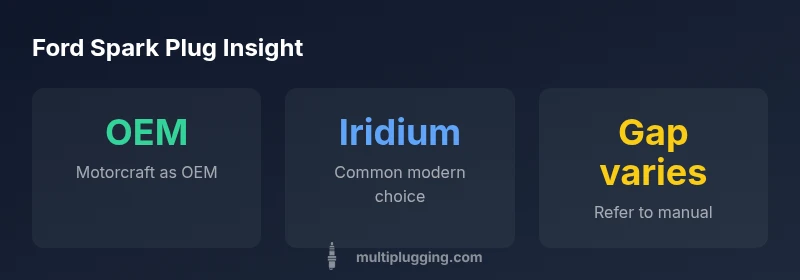
Ford generally specifies OEM Motorcraft spark plugs, carefully matched to each engine family and generation. The exact plug type—copper-core, platinum, or iridium—depends on the model year and engine design. For DIYers, always verify the correct plug type and gap in the official Ford service manual or owner’s manual for your specific vehicle to ensure reliable starts, smooth idle, and optimal fuel efficiency. While aftermarket options exist, OEM Motorcraft plugs are designed to align with Ford ignition systems and cooling dynamics for best overall performance.
What kind of spark plugs does Ford use?
When considering what kind of spark plugs Ford uses, the core answer is that Ford specifies OEM Motorcraft spark plugs tailored to each engine family and generation. The exact plug type—copper-core, platinum, or iridium—depends on factors such as heat range, electrode design, and cylinder count. The takeaway for DIYers is to always verify the plug type and gap in the official Ford service manual or owner's manual for your specific model and year. This ensures reliable starts, smooth idle, and optimal fuel efficiency. While aftermarket options exist, OEM Motorcraft plugs are designed to pair with Ford ignition systems and cooling dynamics for best overall performance.
OEM Brand and Ford's engineering philosophy
Ford's engineering approach prioritizes reliability and serviceability. For most vehicles, the recommended spark plugs come from Motorcraft, Ford's OEM brand. Motorcraft plugs are selected to match a given engine family’s heat range and firing characteristics, which helps minimize misfires and maintain combustion efficiency. The MultiPlugging team notes that choosing the OEM option often yields predictable performance and easier service intervals. When you follow Ford's guidance, you support consistent ignition quality across seasons and driving conditions. If you have a high-mileage engine or a performance variant, you may still find Motorcraft plugs with longer life ratings that align with the engine’s design intent.
Spark plug types by Ford engine family
Over the years, Ford engines have used a range of spark plug technologies. In older, copper-core plugs, a robust design offered good conductivity and cost efficiency, suitable for many daily drivers. Modern Ford engines commonly use platinum or iridium long-life plugs, which resist wear and extend replacement intervals. The exact choice is driven by the engine's compression ratio, ignition system, and intended service life. In general, Iridium IX or similar premium designs are favored for high-performance or turbocharged models, while standard duty engines might still run on platinum or copper plugs depending on era. Always check the engine-specific documentation to confirm the recommended plug family and heat range.
How to identify the correct plug for your Ford
To identify the correct spark plug for your Ford, start with the owner's manual or the official service documentation for your model/year. The manual lists the exact plug part or a Ford Part Number and specifies the heat range and gap. If the manual is unavailable, consult a dealer or trusted independent shop for the engine family and plug characteristics. Once you know the correct plug, you can verify the thread size and reach length, then check the recommended gap using a feeler gauge. Maintaining the recommended gap ensures optimal ignition timing and combustion efficiency.
Replacement intervals and heat range considerations
Ford’s maintenance schedule outlines replacement intervals based on engine design, operating conditions, and fuel quality. In practice, many Ford engines benefit from replacing plugs at regular service intervals, particularly when the vehicle experiences misfires or reduced performance. Heat range matters: too hot a plug can cause pre-ignition, while too cold can foul, so Ford's recommended heat range should be followed precisely. If you drive in harsh conditions—short trips, heavy towing, or extreme temperatures—you may fall outside the baseline interval and require inspection sooner. In all cases, use the recommended torque or wrench specifications and ensure the correct gap is set before installation.
Aftermarket alternatives and considerations
While aftermarket plugs are widely available, choosing a plug that matches Ford’s heat range and electrode design is essential for reliable ignition and engine longevity. When selecting aftermarket plugs, look for reputable brands known for compatibility with Ford ignition systems. Verify the gap specification and ensure the recommended torque is used during installation. There are performance-oriented plugs that claim longer life or better fouling resistance, but if your engine is under warranty or you rely on factory diagnostics, sticking with OEM recommendations minimizes risk of misfires and warranty concerns.
Special cases: turbo engines, high-performance models
Turbocharged or high-performance Ford engines place higher demands on spark plugs. They often benefit from plugs with more robust heat management and advanced electrode designs. For these engines, Ford frequently endorses specific plug families designed to prevent pre-ignition and sustain power delivery under boost. When upgrading or maintaining these engines, consult the factory service bulletin or an authorized technician to ensure you select the correct heat range, thread size, and reach.
DIY replacement tips and common mistakes
If you’re replacing Ford spark plugs yourself, gather the right tools and a clean workspace. Clear any debris around the spark plug wells, disconnect the ignition coil packs if required, and install plugs by hand to avoid cross-threading. Check the new plug’s heat range and gap, and torque to the manufacturer’s specification. Avoid gapping the plugs too aggressively or using a dirty tool, which can damage the new plugs. Keep replacement records and reference Ford’s maintenance schedule to determine when a future replacement will be due.
How MultiPlugging supports your maintenance journey
The MultiPlugging approach combines engine knowledge with practical DIY steps, helping you navigate Ford’s plug choices and installation best practices. By focusing on OEM guidance, engine family design, and proper gap settings, DIYers can achieve reliable starts and efficient operation. Remember to consult the owner's manual for your model and year and use OEM or OEM-recommended plugs when possible. The MultiPlugging team continues to monitor service data to provide up-to-date guidance aligned with Ford’s engineering standards.
Ford spark plug types by engine family
| Ford Engine Family | Plug Type (OEM) | Gap Guidance |
|---|---|---|
| Varies by model/year | OEM Motorcraft plugs | Refer to manual for gap |
| Modern EcoBoost engines | Iridium or platinum Motorcraft plugs | Gap varies; refer to manual |
FAQ
Do all Ford engines use the same spark plug type?
No. Ford engines span a range of engine families and generations, and the correct plug type varies by model and year. Always check the owner's manual or Ford service documentation to confirm the exact plug and gap.
No. Ford engines use different plugs depending on the model and year. Check your manual for the exact plug type and gap.
Should I use Motorcraft plugs for my Ford?
Motorcraft is Ford's OEM brand and is typically recommended unless the manual specifies otherwise. OEM plugs are designed to match Ford ignition systems.
Motorcraft plugs are usually the safest choice since they're Ford's OEM brand.
Can I mix different plug types across cylinders?
It's generally not recommended. Use the same plug type and heat range across the set to ensure uniform ignition and performance.
Stick to the same plug type for all cylinders to avoid uneven ignition.
What about aftermarket plugs for EcoBoost or turbo Ford engines?
Aftermarket options exist, but ensure compatibility with Ford's heat range and gap specifications. When in doubt, choose OEM or OEM-approved alternatives.
There are aftermarket options, but pay attention to heat range and gap; OEM is safest.
How do I find the correct gap for my Ford plug?
Consult the owner’s manual or Ford service documentation for the exact gap. Use a feeler gauge to verify the measurement before installation.
Check the manual for the exact gap and verify with a feeler gauge.
“Ford's spark plug strategy emphasizes aligning heat range and electrode design with the engine family, delivering dependable ignition and efficiency.”
Main Points
- Follow Ford's OEM guidance for plug selection
- Always verify plug type and gap in your model/year manual
- OEM plugs typically offer reliable performance and easier servicing
- Heat range and gap are critical for avoiding misfires
- Turbo/hi-performance Ford engines may require special plug recommendations