Push Mower Spark Plug Size Guide: Identify, Replace, and Fit
A practical, data-driven guide to identifying the correct push mower spark plug size, including thread diameter, reach, and replacement tips for DIYers. Learn how to measure, verify, and choose the right plug for reliable starts and smooth operation.


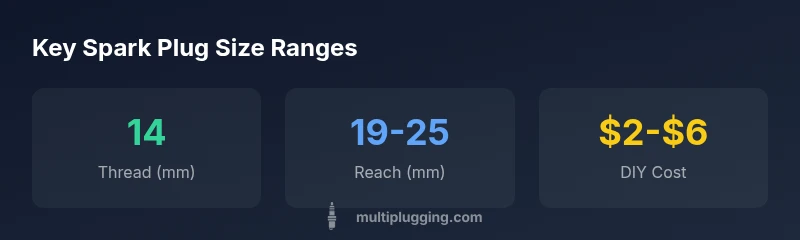
Push mower spark plug sizes most commonly use a 14 mm thread with a standard reach around 19 to 25 mm. However, some smaller or older engines employ 12 mm or even 10 mm threads with varying reach. To avoid misfit, always verify by checking the mower's manual, the existing plug, or the engine model specification, then choose a plug within the recommended range.
Understanding push mower spark plug size basics
When people talk about the size of a spark plug for a push mower, they're usually referring to three dimensions: the thread diameter, the reach, and the heat range designed for that engine. In practice, the thread diameter is standardized for most lawn equipment around 14 mm, and the reach often sits in the 19–25 mm range. The exact specification varies by model and engine family, so you should not assume — confirm with the mower’s manual or the existing plug. The MultiPlugging team has found that sticking to the maker's size chart reduces misfires and engine damage more effectively than guessing.
Beyond diameter and reach, consider the seating depth and the seal between the head and the gasket. An undersized thread or too-short reach can fail to seal, causing compression losses and misfiring, while an oversized thread can damage threads. As a rule of thumb, aim for a plug that seats snugly when installed by hand, then a touch more with a wrench—never force it. According to MultiPlugging, starting with the manufacturer’s exact size is the quickest path to reliable starting and smooth idle.
How to verify the correct size for your mower
Verifying the correct spark plug size for your mower minimizes waste and keeps the engine healthy. Start with the owner’s manual or the mower manufacturer’s website; look up the exact plug size for your engine model. If you don’t have the manual, examine the existing plug for stamped numbers or brand markings, which often indicate the thread diameter and reach. If the plug is damaged, you can measure the diameter with calipers across the threaded portion and estimate reach by measuring the distance from the shoulder to the tip of the threads.
Next, compare with replacement charts from reputable sources. Do not assume that a plug with the same heat range from a different line is automatically compatible. For many everyday push mowers, you’ll encounter a 14 mm thread and a reach near 19–25 mm; some models may require 12 mm or 10 mm threads. If you’re unsure after measuring, contact the engine manufacturer’s support or consult a professional. By investing a few minutes for measurement, you’ll save time and prevent engine damage later.
Common sizes and what they mean for replacement choice
When you shop for a replacement plug, you’ll see sizes framed as thread diameter and reach. The most common thread size for push mower engines is 14 mm, and the usual reach falls in the 19–25 mm window. There are exceptions: a handful of older or European-oriented engines use 12 mm threads, and a small subset of very compact engines rely on 10 mm threads. In practice, if your mower manual calls out '14 x 19' or '14 x 19.0', that means 14 mm thread diameter with 19 mm reach. If the numbers differ, look up the engine family or the original plug part number to avoid mismatch. Matching the size ensures proper sealing, accurate heat transfer, and reliable cold starts.
Measuring at home and choosing the right plug
With a simple set of tools, you can confirm size quickly. Remove the old plug and inspect the threaded section; use a caliper to measure diameter, and note the seat depth (how far the thread extends). The plug’s reach is the distance from the gasket seat to the tip of the threads — not the overall length of the body. If you’re replacing, choose a plug with the same thread diameter and reach; if in doubt, aim for a 14 mm thread with a 19–25 mm reach as a safe default. Remember to check the gap specification after installation and adjust if required according to the engine manual.
Tools, tips, and maintenance
A spark plug socket, a ratchet, and a gauge for gap measurement are the core tools for a quick swap. Keep replacement plugs in a labeled container and avoid touching the electrode with dirty hands to prevent contaminating the insulator. After installing, hand-tighten, then snug with a wrench while monitoring the seating. Anti-seize compounds are optional for aluminum heads but can complicate removal later; consult the mower manufacturer guidance before applying. As your engine ages, periodic checks of plug size and cleanliness help maintain reliable starts and fuel efficiency. A wrong-sized plug increases heat creep and fouling risk, which makes yearly inspection worthwhile.
Common spark plug size ranges across lawn mower types
| Model Type | Thread Size (mm) | Reach (mm) | Notes |
|---|---|---|---|
| General push mower | 14 | 19-25 | Most engines use 14 mm thread; verify with manual |
| Older Briggs & Stratton small engine | 12-14 | 19-22 | Some models may use 12 mm or 14 mm |
| European small engine mower | 10-12 | 22-28 | Smaller thread options in narrow designs |
FAQ
What is the standard spark plug size for most push mowers?
Most push mowers use a 14 mm thread with a reach around 19–25 mm; always verify with the engine model or manual.
Most push mowers use a 14 mm thread and about a 19 to 25 mm reach.
How can I find the correct plug size if I lost the manual?
Check the old plug for numbers, inspect the engine model, or consult the manufacturer's online spec sheets. If needed, measure the thread diameter with calipers.
Check the old plug for numbers or look up your engine model online; measure the thread if needed.
Can I use a plug with a different size if the mower runs fine?
No. Using the wrong thread size or reach can cause poor sealing and misfires. Always match the size to the manual or original plug.
Usually not; the wrong size can cause misfires and sealing problems.
Are there safety tips for replacing spark plugs on a lawn mower?
Wear gloves, disconnect the spark plug boot before working, and ensure the engine is cool. Use the correct socket and avoid overtightening.
Wear gloves, unplug before work, and avoid overtightening.
What tools do I need to replace a spark plug on a lawn mower?
A spark plug socket, ratchet, and gap gauge are the essentials. Keep spare plugs on hand and label containers.
Spark plug socket, ratchet, and a gap gauge are the basics.
Does plug size affect performance more than the gap?
Both matter. Size ensures proper seating and heat transfer; gap affects ignition timing. Use the manufacturer’s specs for both size and gap.
Size and gap both matter; follow the manufacturer’s specs.
“Understanding spark plug size is the first step to reliable mower performance. The right thread diameter and reach ensure proper seating and heat management.”
Main Points
- Always verify plug size against the manual before buying.
- 14 mm thread is the most common for push mowers.
- Measure thread diameter and reach if in doubt.
- Use the correct plug size to ensure sealing and ignition reliability.