What Spark Plugs for the 5.3 Vortec: A Practical Guide
Learn which spark plugs suit the GM 5.3L Vortec, why heat range and gap matter, and how to replace them safely. A practical, data-informed guide by MultiPlugging.


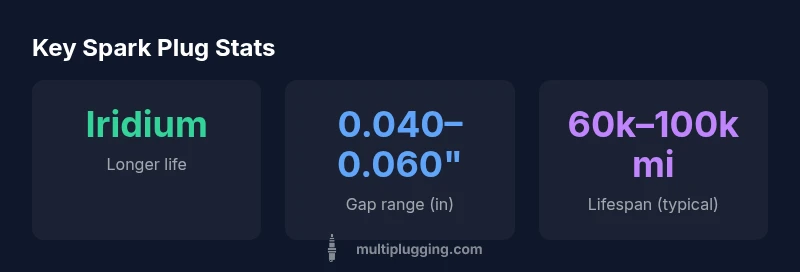
Based on MultiPlugging analysis, iridium or platinum spark plugs are recommended for the 5.3L Vortec to balance longevity and firing efficiency. Start with a 0.040–0.060 inch gap, and verify OEM torque specs before installation. The exact choice depends on driving style and maintenance history. In most cases, durable iridium plugs offer longer intervals between replacements, while copper plugs are cheaper but require more frequent changes.
What the 5.3 Vortec Really Needs in Spark Plugs
For many DIYers, the question what spark plugs 5.3 vortec requires isn't about brand alone—it's about heat range, electrode design, and durability. The 5.3L Vortec is built for reliable daily driving, but it benefits from plugs that resist fouling and maintain stable combustion across a wide operating envelope. In practice, this means considering iridium or platinum electrodes for longevity, rather than the cheapest copper options. You should also confirm the correct gap for your specific vehicle and setup. Always start with OEM recommendations when available and adjust only if you notice misfires, reduced fuel economy, or rough idle during normal driving.
Spark plug types explained
There are three main categories to consider:
- Copper core plugs: inexpensive and readily available; deliver solid performance but wear more quickly.
- Platinum plugs: longer life than copper and good all-around performance; a common mid-range choice.
- Iridium plugs: highest durability and resistance to wear; often the best long-term value for engines like the 5.3 Vortec when you drive aggressively or log lots of miles.
For most 5.3 applications, iridium or platinum plugs offer the best balance of longevity and performance. Copper plugs can be acceptable on budget builds or partial replacements, but expect more frequent changes.
Gap, heat range, and performance considerations
The gap and heat range directly influence combustion stability and misfire resistance. For the 5.3 Vortec, a conservative starting gap is typically in the 0.040–0.060 inch range, but always verify with the OEM specification for your exact model year and plug type. Heat range determines how quickly a plug heats to its self-cleaning temperature; a plug that is too cold can foul, while one that is too hot can preignite. When selecting plugs, consider your climate, driving style, and maintenance history. If you tow or drive in hot, extended-load conditions, a slightly colder heat range can help prevent detonation risk.
Installation checklist for a 5.3 Vortec
Prepare with the right tools: torque wrench, spark plug socket, anti-seize compound sparingly (or none if the factory hardware already has a coating), and dielectric grease for boots. Disconnect the battery before starting. Remove each coil-on-plug boot, thread the new plug by hand to avoid cross-threading, and then tighten to OEM torque specification. Reinstall boots, reconnect the battery, and run the engine to verify steady idle and smooth acceleration. Always reset any fault codes if they reappear after replacement.
Maintenance, replacement intervals, and upgrade paths
Use the vehicle’s service manual as the primary guide for replacement intervals. In general, expect longer intervals with iridium or platinum plugs (60,000–100,000 miles) compared to copper plugs (roughly 20,000–40,000 miles). If you frequently drive in harsh conditions or have a history of fouling, you may prefer a smaller, more robust gap optimization strategy or a higher-quality iridium plug. Periodic inspection of coil packs and wires is also wise, as failed ignition components can mimic worn plugs. Regular maintenance ensures the 5.3 Vortec keeps delivering consistent power and efficiency.
Comparison of spark plug types for the 5.3 Vortec
| Plug Type | Typical Gap (in) | Lifespan | Notes |
|---|---|---|---|
| Copper | 0.040–0.060 | 20,000–40,000 miles | Budget option; shorter life |
| Platinum | 0.040–0.060 | 40,000–60,000 miles | Better longevity; balanced performance |
| Iridium | 0.040–0.060 | 60,000–100,000 miles | Best longevity; premium option |
FAQ
What spark plug types are best for a 5.3 Vortec?
Iridium and platinum plugs are commonly recommended for the 5.3 Vortec due to longevity and reliable performance. Copper plugs are cheaper but may wear out sooner. Always match your choice to driving style and maintenance history.
Iridium or platinum plugs are usually best for the 5.3 Vortec, offering longevity with solid performance. Copper is cheaper but wears out faster.
Should I gap my spark plugs myself?
Yes, if you have the correct gap tool and know the OEM specification. Gapping outside recommended ranges can cause misfires or poor efficiency.
Yes, gap them to the OEM spec with the right tool, then install.
How often should I replace spark plugs on a 5.3 Vortec?
Replacement intervals vary by plug type and driving conditions. Typical ranges are 60,000–100,000 miles for iridium/platinum and shorter for copper plugs.
Typically, iridium or platinum plugs last 60k to 100k miles; copper plugs wear faster.
Can using the wrong plug affect performance?
Yes. An incorrect heat range or gap can cause misfires, reduced fuel efficiency, and idle instability. Always align with OEM specs.
Yes—wrong plugs can cause misfires and poor performance. Stick to OEM specs.
Do I need to replace spark plug wires when changing plugs?
If the wires or boots show cracking, wear, or resistance, replace them or inspect for wear. Worn wires can mimic plug issues.
Check wires for wear and replace if needed to avoid ignition problems.
“Selecting the right spark plugs for the 5.3 Vortec requires balancing heat range, electrode design, and service intervals. The best choice combines longevity with reliable, consistent ignition under typical duty cycles.”
Main Points
- Choose iridium or platinum plugs for longevity.
- Verify OEM gap and torque specifications before install.
- Expect copper plugs to require more frequent changes.
- Follow OEM guidance for replacement intervals.
- Check ignition components together with plugs during maintenance.