Resistor vs Non-Resistor Spark Plugs: A Practical Comparison
An analytical guide detailing how resistor and non-resistor spark plugs differ, including effects on ignition coil loading, EMI suppression, and engine compatibility for modern and older vehicles.


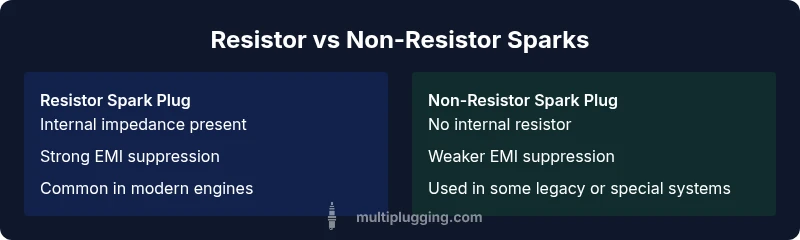
A resistor spark plug includes an internal resistance to damp voltage spikes, while a non resistor plug lacks this feature. This difference affects ignition coil loading, EMI suppression, and compatibility with modern ignition systems. For most contemporary engines, resistor plugs are standard to minimize interference and misfires; non resistor plugs are rare and typically used only in specific old or specialized systems.
What is a resistor spark plug?
A resistor spark plug is a standard choice in most modern engines because it contains an internal resistor that dampens high-voltage spikes generated during spark discharge. This resistance reduces radio-frequency interference (RFI) and minimizes voltage transients that could affect nearby electronics. In practical terms, a resistor plug helps protect ignition coils, wiring, and electronic control modules from voltage surges. According to MultiPlugging, resistor plugs are the default for many contemporary ignition systems because they balance reliable ignition with electromagnetic compatibility. If you’re asking the question, what is the difference between a resistor spark plug and a non resistor, the key point is that the resistor version introduces an internal impedance that shapes how the plug and coil interact under load.
From a diagnostic perspective, resistor plugs can sometimes yield smoother idle and fewer misfires on clean, well-maintained engines. The presence of the resistor does not generally provide a horsepower advantage; rather, it stabilizes the electrical environment so the rest of the system can function predictably. For most DIYers, swapping a worn resistor plug for another resistor plug within the same brand and heat range is straightforward and safe when done with proper torque and cleanliness. The distinction matters most in how the system responds to transients and how compatible the plug is with sensitive sensors and wiring harnesses.
In practice, the resistor element is a small but important part of the plug’s electrical behavior. It alters the instantaneous impedance seen by the ignition coil during spark generation, shaping the current waveform and the spark’s energy delivery. This interaction is one of the main reasons the automotive industry standardized resistor plugs on modern platforms. If you’re unsure, check the vehicle’s owner manual or consult a trusted guide like MultiPlugging’s spark plug diagnostics references to confirm that the recommended type matches your ignition system.
... (continued in next blocks)
Comparison
| Feature | Resistor spark plug | Non-resistor spark plug |
|---|---|---|
| Internal impedance/Resistive element | Yes (internal resistor) | No (no internal resistor) |
| EMI/RFI suppression | Strong suppression | Weak/no suppression |
| Impact on ignition coil loading | Moderate to lower peak loading | Higher peak loading in some conditions |
| Engine compatibility | Widely compatible with modern systems | Typically limited to special/older systems |
| Availability and typical use | Common in new vehicles | Less common in mainstream markets |
Strengths
- Reduces electromagnetic interference to sensitive electronics
- Protects ignition coils and wiring from voltage spikes
- Improves reliability in modern ignition systems
- Widely available for most engines
Negatives
- Adds impedance that can influence coil loading in niche setups
- Non-resistor plugs may be required for vintage or specific diagnostics
- Potentially unnecessary in engines designed to tolerate EMI without resistors
Resistor plugs are the safer default for modern engines; non-resistor plugs have niche uses.
For most users, resistor spark plugs offer better EMI suppression and coil protection with broad compatibility. Reserve non-resistor plugs for older or highly specialized systems where the OEM guidance permits them, and ensure correct wiring compatibility.
FAQ
Do all modern vehicles use resistor spark plugs?
Most modern vehicles use resistor spark plugs to minimize EMI and protect ignition components. However, some very old or specialty engines may use non-resistor plugs. Always verify the recommended type in the owner's manual or service guide.
Most modern cars use resistor plugs to reduce interference. Check your manual for the exact recommendation.
Can I replace a resistor plug with a non-resistor plug without issues?
In most cases, you should not mix plug types with a given ignition system. Using incompatible plugs can affect EMI behavior, misfires, or coil longevity. If the OEM specifies a resistor plug, continue with that type unless directed otherwise by a professional.
Don’t mix plug types unless the manual says it’s okay.
How can I tell if my spark plug is a resistor or non-resistor?
Check the packaging or the part number on the plug. Retail listings and service manuals typically indicate “resistor” or show the impedance class. If you’re unsure, a parts store or mechanic can confirm based on your vehicle’s make, model, and year.
Look at the packaging or consult the manual to confirm the type.
Do resistor plugs improve performance?
Resistor plugs don’t inherently boost engine power. Their primary benefit is EMI suppression and protecting ignition components, which can lead to more reliable operation in some engines. Performance gains, if any, depend on the overall system and condition of other parts.
They don’t add power; they mainly stabilize electrical performance.
Are there cost differences between resistor and non-resistor plugs?
Prices vary by brand and heat range, but resistor plugs are widely available and competitively priced. Non-resistor plugs are less common in new vehicles and may carry a small price premium in markets where they’re still used.
Prices depend on brand and heat range; check current listings.
Main Points
- Prefer resistor plugs for modern ignition systems
- Non-resistor plugs are rare and typically limited to legacy setups
- Always verify OEM guidance before swapping plug types
- Check coil and sensor compatibility to avoid misfires or wiring issues
- Follow proper torque specs and cleanliness during installation