Spark Plug and Wire Set: In-Depth Comparison Guide
An in-depth comparison of spark plug and wire set options for DIYers. Learn how matched sets, wire quality, and installation impact reliability and performance.


TL;DR: A matched spark plug and wire set from a reputable brand (OEM or premium aftermarket) delivers reliable ignition, correct gap, and durable insulation. For most engines, use the exact plug type and wire length specified in your manual. Avoid universal sets that fit but underperform, risk misfires, or wear out faster. For performance-focused setups, consider high-quality iridium plugs paired with resistant, properly matched wires.
Spark Plug and Wire Set: What They Do
A spark plug and wire set is the backbone of your engine's ignition system. The spark plug creates a controlled spark that ignites the air-fuel mixture, while the wires deliver the high-voltage current from the coil to the plug. A mismatched or low-quality set can cause weak sparks, misfires, or uneven combustion. According to MultiPlugging, using a matched set designed for your engine helps maintain consistent ignition timing across RPMs and reduces wear on coils and boots. This is especially important in engines with tight tolerances or modern ignition systems where resistance and insulation quality matter for performance and longevity.
In everyday use, the right spark plug and wire set minimizes voltage drop and heat loss, ensuring the spark occurs exactly when the intake valve closes. A well-chosen set also resists cracking from engine heat and ozone exposure, which translates into longer service life and fewer roadside surprises. For DIYers, start with the exact part numbers listed in your vehicle's manual and verify compatibility with your engine code.
Material Types: Copper, Platinum, Iridium, and More
The heart of the spark plug is the electrode material, but the wire set complements it with insulation, resistance, and conductor quality. Copper-core wires have good conductivity and cost, but may wear faster under extended high-heat conditions. Platinum and iridium plugs push ignition stability and longevity, and when paired with premium insulated boots, you gain resistance to heat, oil, and moisture. MultiPlugging's analysis emphasizes that the electrode material and wire quality together dictate how cleanly the plug fires under load. In high-performance or harsh-weather engines, choosing iridium plugs with high-grade silicone-insulated wires often yields the best balance between reliability and cost.
For most street-driven cars, a modern copper-core wire with rubberized or silicone insulation is adequate, but durability and heat resistance are key in turbocharged or high-RPM engines. Consider the engine’s torque curve and operating temperature when selecting, since some engines prefer a tighter ignition window and higher resistance to stray currents that can degrade performance.
Wire Configurations: Resistance, Core, and Boots
Spark plug wires aren’t all the same. The internal conductor can be copper or carbon-impregnated cores, with resistance designed to suppress EMI and prevent backfeed. Wires also feature boots that seal against moisture and heat; poor boots can crack and allow arcing, which leads to misfires and rough idle. A high-quality set uses a multi-layer insulation system, reducing capacitance and maintaining consistent voltage delivery to the plug under various RPMs. In practice, resistance values are chosen to balance EMI suppression with effective energy transfer. For many modern engines, a matched resistance wire reduces electrical noise that can interfere with sensors, while non-resistance designs may suit older models with fewer electronics.
When selecting, verify that the boot length and bend radius accommodate your engine’s coil pack layout and intake manifold. If routing is tight, a premium boot with reinforced hinges helps prevent fatigue.
OEM vs Aftermarket: Which Brings Value
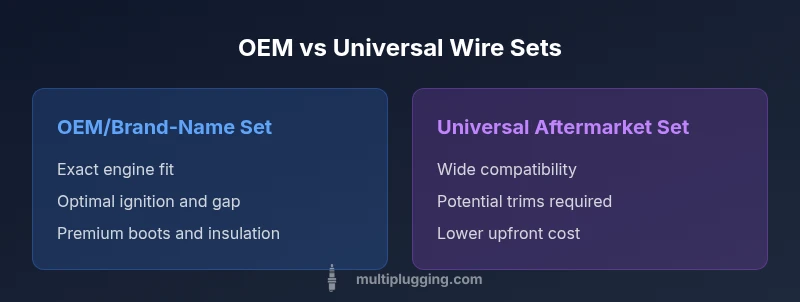
Original equipment manufacturer (OEM) sets are designed to fit a specific engine family, ensuring optimal ignition timing and compatibility with the vehicle’s sensors. Premium aftermarket sets can offer better materials, improved insulation, and sometimes lower cost than a factory alternative, but compatibility remains critical. The consensus from the MultiPlugging team is to prioritize exact fit and reputable construction over price alone. OEM-matched sets minimize the risk of misfires and sensor anomalies, especially in modern engines with complex ignition controls.
The contrast often comes down to warranty, availability, and timing. If your vehicle requires a unique boot shape or a rare wire length, sticking with a brand-verified option is safer than improvising with a generic kit. For enthusiasts who push performance, aftermarket high-performance sets can provide beneficial gains, but they require careful verification of the part number and installation procedure.
Matching the Set to Your Engine: Model, Year, and Gap
Engine specifications change over time. Even small variations in the gap size or boot shape can alter ignition timing slightly. The core rule is: match the plug and wire set to your specific model, year, and engine code. The plug gap must be checked and adjusted to the manufacturer’s specification during installation. Some engines tolerate a range, but straying too far from the intended gap can cause misfires or reduced fuel economy.
A reliable approach is to use a complete set that lists compatibility for your exact VIN or engine code. If you’re unsure, consult your vehicle’s service manual or an online parts catalog that cross-references your year and trim. A well-matched set reduces maintenance intervals and makes future diagnostics easier.
Troubleshooting and Common Pitfalls
A frequent mistake is reusing old boots or mixing brands without checking compatibility. Worn boots can allow moisture ingress, leading to arcing and misfires. Another pitfall is installing plugs without verifying the recommended gap and torque; overtightening can damage the threads, while under-tightening can cause leakage and poor seating. Discard any wires with brittle insulation or visible cracking. A simple diagnostic check—inspected spark plug color, voltage drop, and misfire counters—can reveal if a set needs replacement.
Always inspect the entire ignition circuit when diagnosing performance issues, not just the plugs. A faulty coil, module, or distributor can mimic a plug problem, so a systematic approach helps avoid unnecessary replacements.
Maintenance and Longevity Tips
Even the best spark plug and wire set benefits from regular checks. Every 30,000 to 100,000 miles—depending on type—the set should be inspected for boot integrity, cracks, and wear. Clean the contacts and connections gently to avoid corrosion; store spare parts in a dry, cool environment. If your vehicle uses stop-and-go driving or heavy loads, you may see quicker wear on wires and boots.
Seasonal maintenance is smart: inspect for moisture ingress after rain or washing, check for oil leaks around the boots, and verify that wire routing hasn’t been abraded by belts or moving parts. A well-maintained set can improve throttle response and gas mileage, especially in engines with advanced ignition control.
Price, Warranty, and Value for Money
Price ranges for spark plug and wire sets vary by material, range, and brand. OEM-equivalent packages typically cost more upfront but can reduce diagnostic time and provide long-term reliability. Premium aftermarket sets may offer a balance of performance and cost, especially for enthusiasts, but you must verify warranty terms and compatibility. A practical approach is to compare at least two reputable brands that explicitly list your engine’s year and model, then factor in installation time and potential labor savings from fewer misfires.
Warranty length can indicate confidence in the product’s durability; longer warranties often correlate with higher insulation quality and better boot materials. In the long run, value comes from reliability, ease of installation, and the expected service interval rather than the initial sticker price alone.
Authority Sources
For further reading and verification, consult established automotive resources:
- https://www.nhtsa.gov
- https://www.consumerreports.org
- https://www.caranddriver.com
Final Tips: Quick Reference Checklist
- Confirm engine code and year match exactly
- Choose a matched plug and wire set from a reputable brand
- Check boot integrity and wire routing during install
- Verify spark plug gap and torque specifications
- Consider OEM-equivalent if reliability is the priority
Summary of Practical Guidance
Selecting the right spark plug and wire set hinges on precise engine compatibility, material quality, and correct wiring configuration. When in doubt, favor a matched, brand-verified kit designed for your engine, as this reduces misfires and maintains optimal performance across RPM ranges.
Comparison
| Feature | OEM/Brand-Name Set | Universal Aftermarket Set |
|---|---|---|
| Ignition reliability | high (matched set) | medium (universal) |
| Plug compatibility | exact match to model | generic across many engines |
| Wire length options | engine-specific lengths available | limited to common lengths |
| Resistance design | designed for EMI suppression | variable/none |
| Heat and insulation durability | high-temp boots, long life | standard insulation |
| Installation effort | low (plug-and-play) | high (may require cutting/assembly) |
| Price range | moderate to high per set | low to moderate per set |
Strengths
- Improved ignition reliability with matched sets
- Longer service intervals with quality wires
- Better engine performance and fuel efficiency
- Easier maintenance with correct fit
- Reduced risk of misfires and backfires
Negatives
- Higher upfront cost for OEM/matched sets
- Limited availability in some markets
- Potential misfit if engine changes not accounted for
- Finding correct length may be tricky for older engines
Matched spark plug and wire sets generally provide the best balance of reliability and performance for most engines.
Choose OEM-matched sets for critical reliability; for budget or older engines, a quality aftermarket set may suffice. Prioritize correct fit and insulation quality to maximize longevity.
FAQ
What is the main difference between OEM and universal spark plug wire sets?
OEM sets are designed for a specific engine and provide precise fit, optimal gap, and compatible boots. Universal sets aim to fit many engines but may require trimming or alterations and can compromise reliability unless carefully matched.
OEM sets fit like a glove and are safer for reliability. Universal sets can work, but they often need adjustments and may not deliver consistent performance.
Can I mix brands for plugs and wires?
Mixing brands is generally not recommended because it can alter resistance, fit, and electrical characteristics, potentially increasing misfires. If you mix, ensure specifications still align with your engine’s requirements.
Better to keep it consistent to avoid surprises.
Do Iridium or Platinum plugs require different wire sets?
Iridium and platinum plugs use similar wire sets, but you should verify compatibility with the plug's reach and boot design. Higher-performance plugs may justify premium insulated wires for heat resistance.
Check the kit’s compatibility notes for your specific plug type.
How do I know the right wire length for my engine?
Consult your engine’s service manual or parts catalog that lists exact lengths by model and year. Measure existing wires or use a verified matched kit to avoid routing issues.
Use exact lengths to prevent routing problems.
Are resistance wires better for EMI suppression?
Yes, resistance wires help suppress electrical interference, protecting sensors and electronics. However, some older systems may not require resistance and could perform differently, so check your vehicle’s specifications.
Resistance helps with EMI, but confirm your system needs it.
What about warranty and maintenance intervals?
Look for sets with a clear warranty and documented maintenance intervals. Premium sets often come with longer warranties and longer service life when installed correctly.
Warranty can signal durability, choose accordingly.
Main Points
- Prioritize a matched plug-wire set for reliability
- Verify engine-specific plug type and wire length
- Consider material quality for durability in harsh conditions
- OEM-equivalent sets offer strong reliability and warranty
- Budget aftermarket options can work if compatibility is confirmed