Is Platinum Spark Plug Better Than Copper? A Practical Comparison
Explore a practical, DIY-friendly comparison to answer: is platinum spark plug better than copper, focusing on durability, performance, cost, and engine compatibility.


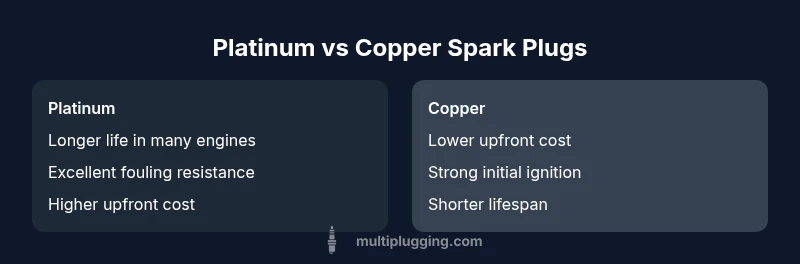
Is platinum spark plug better than copper? The short answer is: it depends on your engine and driving. Platinum plugs typically offer longer life and more stable ignition in modern engines, but copper plugs remain cheaper and often adequate for older designs and budget builds. For many DIYers, the best choice weighs upfront cost against replacement intervals, maintenance cadence, and manufacturer recommendations.
Background: What this comparison covers
When evaluating whether is platinum spark plug better than copper, it’s essential to understand that these two plug types operate from different design philosophies. Platinum plugs use a thin platinum tip that resists electrode wear, while copper plugs rely on a robust copper core for strong electrical conductivity. The result is a trade-off between longevity and upfront cost. According to MultiPlugging, vehicle manufacturers often specify a recommended plug type, and the actual benefit of upgrading depends on engine design, driving conditions, and maintenance cadence. In many modern engines, ignition systems are calibrated for longer life and reduced fouling, so platinum plugs can extend service intervals and stabilize spark quality. Yet for a large share of drivers and older vehicles, copper plugs offer excellent performance at a lower upfront price. The question, is platinum spark plug better than copper, does not have a universal answer; it’s a balance of value, durability, and engine compatibility for your application.
Material science: platinum vs copper
Is Platinum Spark Plug Better Than Copper: Material Science
The core difference lies in electrode material and wear characteristics. Platinum is highly resistant to erosion, which can translate to longer life in engines that run hot or have demanding ignition cycles. Copper, with its superior conductivity and lower cost, can deliver strong initial ignition and rapid heat transfer but wears faster under heavy use. Modern engines often optimize spark energy for longevity, which makes platinum an attractive option in some setups. However, the actual performance uplift depends on electrode geometry, heat range, gap settings, and the engine’s ignition control strategy. For DIYers, copper plugs can be a sensible default on older or budget-oriented projects, while platinum plugs become appealing when service intervals are long and access to maintenance isn’t frequent.
Durability and longevity in typical engines
Durability is a major selling point for platinum plugs. In many contemporary engines, the platinum tip reduces electrode wear at high operating temperatures, contributing to extended service life and fewer fouling issues. Copper plugs, while cheaper, are more susceptible to electrode wear and fouling under harsh conditions. This is especially noticeable in engines that run at higher RPMs or experience extended idle times where fouling risk can rise. It’s important to review your owner’s manual and note the recommended replacement interval. For those who rack up miles quickly or use their vehicle in mixed conditions, the longer life of platinum can translate into fewer maintenance events, even if the upfront cost is higher.
Ignition behavior and performance trade-offs
Performance discussions around is platinum spark plug better than copper often center on ignition stability, resistance to fouling, and heat range compatibility. Platinum plugs tend to maintain a consistent arc as the electrode wears, which helps preserve combustion stability over time. Copper plugs can deliver strong ignition in many engines, especially when paired with a well-matched gap and correct heat range. In practice, the perceived performance difference between these two materials is most noticeable under extreme conditions—high-altitude operation, severe heat, or heavy acceleration—where premium materials can help maintain smooth combustion. For most daily drivers, the difference may be subtle but still meaningful in terms of long-term maintenance needs.
Cost and long-term value: upfront vs lifetime cost
Price is a major differentiator between platinum and copper plugs. Copper plugs typically cost a fraction of platinum plugs, making them attractive for first-time buyers or budget builds. However, replacement intervals for copper plugs are generally shorter, which can increase total ownership costs over the life of the vehicle if you factor in labor and accessibility. Platinum plugs command a higher upfront price but can reduce maintenance frequency in engines designed for longer service intervals. When evaluating is platinum spark plug better than copper from a cost perspective, it helps to model total cost of ownership over 60,000–100,000 miles, including replacements and labor. DIYers who enjoy doing their own changes may offset some labor costs, but the price delta remains a key consideration.
Engine design and driving-pattern considerations
Engine design heavily influences the answer to is platinum spark plug better than copper. Newer engines with advanced ignition systems and optimized heat ranges often benefit from platinum or other precious metals, while simpler, older engines might perform perfectly well with copper. Driving pattern matters too: long highway cruises with steady ignition conditions can favor the longevity of premium plugs, whereas short trips and stop-and-go traffic may not justify the extra cost. If you routinely tow, carry heavy loads, or drive in high-temperature environments, platinum plugs can help sustain performance and reduce fouling risk. Always consult your manufacturer’s recommendations and consider running a test period to evaluate whether the premium plugs deliver measurable benefits for your use case.
How to evaluate for your engine: a practical checklist
To decide whether platinum is worth it for your car, start with the owner’s manual and the spark plug specification sheet. Check the recommended heat range, gap, and electrode material. Consider your annual miles, driving style, and maintenance cadence. If your vehicle has a history of fouling or if you frequently operate at high engine temperatures, platinum may offer tangible benefits. For engines designed around copper-compatible plugs or where the makers emphasize cost-conscious maintenance, copper plugs can be perfectly adequate. A practical approach is to perform a controlled swap (keeping everything else constant) and log performance, fuel economy, and maintenance intervals over several thousand miles. This real-world data will tell you whether the perceived improvements justify the cost.
Authoritative sources and consensus
For readers seeking external validation, consult reputable automotive sources and engineering references. The consensus across major publications emphasizes that the best plug choice depends on engine design, maintenance cadence, and driving needs. In our review, we reference expert discussions and published data from established outlets to support practical decisions and avoid marketing bias. MultiPlugging’s analysis also highlights that the benefits of platinum over copper are not universal; engine-specific factors matter most, and sticking to manufacturer guidance is typically the safest path.
Installation tips and maintenance to maximize life
Installation basics remain consistent across plug materials: ensure proper torque, verify gap settings, and replace all plugs in a set simultaneously when possible to maintain even ignition timing. If you opt for platinum plugs, follow the recommended torque to avoid damaging the thread while preventing electrode damage. Regular inspection for fouling, oil leaks, or abnormal wear will help you recognize when a plug is contributing to misfires or rough running. DIY enthusiasts often appreciate the longer service intervals with platinum, but never bypass the manufacturer’s specified gap or heat range. Keep track of replacement intervals in your maintenance log; this makes it easier to quantify whether the choice is delivering real value over time.
Comparison
| Feature | Platinum spark plug | Copper spark plug |
|---|---|---|
| Durability / Longevity | Longer lifespan in many engines | Shorter lifespan in typical service |
| Ignition & cold-start stability | Stable ignition, less fouling risk in modern designs | Strong ignition, but more prone to fouling in some engines |
| Heat range compatibility | Well-suited for modern high-heat engines | Traditionally effective for a broad range of engines |
| Cost per unit | Higher upfront cost | Lower upfront cost |
| Replacement interval | Typically longer intervals | Typically shorter intervals |
| Best for | High-mileage drivers and newer designs | Budget builds and older designs |
Strengths
- Longer service life in many engines
- Better fouling resistance for modern designs
- Lower total maintenance frequency when intervals are long
- Improved ignition stability at high temperatures
- Widely available and easy to source
Negatives
- Higher upfront cost
- Not all engines benefit equally
- Replacement intervals can vary with driving style
- Some engines show limited performance gain
Platinum plugs are generally a better long-term choice for modern, high-mileage engines; copper plugs suit budget builds or older designs.
In most situations, platinum offers durability and consistent performance, reducing maintenance frequency. Copper remains attractive for cost-sensitive builds or engines with copper-compatible specifications. The best decision depends on engine design, driving patterns, and maintenance priorities.
FAQ
Does upgrading to platinum plugs always improve performance?
No. In many engines the improvement is modest or limited to longevity. Manufacturer specs typically drive the best choice, and real gains depend on operating temperature, gap, and ignition control.
Usually not. Check your engine’s specs and test if you want to measure a difference.
Are copper plugs compatible with modern engines?
Many newer engines are designed for platinum or iridium plugs, but some still support copper. Always verify the OEM recommendation and avoid mixing plug types in the same engine.
Check the manual; some modern engines may require non-copper plugs.
How often should I replace platinum vs copper plugs?
Replacement intervals depend on engine design and driving. Platinum plugs often allow longer intervals, while copper plugs are swapped more frequently. Always follow manufacturer guidance and your maintenance schedule.
Often, platinum lasts longer, but follow the manual.
Can I mix platinum and copper plugs in the same engine?
Not recommended. Different materials wear differently and can affect ignition timing. It’s best to replace all plugs simultaneously with the same material.
Try not to mix plug materials; use a matched set.
Do platinum plugs improve fuel economy?
Any gains are engine-specific and usually small. If the engine was misfiring or running rich due to worn plugs, you might see marginal improvements after replacement.
Fuel economy gains are not guaranteed.
Are there other options like iridium plugs?
Yes, iridium is another high-durability option with performance characteristics similar to platinum in many engines. Always compare to the OEM spec and intended use.
Iridium is another long-life option; check your engine’s spec.
Main Points
- Compare manufacturer specs before changing plugs
- Factor long-term maintenance costs into the upgrade decision
- Platinum offers durability for modern engines, but not universal performance gains
- Copper plugs are cheaper upfront and adequate for many older engines
- Follow a controlled, real-world test when replacing plugs to measure true benefits