Autolite 3116 Spark Plug: DIY Diagnostics, Replacement & Tips
Learn how to diagnose, replace, and optimize the Autolite 3116 spark plug with practical, DIY-friendly guidance from MultiPlugging. Includes compatibility checks, gap standards, installation steps, maintenance tips, and troubleshooting for a smooth-running engine.


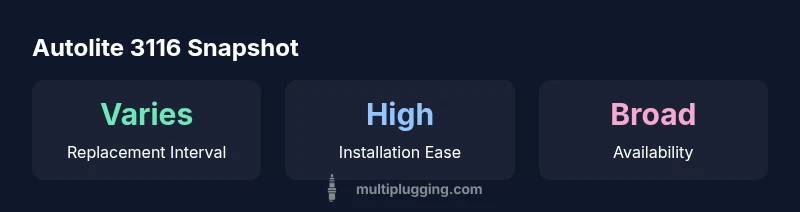
Autolite 3116 spark plug is a versatile, general-purpose plug widely used in gasoline engines. It offers reliable ignition, straightforward installation, and broad availability, making it a popular DIY choice for many cars and light trucks. Always verify engine-specific gaps and torque in your manual before replacement. This plug is commonly chosen for its balance of performance and affordability, which makes it a practical starting point for DIY maintenance.
What the Autolite 3116 Spark Plug Is and Why It Matters
The Autolite 3116 spark plug is a widely used, general-purpose ignition component that appears in many gasoline-powered engines across a broad range of makes and models. In DIY circles, it is often recommended for its availability and straightforward replacement process. While specific performance can vary by engine design, the plug generally supports reliable ignition under typical driving conditions when installed correctly. This guide from MultiPlugging outlines how to assess compatibility, gap the plug properly, and perform a safe installation. Remember that engine manufacturers publish exact torque specs and gap values for each application, so always verify before you swap.
Beyond compatibility, understanding the role of a spark plug helps you make better maintenance decisions. A good plug should ignite the air-fuel mixture consistently, reduce misfires, and maintain efficient combustion. The 3116 can serve as a practical option for many owners performing routine maintenance or diagnosing subtle drivability concerns. It is important to approach the replacement as part of a system check: inspect ignition wires, coils, and the ignition switch as part of a comprehensive tune-up plan. The overarching principle is simple: a clean, properly gapped plug supports smooth engine operation and can prevent downstream issues that stem from marginal ignition.
Compatibility and Engine Guidelines
Compatibility is the first checkpoint when considering the Autolite 3116 spark plug. Different engines require different spark plug specifications, and even within the same engine family, there can be variations in heat range, thread size, and projection. To avoid mismatches, use your vehicle or engine’s owner manual, service manual, or an official Autolite cross-reference guide. If you own a non OEM application or a lightly modified engine, cross-reference with the original equipment part number and, when in doubt, contact the manufacturer or a trusted technician. In DIY contexts, many enthusiasts keep a small array of common gap sizes and thread adapters on hand to accommodate different engine blocks without sacrificing accuracy. Always ensure the plug you select matches the recommended heat range and electrode design for your specific engine to optimize performance and longevity.
Gap Setting, Torque, and Installation Steps
Getting the gap right is a critical step in the installation process. Use a reliable feeler gauge to set the gap precisely to the engine’s specification before installing the plug. Do not bend or damage the electrodes in the process, and always dry-thread the plug by hand first to avoid cross-threading. When threading into the cylinder head, turn gently and steadily, using a torque wrench to achieve the manufacturer’s recommended torque. Tightening too much can damage the threads, while under-tightening can cause a poor seal and misfires. After installation, recheck the gap if you adjusted it in any way and confirm there are no leaks around the seat. Finally, route wires or ignition coils carefully to avoid contact with hot surfaces or sharp edges, and ensure there is no excessive tension on the boot that could cause arcing or misfires.
Diagnostics: Signs of Wear and Testing Tips
Even with the Autolite 3116 in place, the engine can exhibit signs of ignition problems. Common symptoms include rough idling, reduced acceleration, rough acceleration, elevated fuel consumption, or misfires under load. If you notice any of these, start with a visual inspection: remove the old plug and check the electrode for wear, fouling, or glazing. A legitimate diagnostic approach includes testing for spark with a qualified tester and inspecting the ignition wires and coil packs for damage or poor connections. Remember that a misfire can be caused by components beyond the spark plug, so consider a full system check if symptoms persist after a plug replacement. Documentation of service intervals and test results helps in predicting future maintenance needs and planning replacements more efficiently.
Maintenance Best Practices and Replacement Intervals
Maintenance with the Autolite 3116 is most effective when approached as part of a scheduled tune-up. Align replacement intervals with engine age, operating conditions, and driving patterns. In many cases, drivers who frequently drive in stop-and-go traffic or operate older vehicles may find a higher need for plug replacement, while vehicles under regular highway cruising may see longer intervals. Visual inspection of plug condition during each maintenance cycle is valuable; a clean, dry electrode with a light color usually indicates normal operation, whereas heavy carbon buildup, oil fouling, or worn electrodes signals the need for replacement. Finally, keep spare plugs of the correct type on hand to minimize downtime during maintenance.
Common Myths and How to Choose the Right Plug
A common myth is that every spark plug is interchangeable across all engines. In reality, engines require specific heat ranges, electrode configurations, and thread sizes. The Autolite 3116 is a versatile option, but it is not universally suitable for every engine. Use official part guides or consult a technician to verify compatibility. When choosing a plug, consider your engine’s operating temperature, driving style, and fuel quality. For DIY enthusiasts, a practical approach is to stock a few core gap sizes and inspection tools, ensuring you can adapt quickly to a broad range of engines while adhering to manufacturer specifications.
Guidance snapshot for using Autolite 3116 spark plugs
| Aspect | Autolite 3116 Guidance | Notes |
|---|---|---|
| Engine Type | Gasoline, 4-stroke compatible | Confirm with engine manual |
| Gap Setting | Gap varies by engine; consult spec | Use a feeler gauge and respect official gap |
| Torque | Follow manufacturer torque spec | Use torque wrench for accuracy |
| Maintenance cues | Inspect electrode wear, fouling, and sealing | Address issues early to prevent misfires |
FAQ
Is the Autolite 3116 suitable for all gasoline engines?
No, compatibility depends on the engine model and specifications. Always cross-check with the official Autolite part guide and your vehicle’s manual.
No—check your engine model and use the official part guide to confirm compatibility.
How do I gap Autolite 3116 spark plug?
Use a calibrated feeler gauge to set the gap to the engine spec before installation. Do not force or bend electrodes.
Use a gauge to set the gap exactly as your manual specifies.
Is Autolite 3116 a resistor plug?
Some 3116 variants include a resistor. Check the packaging or manufacturer specs to confirm.
Check the packaging or spec sheet to see if it’s a resistor plug.
What are signs that the Autolite 3116 needs replacement?
Misfiring, rough idle, reduced fuel economy, or hard starting can indicate worn plugs.
Look for rough running, poor acceleration, or starting trouble.
Can I use Autolite 3116 in high-performance engines?
Autolite 3116 is a general-purpose plug. For high-performance apps, consult the engine builder for tailored recommendations.
Consult your engine spec for performance-focused recommendations.
How often should I replace Autolite 3116 plugs?
Replacement intervals vary with engine age, driving conditions, and fuel quality; follow the vehicle’s maintenance schedule.
Follow the manufacturer’s maintenance schedule and pay attention to drivability cues.
“In our evaluations, the Autolite 3116 spark plug consistently delivers reliable ignition across a broad range of gasoline engines, making it a dependable option for DIY maintenance.”
Main Points
- Check engine manual for gap and torque before installing
- Inspect plugs visually for wear and fouling
- Cross-check compatibility with your engine model
- Follow safe, step-by-step installation and testing