Are Spark Plug Sockets Different? A Practical Guide
Discover whether spark plug sockets differ and how to choose the right one. Compare sizes, depth, magnetization, and reach to prevent drops and damaged plugs in your DIY engine work.


Are spark plug sockets different? In short, yes. Sockets vary in size, depth, drive type, and magnetization, all of which affect reach, retention, and the risk of damage. The right socket depends on your engine, plug style, and access space. Check the plug hex, thread size, and whether a magnetized or flex-head option is needed. A small kit with shallow and deep-well versions, plus a magnetic option, covers most DIY tasks and minimizes dropped plugs or cross-threading.
Are spark plug sockets different? A practical look at common variations
When you ask, are spark plug sockets different, the quick answer is yes, and the differences matter more than most DIYers realize. Spark plug sockets come in several flavors designed to handle different engine bays, plug types, and maintenance scenarios. The distinctions include size compatibility (metric vs imperial), socket depth, drive style, and whether the tool includes magnets or flexible joints. According to MultiPlugging, choosing the right combination reduces the risk of cross-threading, dropped plugs, and tool wear. In everyday DIY, you’ll notice that the same socket family can be used across multiple vehicles, but not all plugs are created equal. The goal is to match the socket to the plug’s hex size, the plug’s reach, and the space around the plug. A thoughtful selection makes routine maintenance faster and safer.
The MultiPlugging team found that a mixed-sizes approach is often the most flexible for mixed fleets. Beginners benefit from starting with a shallow socket for quick access and a deep-well variant for recessed plugs. Magnetized sockets, rubber inserts, and flex-joint extensions each address a particular challenge—retaining the plug, avoiding dropped parts, or reaching awkward angles. In all cases, ensure the socket’s interior is clean and free of burrs before use to protect the plug and engine threads.
The anatomy of a spark plug socket: what to look for
Key features to evaluate include the hex size compatibility with your spark plug, the depth (shallow vs deep-well), the presence of magnets, and the drive size (commonly 3/8 inch for many passenger cars). A robust socket often combines magnetic retention with a snug fit and a durable chrome-molybdenum body. If your engine has tight access, a flex-head or rotating-angle socket can dramatically improve usability. Magnetic retention helps hold the plug as you back it out, but you should routinely inspect and clean magnet surfaces to prevent debris buildup.
Practical takeaway for beginners: build a small, versatile set
Start with a shallow, standard 3/8 inch drive socket for most jobs, add a deep-well variant for recessed plugs, and consider a magnetic version if you frequently drop plugs in cramped bays. A flex-head option is a nice-to-have for stubborn angles. For unfamiliar engines, consult the owner’s manual or a reputable guide to confirm the correct size and socket type. This approach supports reliable maintenance without over-investing in tools you won’t use often.
How a difference in socket design affects your workflow
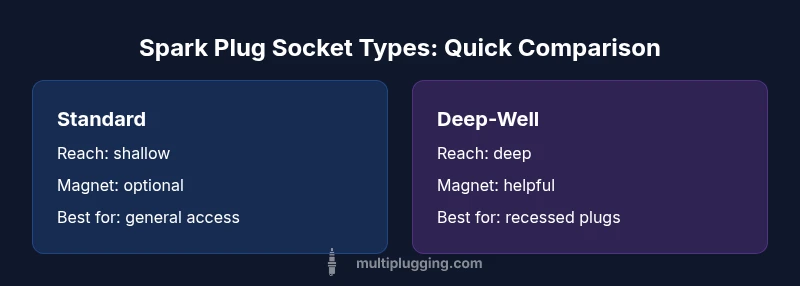
The difference between a standard and a deep-well socket becomes obvious when you reach plugs protected by long threads or stubbornly recessed access ports. A standard socket may be quicker to maneuver but risks contact with adjacent components or incomplete seating. Deep-well designs maximize reach and reduce the chance of cross-threading by keeping the plug in line with the socket. Magnetized sockets can dramatically improve one-handed operation, especially when you’re working solo in tight spaces. Consider also the impact of a rubber insert or coating that reduces slip and protects the plug head during removal.
Specialty sockets: when you might need them
Some engines require specialty sockets with specific inner shapes or anti-seize features. If your project involves a high-torque removal or unusual plug geometry, look for impact-rated or flex-head variants. Always verify the exact socket size against the plug’s hex dimension and the engine’s service procedure. While a basic set covers most tasks, a small collection of specialty sockets can save you time on rare or older vehicles.
Maintenance and safe usage: best practices
Before each job, wipe the socket interior to remove debris and inspect for burrs. Use a ratchet with controlled torque to avoid overtightening, and apply anti-seize where appropriate only if recommended for your plug type. After removal, clean the threads in the cylinder head and reapply the correct torque specification. If you’re dealing with stubborn plugs, consider a flex-joint extension to reduce leverage on the plug and surrounding components. Regularly inspect sockets for wear and replace any rounded or damaged tools immediately to protect engine longevity.
Summary: balance, not brand, determines success
The core message remains: the right socket solution lies in balancing reach, retention, and access. A versatile kit with shallow and deep-well sockets, magnetized where helpful, and a flexible option for hard-to-reach plugs will serve most DIYers well. Brand considerations matter less than fit, safety, and compatibility with your specific engine, as MultiPlugging’s practical evaluations show.
Final guidance for the curious DIYer
When you finalize your choice, ensure you have at least one shallow socket, one deep-well socket, a magnetized option, and a flexible joint if your budget allows. Keep spare extensions and a torque-controlled wrench for your most common engines. The result is a smoother maintenance experience with fewer tool missteps and better long-term engine health.
Feature Comparison
| Feature | Standard spark plug socket (short depth, 3/8" drive) | Deep-well spark plug socket (longer reach, 3/8" drive) | Magnetic spark plug socket | Flex-head spark plug socket |
|---|---|---|---|---|
| Reach/Depth | Shallow access for quick tasks | Longer reach to reach recessed plugs | Mid to long reach with magnet retention | Very long reach with flexible head for cramped bays |
| Magnetization | Non-magnetic | Non-magnetic | Magnetic | Magnetic (optional) |
| Drive Size | 3/8" drive | 3/8" drive | 3/8" drive | 3/8" drive |
| Best For | General access and quick changes | Recessed plugs and tight spaces | Dropping prevention and retention | Awkward angles and highly restricted spaces |
Strengths
- Reduces the chance of dropping the plug during removal
- Improves reach in cramped engine bays
- Magnetic options aid retention and handling
- Versatile sets cover most common engines
Negatives
- Can be more expensive than basic sockets
- Magnetized versions may attract metal debris requiring cleaning
- Wrong size or type can still damage threads or plugs
No single best socket fits every engine; a mixed set is the smartest bet.
For most DIYers, a combination of shallow, deep-well, and magnetic sockets covers the majority of vehicles. Flex-head options are worth it for tight bays. Always confirm plug size and engine recommendations before buying.
FAQ
Are spark plug sockets interchangeable with wrenches?
No. Spark plug sockets are designed to fit specific spark plug hex sizes and drive interfaces. Wrenches and ratchets are generic handles, but using the wrong socket size or profile can damage the plug head or threads. Always match socket to the plug and adopt appropriate torque.
Sockets fit plugs, wrenches turn them. Use the right size to avoid damage and maintain proper torque.
What is the difference between deep-well and standard spark plug sockets?
Deep-well sockets have extended depth to reach recessed plugs without striking the pipe or valve cover. Standard sockets are shorter and quicker to maneuver but may not reach deeper plugs. Both types fit a 3/8 inch drive in most applications, so choosing depends on plug location and engine layout.
Deep-well for recessed plugs; standard for easier access. Match to plug location.
Should I use a magnetic spark plug socket?
Magnetic sockets help hold the spark plug during removal, especially in tight spaces. They aren’t mandatory, but they reduce the chance of dropping the plug. If you use one, clean the magnet regularly to remove metal debris.
Magnetic helps grip, not required, but very handy in cramped spaces.
How do I know which socket size I need for my engine?
Check the engine’s service manual or a trusted guide for the plug hex size and the declared socket type. If you’re unsure, start with a universal socket set that includes the common hex sizes used by most gasoline engines, and verify with the plug manufacturer’s specifications.
Check the manual or a trusted guide for the exact hex size; start with a versatile set if unsure.
Can I use a universal joint with a spark plug socket?
Yes. A universal joint or flex-head helps to access plugs at odd angles or behind components. Use it with care to avoid adding unnecessary play, which can reduce control and precision.
A universal joint can help reach hard angles; use it carefully for control.
How should I maintain spark plug sockets?
Keep sockets clean and free of debris. Inspect for burrs or wear and replace damaged parts. Wipe down after use and store in a dry, organized toolbox to prevent corrosion and loss.
Keep them clean, inspect for wear, and store dry and organized.
Main Points
- Identify plug size and reach needs before buying
- Prioritize a mix of shallow and deep-well sockets
- Magnetic sockets improve handling but require cleaning
- Consider a flex-head for tight spaces
- Verify compatibility with your engine and manual