Spark Plug Socket Size: A Practical Guide for DIYers
Learn how to identify spark plug socket sizes, including common hex sizes and drive options, with practical tips to avoid stripping or cross-threading during plug replacement.


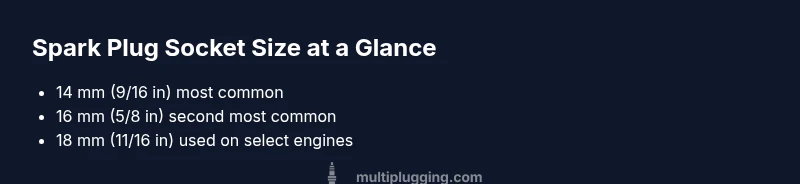
The most common spark plug socket hex sizes are 14 mm (9/16 in) and 16 mm (5/8 in), which cover the majority of modern gasoline engines. Some older or specialized engines use 18 mm (11/16 in). Always verify your specific plug size by checking the owner's manual or the plug packaging, and match the socket to the plug hex, not the drive size.
Understanding spark plug socket size
The term spark plug socket size refers to two related, but distinct, measurements: the hex size of the spark plug itself (the across-flats measurement) and the drive size of the socket that attaches to your ratchet. For most modern gasoline engines, the plug hex is either 14 mm (about 9/16 inch) or 16 mm (about 5/8 inch). A smaller subset of engines uses 18 mm (about 11/16 inch). The socket you choose must fit the plug hex precisely; using the wrong hex can round the corners, making future removal difficult and risking thread damage. Drive size (1/2 inch vs 3/8 inch) matters for the tool you’re using but does not change which hex you need. In short: match the plug hex first, then ensure your tool drive fits your ratchet and space.
How to identify the right size for your engine
Start by locating the spark plug and inspecting its hex portion. If the plug remains in place, you can often estimate the size by comparing visually to common sizes (14 mm, 16 mm, or 18 mm). The most reliable method is to check the vehicle’s service manual or the plug’s packaging for the exact hex size. If you’re unsure, you can remove the plug to read its hex size directly or bring the plug to an auto parts store for a quick match. Always choose a socket that fits snugly and seats on all flats without wobbling. Remember to use a 6-point deep socket to minimize rounding and to apply the correct torque when reinstalling.
Common hex sizes and coverage across engine families
14 mm (9/16 in) and 16 mm (5/8 in) are by far the most widespread hex sizes on modern cars, trucks, and motorcycles. A smaller cohort of engines uses 18 mm (11/16 in), especially in some older or performance-oriented models. The plug hex size rarely correlates with plug type (copper, platinum, iridium); instead, it’s dictated by the engine’s spark plug design. If you’re shopping for a socket, you’ll often see them advertised as 14 mm or 16 mm; some kits label them by their drive size and a hex size, e.g., 1/2 in drive, 14 mm hex. For DIYers, having both sizes on hand covers the majority of vehicles encountered.
Matching the size to the drive and tool set
The hex size and the socket’s drive size are two separate considerations. A 14 mm or 16 mm hex socket can come in a 1/2 in drive or a 3/8 in drive depending on the kit. In tight engine bays, a 3/8 in drive with a short or medium-length extension may be more maneuverable, but the socket must still fit the plug’s hex precisely. If space is extremely tight, a universal joint or wobble extension can help, but never substitute an incorrect hex with a loose adapter. Always verify that the socket seats fully on the hex before applying torque.
How to measure if you’re unsure
If you don’t have the exact plug size on hand, measure across the flats of the hex with calipers or a precise ruler and compare to standard sizes: 14 mm, 16 mm, and 18 mm. Alternatively, remove the plug and read the hex size directly from the plug body. You can also use a spark plug gauge or bring the old plug to an auto parts store for a precise match. The goal is a snug, square seating on the hex with no gap around the flats.
Practical sizing tips for DIYers
Carry a small socket set that includes both 14 mm and 16 mm hex sizes in at least 1/2 in drive, plus a 3/8 in drive option for tighter spaces. Include a 6-point deep socket, a couple of extensions, and a magnetic or rubber insert to hold the plug securely. When removing a heated plug, wait until the engine cools; use anti-seize on aluminum threads if recommended by your vehicle manufacturer, and always torque to spec when reinstalling to avoid overtightening or under-tightening.
Sizing pitfalls to avoid
Common mistakes include forcing a socket onto the plug, using an incorrect hex to ‘fit’ a stubborn plug, or using a universal socket that doesn’t capture all flats securely. Such errors can strip the plug or damage the threads in the cylinder head. If the plug is stubborn, apply gentle rocking motions and use appropriate lubrication on the plug thread, while ensuring you maintain a clean working area.
Quick-sizing checklist
- Confirm the plug hex size (14 mm, 16 mm, or 18 mm)
- Check the drive size (1/2 in or 3/8 in)
- Use a 6-point deep socket for better grip
- Verify socket seats squarely on the hex
- Refer to the owner’s manual or plug packaging for validation
- Torque to the manufacturer’s spec on reinstall
Common spark plug socket sizes and drive considerations
| Aspect | Typical Sizes | Notes |
|---|---|---|
| Common plug hex (metric) | 14 mm (9/16 in), 18 mm (11/16 in) | Most engines use these sizes |
| Common plug hex (SAE) | 5/8 in (16 mm) | Widely used in many models |
| Socket drive size | 1/2 in drive standard; 3/8 in drive common | Choose based on toolset and space |
| Plug types | Copper, Platinum, Iridium | Hex size usually independent of plug type |
FAQ
What is the most common spark plug socket size?
The most common hex sizes are 14 mm (9/16 in) and 16 mm (5/8 in). Some engines use 18 mm (11/16 in). Always verify with the vehicle manual or plug packaging.
The most common sizes are 14 and 16 millimeters, with 18 millimeters on some engines. Check your manual to confirm.
Can I use a universal spark plug socket for multiple sizes?
Universal sleeves or adapters should not substitute for a proper hex-sized spark plug socket. Use the exact hex size to prevent rounding and stripping.
Avoid universal sockets; use the correct hex size for a secure fit.
What happens if I use the wrong socket size?
Using the wrong size can round the plug hex and damage the threads in the cylinder head. It can also slip and strip the plug, making removal harder later.
Wrong size can damage the plug and engine threads.
Do plug size and torque specs affect each other?
Torque specs are engine-specific and independent of the socket size as long as the socket fits the hex perfectly. Always follow the manufacturer's torque spec when reinstalling.
Torque specs depend on the engine, not the socket size, as long as the fit is exact.
How can I confirm the correct size without removing the plug?
Consult the service manual or plug packaging first. If uncertain, remove the plug to read the hex size or bring the plug to an auto parts store for a precise match.
Check the manual or packaging; if unsure, remove the plug to read the hex size.
“Understanding the correct spark plug socket size is essential to avoid damaging the plug or engine, and to ensure accurate torque during maintenance.”
Main Points
- Identify the plug hex first, then choose the socket.
- 14 mm and 16 mm are the dominant sizes for modern engines.
- 18 mm appears on select engines; verify with manual.
- Drive size matters for tool access, not hex fit.
- Use a 6-point deep socket and torque to spec.