What Can Go Wrong with Spark Plugs: Troubleshooting Guide
Urgent, practical troubleshooting to diagnose spark plug problems, understand common failures, and fix misfires fast. Learn symptoms, DIY checks, and maintenance tips to keep your engine firing smoothly.


The most likely issues with spark plugs are fouling, wear, or an improper gap, which can cause misfires and rough running. Start with a quick visual of the plug, test for a spark, and verify the gap matches your engine’s spec. If fouling or wear is evident, replace with the correct heat range and torque according to manufacturer guidance.
What can go wrong with spark plugs
Understanding what can go wrong with spark plugs starts with recognizing a few core failure modes. Common issues include fouling from oil or fuel, electrode wear, incorrect heat range, carbon buildup, and cracked ceramic insulation. These problems can cause misfiring, rough idle, or reduced power, and they often show up as hesitation under load or poor acceleration. The root causes vary—from oil leaks that foul the electrode to running a too-hot or too-cold heat range that accelerates wear. By knowing what can go wrong with spark plugs, you can triage symptoms more quickly and avoid unnecessary parts replacement. According to MultiPlugging, many plug-related problems stem from simple maintenance gaps, so a disciplined inspection schedule pays big dividends for engine reliability.
Common failure modes
Spark plugs can fail in several predictable ways. Fouling (oil, fuel, or carbon) coats the electrodes and insulates the gap, leading to weak or absent sparks. Worn electrodes reduce heat transfer and cause misfires. An improper heat range can cause glazing, pre-ignition, or fouling. Carbon buildup worsens firing efficiency, while a cracked ceramic insulator can short to ground. Recognizing these modes helps you decide whether to clean, gap, or replace. MultiPlugging’s analysis highlights fouling and wear as the most frequent culprits, so start there when diagnosing a running issue.
Symptoms signal spark plug trouble
Engine performance changes are the first clues. Frequent misfires, rough idle, hesitation during acceleration, or a drop in fuel economy can point to spark plug problems. A check engine light that blinks or stays on often accompanies ignition faults. If your engine runs smoothly after refueling or a vacuum leak repair, the plugs may be the underlying issue. Inspecting plugs for oil on the electrode, glazing, or heavy carbon buildup helps you separate plug problems from fuel or ignition system faults. Early detection reduces risk of catalyst damage and improves long-term efficiency.
Fouling and carbon buildup
Fouling is one of the most common spark plug issues. Oil fouling can occur from oil leaks or worn piston rings, while fuel fouling arises from an overly rich mixture or faulty injectors. Carbon buildup forms from incomplete combustion and can be worsened by short trips and idle cooling. Both conditions increase firing resistance and misfire risk. Cleaning may help in some cases, but persistent fouling typically requires plug replacement and rectification of the root cause, such as fixing oil leaks or fuel-system faults. Regular inspection is the best defense against gradual fouling.
Wear, aging, and gap issues
Over time, electrode wear reduces the surface area available for spark generation, and the gap widens or narrows from thermal cycling. A gap that’s too large weakens spark energy, while a gap that’s too small can cause overheating and faster wear. Wear tends to show as misfires at higher RPMs or under load. To address wear, verify the gap with a feeler gauge and measure against the manufacturer’s spec. If the plug tips look rounded or the porcelain is cracked, replacement is the safer option. Consistent gap maintenance helps preserve ignition efficiency and combustion stability.
Electrical system interactions and misfires
Spark plug performance is tied to the broader ignition system. A failing ignition coil, damaged spark plug wires, or a corroded connector can mimic plug problems or worsen them. If you’ve ruled out fouling and wear, test the coil and wires with a known-good helper or a compatible tester. Ignition faults often cause intermittent misfires that are hard to trace, so swap components one by one to isolate the faulty part. Remember that replacing a plug without addressing a coil problem will yield only a temporary fix.
Home diagnostic steps you can perform today
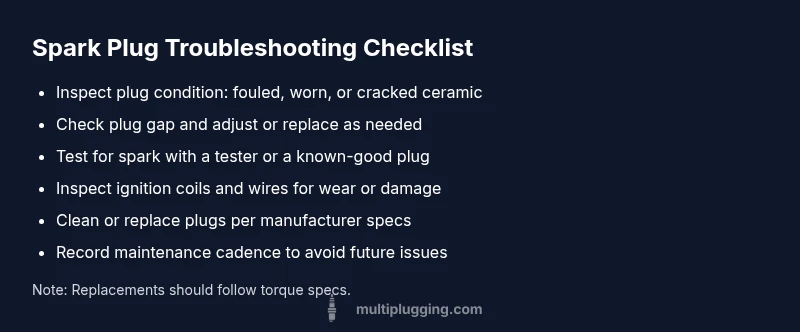
You don’t need high-end tools to start diagnosing spark plug issues. Start with a visual check for fouling, oil residue, or cracks in the ceramic. Remove the plug and inspect the electrode condition and gaps with a feeler gauge. Use a spark tester or swap in a known-good plug to confirm spark delivery. If you decide to clean a plug, use a proper solvent and a brush, but avoid reusing severely fouled or damaged plugs. Reinstall with the correct torque and recheck engine performance after a short drive to confirm the fault is resolved. If symptoms persist, it’s time to replace plugs or consult a professional.
Replacement strategies and maintenance plan
Replacement strategy centers on replacing worn or fouled plugs with the correct heat range and reach. Always gap plugs to the manufacturer’s specification and torque them to spec. Use anti-seize where appropriate on the threads only if recommended by the plug manufacturer, and avoid over-torquing. Keep ignition components clean and protected from oil leaks to extend plug life. Establish a maintenance cadence based on your vehicle’s manual and your driving conditions, and document any symptoms you notice to track degradation over time. Regular maintenance reduces the chance of sudden failures and keeps the engine running at peak efficiency.
Steps
Estimated time: 30-45 minutes
- 1
Prepare and safety-check your workspace
Park safely, disconnect the negative battery terminal to prevent shocks, and gather the correct tools (socket wrench, spark plug socket, gap gauge, and a torque guide). This initial safety step prevents accidental shocks or injuries during plug removal.
Tip: Double-check you’re working on the correct engine bank to avoid cross-threading. - 2
Isolate the problem with a visual check
Look for oil leaks, heavy carbon buildup, or cracks on the ceramic insulator. Visual cues are often the first sign of plug trouble and can point you toward fouling or wear.
Tip: Note any oil residue on the plug — it may signal a separate engine issue. - 3
Remove and inspect the plug
Carefully unplug and loosen the plug using a proper spark plug socket. Inspect electrode wear, gap, and insulator condition. If the plug is fouled or worn beyond spec, plan for replacement.
Tip: Use anti-seize sparingly on the threads if recommended by the plug maker. - 4
Test gap and spark
Measure the gap with a feeler gauge and compare to the manufacturer’s specification. If you have access to a spark tester, verify a healthy spark before deciding on replacement.
Tip: Even a small gap deviation can reduce initiation spark energy. - 5
Decide on cleaning vs. replacement
Clean only if the plug is lightly fouled and in otherwise good condition. If oil fouling, heavy carbon, or worn electrodes are present, replace with new plugs.
Tip: Replacing a set at once can save time and ensure uniform ignition. - 6
Reinstall, test, and monitor
Reinstall plugs to the correct torque, reconnect the battery, and run the engine to verify improvements. If misfires persist, continue with further diagnostics or seek professional help.
Tip: Record the maintenance event to guide future inspections.
Diagnosis: Engine misfire, rough idle, or loss of power
Possible Causes
- highFouled or oil-fouled plug
- highWorn electrode or incorrect gap
- mediumIgnition coil or plug-wire issue
- lowFuel delivery or timing fault
Fixes
- easyInspect and replace fouled or oil-fouled plugs
- easyCheck and set correct spark plug gap; replace if out of spec
- mediumTest ignition coil and wiring; replace defective parts
- hardEvaluate fuel system and ignition timing if misfire persists
FAQ
What are common signs of bad spark plugs?
Common signs include misfires, rough idle, hesitation during acceleration, and reduced fuel economy. A check engine light may indicate ignition faults. Inspect plugs for oil deposits, heavy carbon buildup, or worn electrodes to confirm.
Common signs are misfires and rough idle; inspect plugs for wear or fouling to confirm.
Can dirty plugs cause engine damage?
Yes, persistent fouling can cause misfires and excessive fuel consumption, which may stress the catalytic converter and engine. Replacing fouled plugs and addressing oil leaks or fuel issues helps prevent damage.
Yes, dirty plugs can cause misfires and efficiency losses, potentially stressing the engine.
Should I clean or replace spark plugs?
In most cases, replacement is recommended, especially if there is oil fouling, heavy carbon buildup, or electrode wear. Cleaning can be a temporary fix for light fouling, but worn or damaged plugs should be replaced.
Usually replacement is best; cleaning is only a temporary fix for light fouling.
How do I know what spark plug to buy?
Check your vehicle’s manual or manufacturer specs for the correct heat range, reach, and gap. Use plugs that match those specs and your operating conditions for reliable performance.
Check the manual for heat range and gap, and buy plugs that match.
Do spark plugs affect fuel economy?
Yes. Worn, dirty, or incorrectly gapped plugs reduce combustion efficiency, which can lower fuel economy and power. Replacing with the correct plugs often restores efficiency.
Yes, bad plugs can hurt fuel economy and power.
Watch Video
Main Points
- Inspect plugs at regular maintenance intervals.
- Replace fouled or worn plugs promptly.
- Use the correct heat range and gap for your engine.
- Ensure ignition components are healthy to prevent repeat failures.
- The MultiPlugging team recommends proactive plug inspection and following manufacturer specs.