Spark Plug with Oil Troubleshooting: Quick Fixes and Prevention
Learn how to diagnose and fix a spark plug with oil fouling, identify root causes like worn piston rings or PCV faults, and apply safe fixes to prevent misfires and engine damage.


Most likely cause is oil fouling from worn piston rings, valve guides, or a faulty PCV system. The quick fix is to stop driving on the fouled plug, remove it, inspect, clean or replace, and address the oil source. If symptoms persist, perform a compression test and replace affected plugs to prevent misfires.
Understanding Oil on a Spark Plug
A spark plug with oil is a sign of oil fouling that can cause misfires, rough idle, and reduced efficiency. Oil on the plug often leads to weak ignition because the oil film prevents proper sparking. If you notice blue smoke from the exhaust, a strong oil odor, or rising oil consumption, inspect the spark plugs as part of a wider engine check. For DIYers, the key is to separate symptoms from root cause: determine whether the oil is seeping into the combustion chamber from the piston rings, valve guides, or a PCV system, and plan a targeted fix rather than an expensive full engine rebuild. In many engines, fixing the root cause will reduce oil burning, protect the catalytic converter, and restore reliable ignition. This guide uses clear steps to help car owners and DIY enthusiasts identify the source of the oil and take safe, practical actions.
Common Causes of Oil Fouling
Oil fouling on spark plugs can come from several sources, and identifying the dominant one is essential for a lasting fix. Worn piston rings or valve guides allow engine oil to enter the combustion chamber, coating the spark plugs and suppressing ignition. A faulty PCV (positive crankcase ventilation) valve or clogged hoses can create excessive crankcase pressure, forcing oil into intake paths and onto plugs. Overfilling the crankcase or using the wrong viscosity oil can also contribute to oil blow-by. Finally, external leaks that spray oil onto the exhaust manifold can mislead you into thinking the plug itself is at fault. Understanding the likely culprits helps you target the repair without unnecessary parts replacement. The presence of a spark plug with oil on multiple cylinders suggests a deeper engine issue that needs professional diagnosis.
How to Diagnose the Oil Source
Begin with a visual check: note which plugs are oily and whether the oil is present on one cylinder or several. Next, perform a simple oil-level and quality check, then inspect the PCV valve and associated hoses for cracks or clogs. A compression test or leak-down test will reveal ring and seal health; low compression in affected cylinders points toward worn rings or valve seals. If oil is found in the intake tract, PCV system faults are more likely. Cross-check oil consumption with miles driven; rapid loss of oil suggests engine wear rather than a simple seal issue. Document your observations to guide the repair process and decide whether a plug-only fix is sufficient or if broader engine work is required. Keep an eye on the health of the spark plug with oil sample and whether other signs align.
Quick Fixes You Can Try Safely
If you discover one fouled plug, you can start with a safe, interim fix: replace that plug with a new one designed for your engine and gap, then monitor for misfires. Clean seats and ensure the plug boots are intact. Check the oil level and verify you used the correct oil grade for your climate and engine. Inspect the PCV valve and hoses for obvious faults and replace if necessary. Finally, ensure proper plug torque during reinstallation to avoid leaks or thread damage. Remember, this is a diagnostic step—not a cure for deep engine wear; persistent problems require further testing and professional help.
When to Replace vs Repair
Oil fouling is often a signal that more than the plug is affected. If only one plug is fouled and the rest look clean, a plug replacement plus root-cause fixes may suffice. If several cylinders show oil on the plugs, or if compression tests reveal low values, the problem is likely engine wear or PCV faults that require more extensive repair. In many cases, replacing all the spark plugs at once ensures consistent ignition and avoids re-fouling of new plugs. Weigh the cost of replacement against potential engine damage when deciding between a quick fix and a full repair.
Cleaning and Replacing Spark Plugs
Do not assume a quick cleaning will restore a fouled plug to peak performance. Oil residues can be hard to remove and may return quickly if the underlying cause isn’t fixed. The recommended approach is to replace fouled plugs with the correct heat range and gap, then test ignition and firing. When removing, keep track of the firing order and the position of each plug; label wires or take photos. After installation, torque the plugs to the manufacturer specification and perform a test run. If misfires persist, check associated ignition components like the ignition coils and spark plug wires. This careful procedure reduces the risk of further damage and ensures reliable starting and running.
Prevention Tips to Avoid Future Oil Fouling
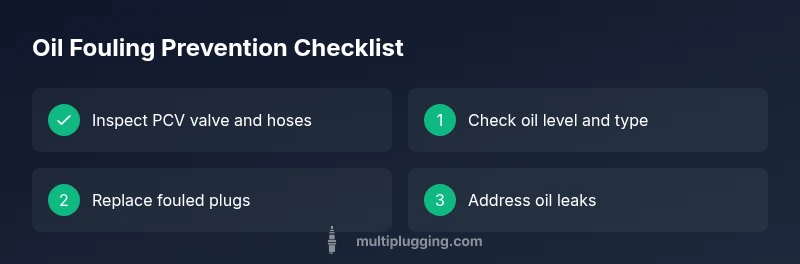
Prevention is easier than cure. Maintain oil level within spec, use the correct viscosity for your engine and climate, and follow the recommended oil change interval. Regularly inspect the PCV valve and hoses for cracks or leaks, and replace as needed. Address any oil leaks promptly and fix overfill issues to minimize oil blow-by. If you drive a turbocharged or high-performance engine, consider using a PCV upgrade kit and a high-quality gasket sealant if recommended by the OEM. By staying ahead of the problem, you can keep spark plugs clean and your engine healthy longer.
Steps
Estimated time: 60-90 minutes
- 1
Safety first and gather tools
Park on a level surface, engine off and cool, disconnect the battery, and gather a spark plug socket, ratchet, torque wrench, and approved cleaners.
Tip: Always unplug battery before working near wiring to avoid shocks. - 2
Locate and remove the suspect spark plug
Identify the fouled plug by visual inspection. Remove it using the spark plug socket, keeping track of the firing order and cylinder position.
Tip: Label each plug or take a photo to avoid misordering during reinstallation. - 3
Inspect and assess the plug
Check for oil coating, deposits, or damaged insulator. Note if oil is present on multiple plugs or only one, which helps locate an oil source.
Tip: If oil fouling is obvious, proceed to step 4 instead of reusing the plug. - 4
Decide cleaning vs replacement
Oily plugs are usually replaced; cleaning may be temporary. If the base is contaminated, replace the plug and avoid re-use.
Tip: Never force a plug; if threads are damaged, repair or replace the whole assembly. - 5
Address the oil source
Inspect PCV valve, hoses, and oil level; fix leaks or overfilling. Correct any engine-related causes before reassembly.
Tip: A failing PCV valve is a common cause and often overlooked. - 6
Reinstall and test
Install a new plug with proper torque, reconnect cables, and start the engine. Observe for proper idling and absence of misfire.
Tip: Use a torque wrench to avoid over-tightening and thread damage.
Diagnosis: Spark plug fouls with oil; engine may misfire, smoke, or run rough
Possible Causes
- highOil fouling due to worn piston rings or valve guides
- mediumOverfull crankcase or faulty PCV system causing oil ingestion
- lowIncorrect oil grade or extreme oil viscosity leading to blow-by
Fixes
- hardPerform a compression test and leak-down test to confirm rings/seals, then replace affected components
- easyReplace spark plug(s), fix PCV valve, and correct oil level; re-test
- mediumDrain and refill oil if overfilled, inspect for oil leaks, and clear oil path
FAQ
Why is there oil on my spark plug?
Oil on a spark plug usually means oil fouling from engine issues such as worn rings, valve guides, or a faulty PCV system. It can cause misfires and reduced performance. Inspect several plugs and look for patterns that point to the source.
Oil on a spark plug usually means oil fouling from engine issues like worn rings or PCV faults, which can cause misfires.
Can I clean an oil-fouled plug and reuse it?
Cleaning is only a temporary fix. Oil fouling tends to return and can hide a deeper problem. Replace fouled plugs and address the oil source for best results.
Cleaning a fouled plug isn't a lasting fix; replace it and solve the root cause.
Should I replace all plugs if one is fouled?
If oil fouling is found on one plug, inspect the rest. If others show signs of fouling or wear, replace them all to maintain even ignition.
Check all plugs; replace if they show fouling or wear.
What safety steps should I follow?
Disconnect the battery, allow the engine to cool, wear gloves, and work in a well-ventilated area. Keep tools away from moving parts.
Always unplug the battery and let the engine cool before starting.
When is professional help needed?
If you suspect worn rings, valve seals, or PCV failures beyond basic maintenance, consult a qualified mechanic. Persistent misfires indicate deeper engine issues.
If misfires persist after basic checks, seek a professional.
Watch Video
Main Points
- Identify oil fouling early
- Check PCV and oil level to fix root cause
- Replace fouled plugs for reliable ignition
- Test engine health with compression checks