Oil on Spark Plugs: Quick Troubleshooting Guide for DIYers
Diagnose and fix oil on spark plugs quickly with this urgent, step-by-step troubleshooting guide. Learn common causes, safe procedures, and DIY fixes to protect your engine.


Oil on spark plugs signals fouling and potential oil intrusion into the combustion chamber or plug wells. If you’re wondering what to do if you have oil on your spark plugs, you’re not alone—this issue can cause misfires, rough idle, and poor acceleration. According to MultiPlugging, acting quickly to diagnose the source and replace affected plugs is the first step toward restoring performance and protecting the catalytic converter. The fix usually involves replacing the fouled plugs, addressing the oil source, and re-testing to ensure the engine runs cleanly again.
What to do if you have oil on your spark plugs
Oil fouling on spark plugs is a sign that oil is entering the combustion area or the plug wells. If you’re wondering what to do if you have oil on your spark plugs, you’re not alone—this issue can cause misfires, rough idle, and reduced power. According to MultiPlugging, quick diagnosis and timely replacement are essential to minimize engine wear and protect the catalytic converter. In this guide, you’ll learn how to assess the problem, fix the most common causes, and prevent recurrence with practical maintenance steps. Expect a clear, solution-focused plan you can follow in your driveway, with safety as a priority. Oil fouling isn’t just a nuisance; it points to leaks, valve train issues, or a blown PCV seal that should be addressed promptly to avoid costly damage.
Common causes and quick checks
Oil on plugs can stem from several sources. The most frequent culprits are external leaks like a worn valve cover gasket or a failing breather/PCV system, plus internal issues such as worn piston rings or turbo seals letting oil into the intake. MultiPlugging analysis shows PCV valve failures and valve-cover leaks are common, especially in older engines or units with high mileage. To diagnose, start with visible oil around the valve cover and a PCV inspection, then check oil consumption trends and compression if symptoms persist. Keeping oil level within the recommended range and using the correct grade helps reduce oil burn risk and plug fouling.
Safety and prep before you touch anything
Safety comes first. Park on a flat surface, engage the parking brake, and disconnect the negative battery cable to prevent shocks or sparks. Allow the engine to cool before touching any parts to avoid burns. Wear safety glasses and gloves, keep a drip pan handy, and have a clean workspace. If you’re unsure about your vehicle’s layout, consult the owner’s manual or a service guide for the exact plug locations. Never force stuck plugs; apply penetrating oil and let it soak if necessary, but avoid spraying on hot components.
Diagnostic flow overview
A logical diagnostic flow helps you identify the source quickly. Start with exterior checks: is there fresh oil on the valve cover or surrounding hoses? Next, inspect the PCV system for clogs or a stuck valve. If exterior seals look intact, perform a compression test to evaluate piston ring wear. Finally, confirm whether multiple plugs are fouled and whether oil presence is limited to certain cylinders, which can hint at localized leaks or ring issues. This structured approach minimizes guesswork and keeps you aligned with maintenance best practices.
Fixing the most common cause: valve cover gasket and PCV
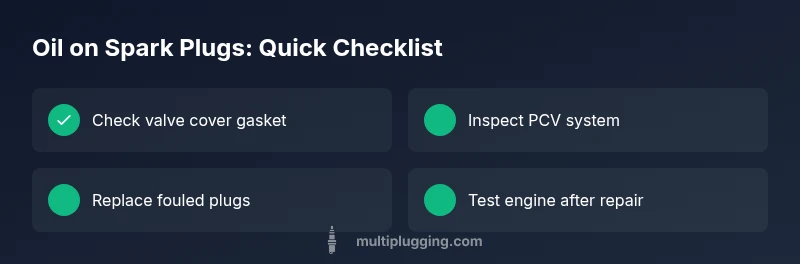
For many engines, the most common cause is an oil leak from the valve cover gasket or a malfunctioning PCV system. Start by inspecting the valve cover seal and replacing the gasket if oil seepage is visible. Clean or replace the PCV valve and ensure the breather hose is clear and properly connected. After sealing the leak, replace any oil-soaked plugs with new, properly gapped units. Retorque valve cover bolts to the manufacturer’s specification after replacement, and recheck for leaks once the engine is restarted. If the leak persists, a deeper inspection of gaskets or seals may be required, potentially involving professional help.
Replacing oil-fouled plugs and testing
Once the oil source is resolved, remove and replace the fouled plugs. Use the correct torque specification and apply anti-seize compound if recommended by the manufacturer to prevent future seizing. Reconnect plugs and ignition coils, then recheck for oil seepage around the valve cover. Start the engine and monitor for smooth idle and consistent compression across cylinders. A short test drive can reveal lingering misfires or rough running; if issues persist, repeat the diagnostic steps or seek professional service. Regular monitoring of oil levels and spark plug condition will help catch future fouling early.
Prevention and maintenance to stop future oil fouling
Preventing oil on spark plugs starts with addressing the source of oil intrusion. Regularly inspect valve covers, gaskets, and the PCV system; replace worn hoses or seals as needed. Use compatible spark plugs and adhere to recommended torque values. Maintain consistent oil changes with the correct viscosity and specification for your engine. A quick vacuum leak test and crankcase ventilation check can catch issues before they affect the plugs. By combining proactive maintenance with timely repairs, you reduce the risk of recurring fouling and preserve engine performance.
Steps
Estimated time: 60-120 minutes
- 1
Prepare and safety check
Park safely, disconnect the battery, and gather tools. Let the engine cool to avoid burns. Wear eye protection and gloves, and set a drain pan for any leaks.
Tip: Double-check that you’re working on a cool engine before touching any parts. - 2
Locate affected plugs
Open the hood and locate the spark plug wires and coils for the affected cylinders. If you’re unsure, consult the service guide to avoid unnecessary disassembly.
Tip: Label or photograph wiring to simplify reassembly. - 3
Remove ignition components
Carefully disconnect ignition coils or wires from the affected plugs. Keep track of connectors and keep them away from moisture.
Tip: Do not twist the coil or wire; pull straight with a gentle wiggle. - 4
Inspect and remove fouled plugs
Take out the plug and inspect for oil deposits. If heavily fouled, replace with a new plug of the correct heat range.
Tip: Carry spare plugs and a torque wrench for precise tightening. - 5
Address the oil source
Inspect valve cover gasket and PCV system. Replace gasket if oil leakage is evident and replace the PCV valve if clogged or stuck.
Tip: Clear any oil on surrounding components to prevent contamination of new plugs. - 6
Install new plugs and reconnect
Install new plugs with the correct torque, reattach ignition components, and ensure proper fitment.
Tip: Do not overtighten; use a torque spec as per the manufacturer. - 7
Test and monitor
Start the engine, check for smoothness, and look for leaks around the valve cover. Take a short test drive to confirm the issue is resolved.
Tip: Keep an eye on oil levels and consumption over the next few days. - 8
Evaluate results
If misfires persist or oil returns, re-run diagnostics and consider professional service for deeper issues like rings or seals.
Tip: Document symptoms and times to help the technician.
Diagnosis: Engine misfire or rough idle with oily spark plugs
Possible Causes
- highOil leaks from valve cover gasket or breather system
- highPCV valve stuck or clogged, causing oil to be sucked into the intake
- mediumWorn piston rings or turbo seals allowing oil into the combustion chamber
Fixes
- easyInspect and replace valve cover gasket; repair breather hoses as needed
- easyReplace PCV valve and clean or replace the breather system
- hardPerform compression test and engine repairs if rings/seals are failing
- easyReplace oil and spark plugs, ensuring proper torque and gap
FAQ
Why do plugs get oil on them?
Oil on plugs typically results from leaks in the valve cover gasket or PCV system, or from internal engine wear like worn piston rings. Diagnosing the exact source is key to a lasting fix plus preventing damage.
Oil on plugs usually comes from valve cover leaks or the PCV system. A diagnosis helps you fix the root cause and stop fouling.
How do I fix oil on spark plugs quickly?
Start by replacing the fouled plugs and repairing the oil source, such as the valve cover gasket or PCV valve. Then recheck for leaks and test drive to confirm the fix.
First, replace fouled plugs and fix the oil source; then test drive to confirm the repair worked.
Can oil on plugs damage the engine?
Yes, oil on plugs can lead to misfires, poor fuel economy, and potential damage to the catalytic converter if not addressed promptly. Fix the root cause to prevent long-term issues.
Oil on plugs can cause misfires and potential catalytic converter damage if ignored.
Should I replace the PCV valve when addressing fouling?
Replacing the PCV valve and cleaning the breather system is a common, effective step that can prevent recurring oil intrusion. Recheck system performance after replacement.
Yes—replacing the PCV valve is often a good move when fouling occurs.
Is it safe to drive with oil fouled plugs?
Driving with oil-fouled plugs is not advised. It can cause misfires, reduced power, and further engine damage. Address the issue and re-test before driving long distances.
No, don’t drive long with fouled plugs; fix them first.
How long does valve cover gasket repair take?
Repair time varies by vehicle but typically ranges from 1–3 hours for a DIY gasket replacement, plus time for testing the system after reassembly.
Gasket replacement usually takes about an hour or two, depending on the model.
Watch Video
Main Points
- Inspect and fix the oil source before replacing plugs
- Replace fouled plugs with correct gaps and torque
- Test drive and monitor for leaks or misfires
- Regular maintenance prevents recurrence
- If in doubt, seek professional help promptly