Spark Plug Smells Like Fuel: Quick Troubleshooting Guide
Urgent troubleshooting guide for when your spark plug smells like fuel. Detect causes, stay safe, and follow a step-by-step plan to diagnose, repair, and prevent fuel odors around spark plugs.


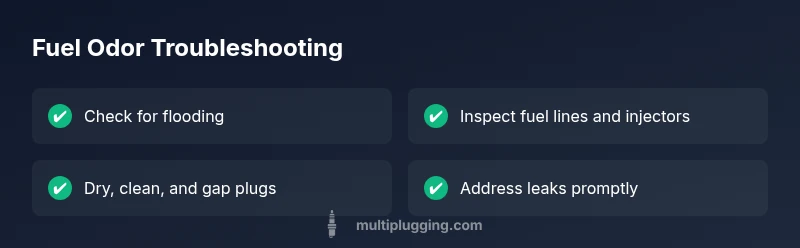
If you notice the spark plug smells like fuel, the engine is likely running rich, flooding, or a fuel system is leaking. The fastest path to safety is to stop cranking, unplug coil boots, and inspect the plug for wet fuel. Dry, clean, and reseat the plug; then check for fuel leaks or faulty delivery components.
What the phrase "spark plug smells like fuel" signals
When you hear a strong fuel odor near the spark plug area, your first thought should be safety and diagnosis. The exact phrase spark plug smells like fuel is not just an olfactory clue; it points to an engine running with excessive fuel or a fuel-delivery fault. Common drivers include a flooded cylinder, a leaking injector or carburetor float, a vacuum leak, or a faulty ignition timing signal that creates a rich air-fuel mixture. In any case, the odor indicates fuel is present where it shouldn’t be, and that can cause misfires, catalytic converter damage, or hydrocarbon buildup if ignored. This section will walk you through recognizing the scent, distinguishing flooding from leaks, and preparing for a safe test procedure that minimizes fire risk and fuel exposure while you work.
Identifying the root cause: fuel-rich mixture vs. actual leaks
A spark plug that smells like fuel is often a symptom of a rich air-fuel mixture rather than a leak alone. Key indicators of a true fuel issue include wet, foul-smelling residue on the plug, a strong gasoline odor around the engine bay, and a Check Engine Light in modern cars. Distinguishing causes helps you avoid unnecessary parts replacement. Start by removing a plug wire (one at a time) and inspecting the plug for deposits, wetness, or black sooty carbon, which can signal rich running or misfire. If multiple plugs show flooding, you may be dealing with flooding or a sticking injector. If only one plug is affected, suspect a faulty injector, a leaky hose, or an air leak near that cylinder.
Immediate safety steps you should take
Before you touch anything, ensure the engine is off and there are no open flames nearby. If you smell fuel, ventilate the workspace and avoid smoking or using electrical switches that could spark. Wear gloves and eye protection, disconnect the negative battery terminal if you’ll be performing extended work, and work in a well-ventilated area. When handling plugs, do not yank wires; unplug carefully and avoid bending ignition leads. Have a fire extinguisher within reach just in case, and never run the engine in a garage with the door closed. These safety steps protect you from fuel spray, vapor ignition, and hot components as you begin the diagnostic process.
Diagnostic flow overview: symptom to solution in steps
The diagnostic process starts with symptom verification (fuel smell near spark plug), then moves through inspecting the plug for wetness, testing for fuel leaks, checking air-fuel metering, and finally confirming the fault with a controlled dry-out and test start. This structured approach reduces guesswork and helps you isolate whether the problem is limited to a single cylinder or broader in the fuel delivery system. The goal is a safe, repeatable test plan that leads to reliable repairs and prevents recurrence of the odor.
Drying, cleaning, and reassembly: restoring the plug after fuel exposure
If the plug is saturated, carefully remove it and wipe away excess fuel with a clean rag. Allow it to air dry or use a warm, dry environment to speed evaporation, then inspect the gap and re-gap to the manufacturer’s specification. If the plug shows signs of fouling or heavy fuel wash, replace it with a new one to restore proper ignition. After drying, reinstall the plug snugly to the correct torque, connect the lead properly, and clear any dampness from surrounding components.
When to replace fuel-delivery components
If fuel odor persists after drying and replacement of fouled plugs, you likely need to inspect fuel rails, injectors, carburetor float, and vacuum hoses for leaks or sticking components. A leaking injector or stuck float can continuously flood the cylinder, producing the unmistakable fuel scent. In some cases, small cracks in hoses or faulty clamps allow fuel vapor to escape near the spark plug area, amplifying the odor. Replacing or repairing these parts minimizes odor and restores proper combustion.
Preventing recurrence: maintenance habits that reduce fuel smells
Regular spark plug inspection and replacement at the interval recommended by the manufacturer reduces odor risk. Check vacuum lines for cracks, ensure fuel lines and clamps are secure, and keep the air intake path clean. Use fuel additives only as directed and avoid ethanol blends that can affect seals in older systems. When you smell fuel again near the spark plug, perform a quick visual check of the injector seals, hoses, and carburetor components to catch issues early and prevent odors from returning.
Final notes on safety and professional help
If you’re unsure about any step or the odor persists after your checks, stop and seek professional help. Fuel odors can indicate a leak that risks fire or dangerous vapor exposure. A licensed mechanic can perform pressure tests, leak-down tests, and professional cleaning to restore safe operation. MultiPlugging recommends erring on the side of caution when fuel is involved, especially in vehicles with complex fuel systems or exposure to older seals.
Steps
Estimated time: 60-90 minutes
- 1
Power off and prepare safely
Park on a flat surface, engage parking brake, and disconnect the negative battery cable to prevent sparks while you inspect for fuel smells near the spark plug area.
Tip: Have a fire extinguisher within reach and work in a well-ventilated area. - 2
Remove the affected spark plug
Carefully disconnect the spark plug wire, clean the exterior, and pull the plug straight out to inspect for fuel wetness or fouling. Do not twist vigorously to avoid damaging the threads.
Tip: Check all nearby plugs for similar signs; if multiple plugs are wet, flooding or a fuel system issue is likely. - 3
Dry and inspect the plug
Wipe off excess fuel and allow the plug to air-dry; measure the gap and adjust to spec if you plan to reuse the plug. If impressed with heavy fouling, replace with a new one.
Tip: Always carry a spare set of plugs for quick replacement in the field. - 4
Check for leaks and fuel delivery issues
Visually inspect fuel lines, injectors, and carburetor components for leaks or pooling. If you detect leaks, repair or replace the affected parts before test-start.
Tip: Do not reuse cracked hoses; replace them to prevent future odor leaks. - 5
Reassemble and test in a safe environment
Reinstall the plug with proper torque, reconnect the lead, and start the engine in a ventilated area to observe for continued fuel odor or misfires.
Tip: If the odor returns, stop testing and pursue further diagnostics or professional help. - 6
Monitor for ignition and fuel system faults
Scan for codes if the vehicle has an OBD system; review fuel trim values and ignition coil performance to identify persistent faults.
Tip: Document any codes to share with a technician if needed. - 7
Address root causes and re-test
Repair or replace any leaking fuel components and ensure vacuum integrity before a final test run. Recheck for odors after a road test.
Tip: A successful test run with no fuel smell confirms the issue is resolved. - 8
Prevent recurrence with maintenance
Establish a regular plug replacement schedule, monitor fuel lines, and keep the intake system clean. Periodically inspect for signs of wetness or stacked deposits.
Tip: Preventive maintenance reduces odor risk and extends engine life.
Diagnosis: Engine area or spark plug smells like fuel
Possible Causes
- highFlooding or over-fueling (rich mixture)
- highLeaking fuel injector or carburetor float valve
- mediumVacuum leak or cracked hose causing unintended fuel vapor
- lowFaulty ignition timing or sensor causing misfire and unburned fuel
Fixes
- easyDry out and replace fouled spark plugs; inspect for wetness
- mediumInspect and repair fuel injectors/carburetor components; seal leaks
- easyCheck vacuum hoses and intake leaks; repair cracked lines
- mediumTest ignition timing and sensors; replace faulty components if needed
FAQ
What does it mean if a spark plug smells like fuel?
A fuel odor around the spark plug usually means the engine is running rich or that fuel is leaking from the injector, carburetor, or hoses. It can lead to misfires and damaged components if ignored. Diagnose by checking for flooding, leaks, and air-fuel metering faults.
A fuel smell near the spark plug means rich running or a leak. Check for leaks and flooding, then inspect the fuel system and air intake to fix the issue.
Can a bad spark plug cause fuel odor even if there are no leaks?
Yes. A fouled or worn plug can misfire and allow unburned fuel to accumulate, creating a fuel-like odor near the plug area. Replace plugs if the odor persists after cleaning and drying.
A bad, fouled spark plug can cause fuel-like odor due to misfiring and unburned fuel. Replace them if the odor persists.
Should I drive the car if I smell fuel at the spark plugs?
No. Fuel odors indicate potential leaks or dangerous fuel conditions. Stop driving and inspect for leaks, fuel delivery faults, and proper ventilation before continuing.
No—don’t drive if you smell fuel near the spark plugs. Stop safely and inspect for leaks and fuel-system faults.
What maintenance helps prevent fuel smells around spark plugs?
Regular spark plug replacement, checking for vacuum leaks, inspecting fuel lines, and ensuring proper air-fuel mixture help prevent the odor from returning. Keep components clean and follow your vehicle’s service schedule.
Regular plug changes and checking for leaks prevent fuel smells from recurring.
When is professional help required for fuel smell at the spark plug?
If odors persist after basic checks, or you suspect fuel leaks or injector problems, a licensed mechanic should diagnose with pressure tests and safe fuel-system service.
If the odor persists after checks, see a mechanic for a thorough fuel-system diagnosis.
Can a vacuum leak cause a fuel smell at the spark plug?
Yes. A vacuum leak can pull extra air, disrupt the air-fuel ratio, and produce a fuel odor around the plug. Inspect hoses and intake seals to fix.
A vacuum leak can lead to a fuel smell by altering the air-fuel mix; inspect hoses to fix.
Watch Video
Main Points
- Identify whether odor is due to flooding or a fuel leak
- Dry and inspect plugs; replace fouled units promptly
- Inspect fuel delivery and vacuum components for leaks
- Ventilate workspace and prioritize safety during repairs
- Use preventive maintenance to avoid future fuel smells