Spark Plug Corona Stain Troubleshooting Guide
Learn how to diagnose, fix, and prevent spark plug corona stain with practical, DIY steps. The MultiPlugging team guides you through symptoms, causes, and safe repairs to protect engine performance.


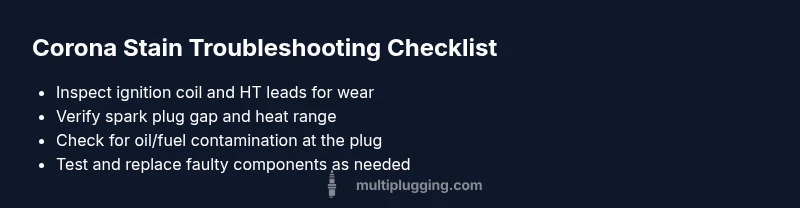
Corona stain on a spark plug typically signals high voltage or an aging ignition path. Start by inspecting the ignition coil and plug wires, then examine the plug gap and heat range. If the stain persists after cleaning or replacing the plug, test the coil and wires and replace any worn components to restore proper operation.
What is spark plug corona stain?
Spark plug corona stain refers to a faint blue-white halo that forms around the spark plug electrode and insulator when high voltage ionizes the surrounding air. This corona discharge can leave visible staining on the porcelain and shell. It is most noticeable on engines with aging ignition components or improper plug selection. According to MultiPlugging, corona staining can indicate excessive spark voltage or wrong plug type, and it often accompanies ignition-related symptoms like rough idle or misfires. The presence of corona stain is a signal you should not ignore; it means the electrical system is pushing voltage that could corrode contacts or cause arcing elsewhere. The key is to determine whether the stain is just cosmetic or a sign of an underperforming ignition path. In DIY diagnosis, start with a quick visual check and then move to targeted tests.
Why corona stain matters for engine performance
Corona stain isn’t just cosmetic: it highlights high-voltage activity around the plug that can accelerate electrode wear and affect combustion stability. Engines with visible corona staining, especially when paired with misfires, rough idle, or reduced fuel efficiency, should be diagnosed promptly. If the stain persists after a basic cleaning, it may indicate other under-the-hood issues such as degraded ignition components, improper plug heat range, or wiring faults. Left unmanaged, sustained corona activity can contribute to irregular ignition timing, increased emissions, and reduced performance. Treat corona stain as a warning sign to verify the health of the ignition system and fuel delivery, then address any root causes to prevent future staining and performance losses.
Common causes behind corona stains
There isn’t a single culprit for corona stain; it usually means the ignition path is stressed. Common causes include worn or weak ignition coils and high-tension leads, spark plug gaps that are too wide or too narrow, and plugs with the wrong heat range for the engine. Oil or fuel contamination near the electrode can also promote erratic arcing and staining on the plug body. In some cases, excessive compression or a lean/flooded condition can alter the burn and promote corona formation around the electrode. According to MultiPlugging analysis, corona staining often accompanies older components or improper plug selection, which compounds voltage stress and accelerates wear. A systematic inspection helps identify the true cause and prevent unnecessary plug replacement.
Diagnostic flow overview (quick checks you can perform safely)
Begin with the simplest checks: confirm battery health, inspect visible ignition wires for cracks or looseness, and measure plug gap with a feeler gauge. If the plug shows heavy fouling or oil seepage, cleaning won’t resolve corona stain long-term. Swap in a known-good plug of the correct heat range and re-test. If staining reappears, you’ll want to test the ignition coil, coil harness, and the spark plug wires for resistance and integrity. In many cases, the problem lies with a weak coil or a degraded wire that cannot consistently deliver the required voltage, triggering corona around the plug. These tests are repeatable and provide clear next steps for repair or replacement.
Quick checks you can do now (before pulling parts)
- Inspect your battery and starter for consistent voltage supply to the ignition system.
- Check the spark plug gap and ensure it matches the manufacturer’s specification.
- Look for oil, fuel, or coolant contamination on the plug and surrounding cylinder head area.
- Inspect ignition wires for cracks, burns, or loose connections.
- If you have a scan tool, check for misfire codes or ignition-related trouble codes.
- If the problem persists after these checks, plan for plug replacement and ignition component testing with proper safety precautions.
Prevention and long-term maintenance to avoid corona stain
Regular maintenance is the best defense against corona stain. Schedule periodic ignition system tests, replace worn wires and coils before failure, and ensure plugs are the correct heat range and gapped to spec. Use high-quality replacement parts and avoid cross-threading when installing plugs. Keep the ignition system clean from oil leaks and ensure the spark plug wells are sealed. Finally, monitor engine performance after any repair—early signs of misfires or rough running can indicate a renewed corona issue before it escalates.
Safety reminders and professional help
Always disconnect the battery before removing ignition components, wear eye protection, and work in a well-ventilated area. If you encounter stubborn corona stains after replacing components or you notice persistent misfires, seek professional help promptly. The MultiPlugging team recommends consulting a qualified technician for complex issues like ignition coil packs or ECU-driven timing adjustments when DIY tests don’t resolve the symptoms.
Steps
Estimated time: 60-90 minutes
- 1
Power down and prep
Park the vehicle on a level surface, engage the parking brake, and disconnect the negative battery cable to avoid shocks. Gather tools: spark plug socket, gap gauge, torque wrench, replacement plugs, and a ratchet set. This ensures a safe starting point for inspection.
Tip: Wear eye protection and gloves; keep a clean workspace to avoid dropping parts into the engine bay. - 2
Remove the affected plug
Carefully remove the spark plug from the cylinder head using a spark plug socket. Note any oil on the threads or around the plug well, which can indicate a seal issue. Inspect the plug for corona staining, fouling, or damaged insulator.
Tip: Do not force the plug; if it resists, stop and re-check the socket or use penetrating oil for stubborn threads. - 3
Inspect and test the plug
Look at electrode color, gap, and the presence of oil or fuel deposits. If the gap is out of spec, adjust or replace. If staining is severe or oil is present, consider replacing the plug and testing the combustion seal and valve guides.
Tip: Compare with a known-good plug to confirm whether the wear is normal or excessive. - 4
Check ignition components
Inspect the ignition coil, spark plug wires, and ignition control module for cracks, burns, or corrosion. Use a multimeter to check resistance on the coil windings and spark plug wires for consistency.
Tip: If you find damaged wiring, replace in matched sets to maintain timing and performance. - 5
Reinstall and test
Install a new or cleaned plug to the correct torque as per specifications. Reconnect the battery and start the engine. Listen for smooth idle and watch for any misfire codes on a scan tool.
Tip: Torque to manufacturer spec to avoid overtightening and fouling the thread. - 6
Monitor after repair
Take a short drive and recheck the plug after a few heat cycles. If corona stain recurs, you may have an ignition or fuel issue that requires deeper diagnostics and possibly professional service.
Tip: Document symptoms and codes to share with a technician if needed.
Diagnosis: Engine misfire or rough idle with visible corona stain around one spark plug
Possible Causes
- highWorn or failing ignition coil/high-tension lead
- mediumSpark plug gap or heat range mismatch
- mediumOil or fuel contamination near the electrode
Fixes
- easyTest and replace weak ignition coil or damaged plug wires; ensure secure connections
- easyVerify and adjust spark plug gap to the manufacturer's spec; replace if out of range
- mediumClean or replace contaminated spark plugs; inspect valve seals and oil leaks
FAQ
What is corona stain on a spark plug?
Corona stain is a blue-white glow around the plug caused by ionization from high voltage. It signals electrical activity that can precede misfires if left unaddressed.
Corona stain is that blue glow around the spark plug caused by high voltage; it can indicate ignition problems.
Can corona stain damage an engine?
Corona stain itself can accelerate wear if it reflects ongoing voltage stress. If symptoms accompany misfires, it can contribute to reduced performance and higher emissions.
Yes, if ongoing, corona stain can be a sign of problems that affect engine performance.
How do I fix corona stain safely?
Start by replacing or cleaning the affected plug, then test ignition components and correct the gap. If stains persist, test the coil and wires and seek professional help if needed.
Replace the plug and test the ignition parts; if it sticks around, get a professional test.
Is corona stain common on high-mileage engines?
Yes, older ignition systems are more prone to corona staining due to worn coils, wires, and degraded plugs. Regular maintenance helps prevent it.
It’s common in older engines, but regular maintenance reduces the risk.
When should I replace spark plugs due to corona stain?
If the plug shows heavy staining, fouling, or oil leaks despite cleaning and proper gap, replace it and inspect related components for root causes.
Replace the plug if staining is heavy or if there are fouling signs beyond cleaning.
Watch Video
Main Points
- Identify corona stain early to prevent misfires
- Check ignition coils and plug wires for wear
- Match plug heat range and adjust gap correctly
- Replace contaminated plugs and seal leaks promptly
- Monitor engine performance after repairs