Oil in Spark Plug Wells Misfire: Troubleshooting Guide
Learn how oil in the spark plug well causes misfire, how to diagnose it safely, and practical fixes to stop fouling and protect your engine. Quick DIY steps with professional thresholds.


Oil in the spark plug well causing misfire is a common sign of an external leak such as a valve cover gasket or PCV system fault. The quick fix is to remove the oil, clean or replace the spark plug, and inspect the gasket or PCV path for leaks. If the problem persists, seek professional inspection.
What the phrase means in practical terms
A diagnosis you’ll often hear is that oil in spark plug well causing misfire, typically linked to oil entering the well through a leaking valve cover gasket or a faulty PCV system. When oil coats the spark plug electrode, it creates a weak or inconsistent arc. That fouling disrupts combustion, leading to one or more cylinders firing poorly, which you’ll notice as rough idling, hesitation, or loss of power. This issue isn’t simply a tweak—left unaddressed, it can accelerate plug wear and promote excessive exhaust emissions. For the DIY reader, the key takeaway is that cleaning out oil is not enough; you must address the source of the intrusion to restore reliable spark and engine performance.
How oil makes its way into the plug well
Oil can reach the plug well through several routes. The most common is a leaking valve cover gasket that allows engine oil to seep down alongside the spark plug wells. A failing PCV valve or cracked hoses can push oil into the intake and onto the plugs, especially under heavy load or during high crankcase pressures. Overfilling the engine oil or using the wrong viscosity can also increase the likelihood of oil being forced into the well during operation. The result is an oily plug that struggles to spark, causing a misfire that may feel intermittent at first and then more persistent as the oil ground becomes fouled.
Visual cues and early warning signs to monitor
Oil fouling around a plug often shows as greasy residue around the plug boot or the spark plug threads. You might notice a faint burning oil smell or blue smoke after startup, particularly on cold starts. Check for an oily puddle on the valve cover or a damp appearance around the spark plug wells when you remove the plug. Engine oil consumption that seems higher than usual can accompany these symptoms. If you observe several of these signs, it’s prudent to perform a targeted inspection rather than waiting for a misfire to worsen.
Safety-first checks you can perform before disassembly
Begin with basic safety: unplug the battery to prevent accidental arcing, allow the engine to cool, and wear gloves to manage spilled oil. Do a visual inspection from the top: look for oil around the valve cover gasket and PCV hoses. If you see oil pooling on the valve cover or hose connections, don’t drive the car. Use a UV dye or simple paper towel test around the gasket area to confirm leaks. When you’re working near hot surfaces, keep tools organized and avoid placing anything on the exhaust manifold. These steps reduce the risk of burns and unintended damage to ignition components.
A practical diagnostic approach: who does what and when
Start with the easiest checks: inspect the spark plug for oil and replace it if fouled. Move to the valve cover gasket and PCV system; look for oil seepage and hose cracks. If the plug comes out oily, wipe clean and inspect the electrode gap. If oil persists after a new plug is installed, the source is likely upstream (gasket, PCV path, or overfill). Remember to log your tests: note oil presence, plug condition, and any changes in starting behavior to guide further action or a professional visit.
When to involve a professional and long-term prevention
If you’re seeing ongoing misfires after plug replacement and oil removal, professional service is warranted. A mechanic can pressure-test the valve cover area, check the PCV system flow, and verify the crankcase breathers aren’t blocked. Long-term prevention relies on keeping oil at the correct level, using the right viscosity for your climate and engine, and replacing worn gaskets before they fail. Routine inspections during oil changes can catch leaks early and save you from repeated misfires.
Steps
Estimated time: 60-90 minutes
- 1
Prepare and safety-check
Park on a level surface and let the engine cool. Disconnect the negative battery cable to prevent sparks. Gather a spark plug socket, a torque wrench, fresh spark plugs, rags, and a drain pan for potential oil spills.
Tip: Label spark plug wires to avoid cross-wiring during reassembly. - 2
Access the affected cylinder
Remove any covers or intake components required to access the spark plug well. Gently detach the spark plug boot or coil-on-plug connector without twisting or pulling on wiring. Keep track of each wire’s position for accurate reassembly.
Tip: Use a magnetic pick-up tool to retrieve the plug if it drops into the well. - 3
Inspect and extract the plug
Carefully remove the spark plug with the correct socket size. Inspect for oil fouling on the electrode and insulator. If oil is present, wipe the plug threads and inspect the well for oil residue before proceeding.
Tip: If the plug is heavily fouled, replace it rather than attempting a quick cleaning. - 4
De-oil and clean the well
Wipe the well and plug seating area with a clean rag. If necessary, use a small amount of solvent in a controlled fashion, ensuring no solvent enters the combustion chamber. Allow any solvent to evaporate completely before reinstalling.
Tip: Avoid splashing solvent across electrical contacts. - 5
Reinstall with a fresh plug
Install a new spark plug with the manufacturer’s torque specification. Reconnect the boot or coil, and ensure the wire routing is correct. Recheck the plug gap if applicable before tightening.
Tip: Always torque plugs to spec to prevent plug damage or thread stripping. - 6
Address the leak source
Inspect the valve cover gasket and PCV system for signs of seepage or cracking. Replace the gasket if you see oil around the edge, and test the PCV valve and hoses for cracks or blockages. Reassemble components and clean the engine bay.
Tip: Perform a simple leak-test after reassembly to verify the source is fixed. - 7
Test-run and verify
Reconnect the battery, start the engine, and let it reach normal operating temperature. Listen for a smooth idle and observe for any misfire indicators or oil smell. If misfire persists, scan for codes and consider professional diagnostics.
Tip: Take note of any new fault codes for the mechanic if you visit later.
Diagnosis: Engine misfires or runs rough after startup; oil smell or visible oil near spark plugs; possible blue smoke on startup
Possible Causes
- highValve cover gasket leak allowing oil into plug wells
- mediumPCV system fault causing oil blow-by toward spark plug wells
- lowOverfilled or contaminated engine oil leading to oil migration
- lowOil fouling from prior misfire contaminating plug wells
Fixes
- easyDry the plug wells and replace fouled plugs; ensure the correct plug type and gap
- mediumReplace valve cover gasket and reseal to stop oil intrusion
- easyInspect and service PCV valve and hoses; fix leaks or blockages
- easyCorrect oil level and viscosity; perform an oil change if contaminated
FAQ
Can oil in a spark plug well cause engine damage?
Yes, oil fouling can foul the plug and cause repeated misfires. Prolonged oil intrusion can risk ignition issues and wasteful emissions, so address the source quickly.
Oil fouling can cause misfires and, over time, ignition problems if not addressed.
What are the common causes of oil getting into spark plug wells?
The most common causes are a leaking valve cover gasket and a faulty PCV system. Oil can also enter if the engine is overfilled or if hoses are cracked.
Most often it’s a gasket or PCV issue, plus possible overfill.
Should I replace all spark plugs if one is fouled by oil?
If oil fouling is confirmed, replacing the affected plug is wise, but many technicians replace the entire bank to ensure consistent performance and avoid a repeat misfire.
If one plug is fouled, consider replacing the whole bank for reliability.
Is it safe to drive with oil in the spark plug well?
Driving with an active oil leak is not advised. Oil can cause continued misfires and potential damage to ignition components or exhaust aftertreatment systems.
It's not safe to drive long-term with oil fouling; fix the leak and plug.
How can you tell oil fouling from fuel fouling?
Oil fouling typically leaves an oily residue on the plug and may emit a burning oil odor, while fuel fouling tends to foul the plug with carbon deposits and soot. Oil tends to appear greasy on the electrode.
Oil fouling leaves an oily residue; fuel fouling is more carbon-rich.
Do I need a professional to fix oil in plug wells?
If you’re uncomfortable with gasket replacement, PCV diagnosis, or oil system work, a professional mechanic is recommended. They can pressure-test the system and verify the fix.
Yes, seek professional help if the leak source isn’t obvious or if you’re not comfortable with seals.
Watch Video
Main Points
- Identify the leak source first to stop oil intrusion.
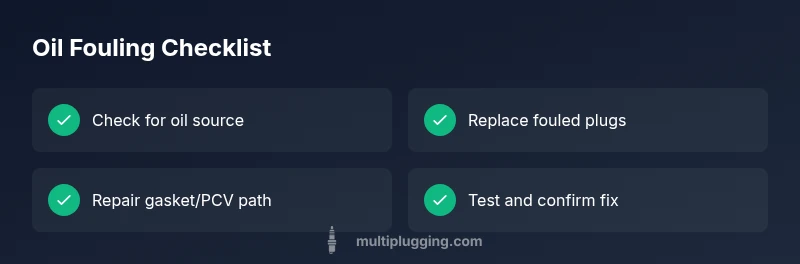
- Replace fouled plugs and fix the gasket/PCV path to prevent recurrence.
- Frequent oil-checks help catch leaks before they cause misfires.
- Test after repair to confirm the misfire is resolved.